
Why the Next Wave of Crypto Users Will Demand Privacy by Default
Public blockchains expose transactions; next crypto users will expect privacy by default, using wallets, mixers and no-account services.

Public blockchains make every transaction visible, creating risks for users. From exposing wallet balances to enabling tracking by blockchain analytics, the lack of privacy in cryptocurrency has become a growing concern. By 2026, privacy isn’t optional - it’s expected.
Key Points:
- Privacy Risks: Public ledgers reveal transaction history, wallet balances, and trading patterns, making users vulnerable to tracking, extortion, and theft.
- Demand for Privacy: Over 30% of Zcash transactions now use privacy features. Privacy tools like Monero and Zcash are gaining popularity for shielding user data.
- Business Concerns: Companies face challenges as competitors can analyze vendor relationships and pricing via transparent blockchains.
- Regulation Shifts: The U.S. Treasury lifted sanctions on Tornado Cash in 2025, signaling a shift toward privacy tools targeting illegal activities directly.
Tools for Privacy:
- Privacy Wallets like Wasabi and Cake Wallet obscure transaction patterns.
- Coin Mixing Protocols like CoinJoin and Tornado.cash break transaction traceability.
- Platforms like Kryptonim offer no-account crypto purchases, reducing data exposure.
Takeaway: Privacy in crypto is now a baseline expectation. By using privacy tools and strategies, you can protect your financial activity and reduce risks.
What's Driving the Demand for Privacy by Default
In the world of cryptocurrency, privacy has become more than just a preference - it's now essential. What was once a niche concern has grown into a universal expectation, influencing everyone from individual users to major institutions. This shift reflects a broader awareness of privacy rights and their role in reshaping what users demand from crypto.
Users Are More Aware of Privacy Rights
Crypto users today are far more informed about the risks tied to their financial activity. Experiences with data breaches, corporate surveillance, and AI-powered tracking have heightened their sensitivity to privacy issues. Blockchain transparency, while revolutionary, can expose wallet balances and trading patterns, leaving users vulnerable. Marina Petrichenko, a Web3 growth expert, sums it up:
"By 2026, privacy is no longer crypto's philosophical edge case. It is operational necessity."
This growing awareness has made privacy a must-have, even if achieving it involves technical compromises. Seasoned users have adapted to the risks of transparent ledgers, but for many, the demand for privacy is no longer optional - it's a baseline expectation.
New Users Need Privacy and Security from Day 1
Unlike the early adopters who eased into crypto, new users today expect privacy from their very first transaction. They want their financial activities shielded from public view, especially in an age where AI-driven surveillance and constant data collection are the norm. For these users, anonymity isn’t just a preference - it’s a form of self-protection.
To meet these expectations, modern tools and platforms are stepping up. Wallets like Zashi now prioritize private transfers by default. In 2025, stablecoin provider Paxos teamed up with privacy-focused blockchain Aleo to introduce confidential finance features to Ethereum. Similarly, in early 2026, the Logos project began developing systems that allow privacy to be applied on a case-by-case basis - such as shielding payroll transactions - without requiring users to move to a separate blockchain. These advancements show how privacy is becoming programmable and adaptable to individual needs, making it more accessible for all users.
sbb-itb-0796ce6
Tools and Strategies for Privacy in Crypto

Privacy Tools Comparison: Wallets, Mixing Protocols, and Network Protection for Crypto Users
The journey from wanting privacy to actually achieving it in the crypto space boils down to the tools you choose and how you use them. As Jibran Mirza from Coin Bureau explains:
"Anonymous" in crypto isn't a wallet setting, it's a system you build.
This "system" involves combining privacy-focused wallets, coin mixing protocols, and network protections to create a layered defense that suits your needs.
Privacy Wallets for Secure Storage
Privacy wallets are designed to protect your keys and reduce the likelihood of linking transactions to your identity. Unlike standard wallets, they include features to make tracing transaction patterns back to you much harder.
- Wasabi Wallet: This wallet uses CoinJoin by default, pooling your Bitcoin transactions with others to obscure ownership. It also routes all traffic through Tor, masking your IP address from wallet servers.
- Sparrow Wallet: Known for its advanced coin control, this wallet lets you manually select which UTXOs (unspent transaction outputs) to spend. This prevents accidentally merging "clean" coins with those that could be tied to your identity.
- Cake Wallet: A solid choice for mobile users, Cake Wallet focuses on Monero, leveraging features like Ring Signatures and RingCT to hide both transaction participants and amounts.
For an extra layer of security, hardware wallets like the Ellipal Titan 2.0 ($169) offer air-gapped signing. This means they use QR codes instead of USB or Bluetooth, ensuring your private keys remain offline. However, while hardware wallets secure your keys, true privacy depends on the software and network routing you pair them with.
One essential tip: never reuse addresses. In 2023, blockchain analytics traced over $2 billion in cryptocurrency transactions by clustering reused or consolidated addresses. By generating a new address for every transaction, you avoid creating a traceable transaction history.
Combining these wallet strategies with coin mixing can further enhance your privacy.
Coin Mixing for Anonymity
Coin mixing adds an extra layer of protection by breaking the chain of traceable transactions. It works by pooling your transaction with others, making it nearly impossible to link deposits and withdrawals.
- CoinJoin: This is the most common mixing method for Bitcoin. Tools like JoinMarket and Whirlpool allow multiple users to combine inputs and outputs into a single transaction, obscuring ownership. These platforms are self-hosted, so you maintain control of your keys throughout the process.
- Tornado.cash: Using zk-SNARKs (Zero-Knowledge Succinct Non-Interactive Arguments of Knowledge), Tornado.cash allows users to prove they've deposited funds into a pool without revealing which deposit is theirs. (Note: Tornado.cash was removed from U.S. sanctions on March 21, 2025.)
To make mixing more effective, patience is key. Avoid withdrawing funds immediately after depositing. Waiting days or weeks increases the anonymity set, making it harder for analysts to trace your activity. When withdrawing, use a relayer to cover gas fees. This keeps you from funding a new wallet with a known source, which could compromise your privacy. Additionally, using Tor or a VPN while interacting with mixing tools can prevent IP-based tracking.
However, there’s a catch: blockchain analytics firms like Chainalysis now flag any transaction involving a mixer as "high-risk", which can leave a permanent mark on your address history. To avoid this, experienced users in 2026 are combining mixing with other privacy measures, such as stealth addresses and cross-chain swaps through Monero. This approach minimizes the risk of leaving a single point of failure.
How Kryptonim Supports Privacy-Focused Users
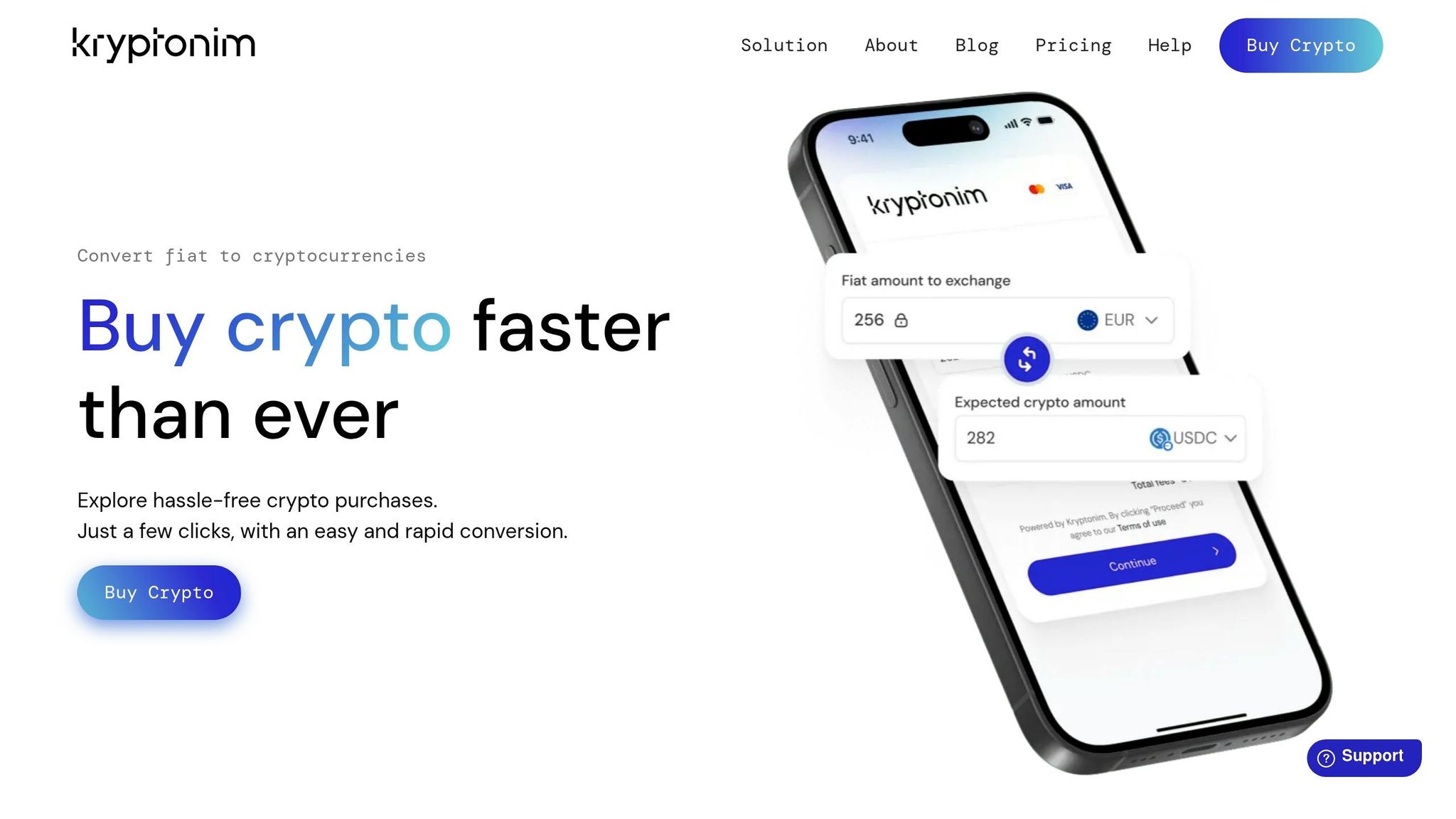
Kryptonim is designed for those who prioritize privacy, offering solutions that reduce data exposure while complying with EU regulations. Operating from Warsaw, it simplifies fiat-to-crypto transactions without compromising user confidentiality.
No-Account Cryptocurrency Purchases
One standout feature of Kryptonim is its no-account approach. You don’t need to create an account to use the platform. Simply visit the converter, pay with a credit or debit card, or use a local payment method, and the crypto is sent directly to your wallet. This method avoids storing personal data in centralized systems or creating a permanent user profile. The verification process is also streamlined, eliminating the need for the usual mountain of paperwork often required by traditional exchanges.
Transparent Fees and Local Payment Options
Kryptonim keeps its fee structure simple: a flat 2% fee for EU transactions and 4% for others, with all rates clearly displayed upfront. The on-site converter provides full transparency, showing exchange rates and transaction details before you commit. There are no hidden fees to worry about. Additionally, the platform supports local payment methods, allowing users to transact through familiar systems, which reduces unnecessary data sharing. These practices align perfectly with Kryptonim’s focus on privacy.
Using Kryptonim with Privacy Tools
Kryptonim can be an essential part of a broader privacy-focused strategy. After purchasing, transfer your assets immediately to a non-custodial wallet like Cake Wallet to separate your identity from on-chain activity. If you’re looking to further enhance your privacy, consider swapping assets for Monero (XMR) using instant or atomic swaps. For added security, use a new wallet address for each transaction, avoid linking payment sources, and allow a few days before making additional transactions to prevent timing-based correlations. Accessing Kryptonim through a VPN or Tor is another effective way to protect your IP address.
Conclusion: Taking Control of Your Crypto Privacy
Protecting your privacy in the crypto world isn't just an option anymore - it's essential. Public blockchains make transaction details visible to anyone, which means taking proactive steps to secure your financial information is a must.
Thankfully, there are practical tools and strategies to help you. Start by moving your crypto to self-custody wallets, keeping your private keys offline and away from potential breaches. Enable two-factor authentication on exchange accounts for an added layer of security. Regularly review and revoke outdated smart contract permissions with services like revoke.cash. If you're looking to minimize data exposure, consider purchasing crypto through platforms like Kryptonim, which prioritize privacy. Immediately transfer your assets to a non-custodial wallet or swap them for privacy-focused options like Monero, which are designed for anonymous transactions.
As Pavel Nikienkov, Founder of Zano, wisely said:
"Privacy isn't about hiding everything. It's about choice".
Whether you're trying to avoid address clustering, protect against surveillance, or maintain the fungibility of your assets, these steps can help you secure your transactions. By understanding the risks of public ledgers and using advanced privacy tools, you can strengthen your financial security.
Platforms like Kryptonim make it easier to prioritize privacy. With a straightforward, privacy-first approach, Kryptonim offers competitive 2% fees for EU transactions, supports local payment methods, and doesn’t require account creation. This aligns with the growing demand for confidentiality in the crypto space. As the next wave of crypto users demands better safeguards, you should too. Take these steps now to ensure you're in control of your crypto privacy.
FAQs
How can someone find my identity from a wallet address?
Wallet addresses might be pseudonymous, but your identity can still be uncovered under certain circumstances. For example, reusing the same address, interacting with regulated exchanges that require identity verification, or linking transactions to accounts tied to your real identity can reveal who you are.
Blockchain analysis tools add another layer of risk by tracking transaction patterns and connections. On top of that, sharing personal details - whether in transaction memos or through online activities - can inadvertently expose your identity.
To safeguard your privacy, it's essential to follow some key practices. Avoid reusing wallet addresses, and be mindful about sharing personal information in any context related to your transactions. Small steps like these can go a long way in protecting your anonymity.
What’s the safest way to start using crypto privately?
To maintain privacy while using cryptocurrency, begin by opting for privacy-centric cryptocurrencies and tools like privacy wallets or mixers to obscure transaction details. For enhanced security, store your assets in cold storage - such as hardware wallets - and activate multi-signature protocols when available.
Additionally, practice responsible key management by securely storing your private keys and avoiding sharing sensitive information. Stay vigilant against phishing scams, as they can compromise your security. Lastly, keep yourself informed about advancements in privacy tools to ensure your crypto transactions stay secure and private over time.
Can privacy tools get my funds flagged or frozen?
Using privacy tools doesn’t mean your funds are completely safe from being flagged or frozen. Authorities or security systems might still take action if they detect suspicious activity or if there’s an ongoing legal investigation. To minimize risks, always make sure you’re following relevant laws and regulations.