
Checklist for Choosing an Anonymous Wallet
Choose the right anonymous crypto wallet: no-KYC, non-custodial keys, Tor/CoinJoin support, hardware compatibility, clear fees, and easy recovery options.
Want to keep your crypto transactions private? Choosing the right anonymous wallet is key. These wallets let you send, receive, and store cryptocurrency without revealing personal details or using government-issued IDs. Here's what to look for:
- No KYC (Know Your Customer): The wallet should never ask for personal details or identity verification.
- Non-Custodial Control: You manage your private keys, ensuring no third party can access or freeze your funds.
- Privacy Tools: Features like Tor routing, CoinJoin, stealth addresses, and support for privacy coins like Monero or Zcash help obscure your transactions.
- Asset Compatibility: Make sure the wallet supports the cryptocurrencies you hold, whether it's Bitcoin, Monero, or multi-chain assets.
- Security Features: Look for options like seed phrase recovery, hardware wallet compatibility, and advanced encryption.
- Fee Transparency: Understand network and additional fees to avoid overpaying.
- Ease of Use: Pick a wallet with a simple setup and recovery process, whether it's software or hardware-based.
Pro Tip: Avoid transferring crypto from anonymous wallets to KYC exchanges to maintain privacy.
Privacy and Security Requirements
Privacy Tools Comparison for Anonymous Crypto Wallets
When choosing a wallet, make sure it checks off these three key privacy and security features.
No KYC Requirements
A wallet that prioritizes anonymity will never ask for personal details. You should be able to download the wallet, generate a seed phrase, and start making transactions right away - no registration or identity verification required. If the wallet asks for account creation or uploads of identity documents during setup, it’s not truly anonymous.
Now, let’s talk about control over your funds.
Non-Custodial Control
A non-custodial wallet ensures that you alone manage your private keys, keeping third parties completely out of the equation.
"If you don't hold the keys, you don't control the wallet. Period." - Bitcoin.tax
Check the wallet’s documentation to confirm it doesn’t store or manage your private keys. Most non-custodial wallets also skip KYC processes since they aren’t acting as financial intermediaries - they’re simply tools to help you manage your own keys.
Built-In Privacy Tools
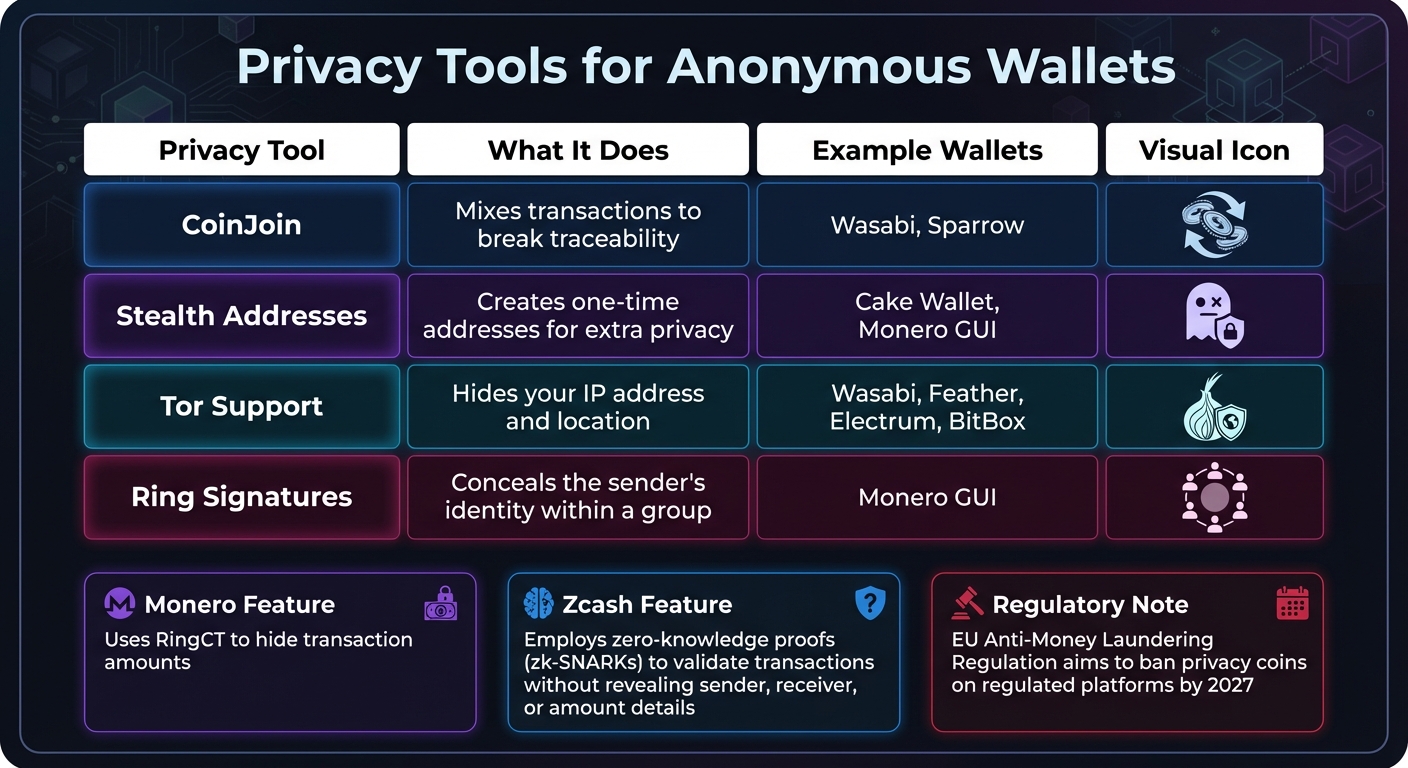
Finally, a good wallet should come equipped with privacy tools to obscure your transaction history. Look for features like CoinJoin, stealth addresses, and Tor support, which help ensure your transactions remain untraceable.
| Privacy Tool | What It Does | Example Wallets |
|---|---|---|
| CoinJoin | Mixes transactions to break traceability | Wasabi, Sparrow |
| Stealth Addresses | Creates one-time addresses for extra privacy | Cake Wallet, Monero GUI |
| Tor Support | Hides your IP address and location | Wasabi, Feather, Electrum, BitBox |
| Ring Signatures | Conceals the sender’s identity within a group | Monero GUI |
Some cryptocurrencies go even further. For example, Monero uses RingCT to hide transaction amounts, and Zcash employs zero-knowledge proofs (zk-SNARKs) to validate transactions without revealing any details about the sender, receiver, or amount. However, keep in mind that the EU’s upcoming Anti-Money Laundering Regulation aims to ban such privacy coins on regulated platforms by 2027.
Compatibility and Usability
When choosing a cryptocurrency wallet, it’s not just about privacy. You also need a wallet that works effortlessly with your assets and offers a straightforward setup process. After all, a wallet is only as good as its usability.
Blockchain and Cryptocurrency Support
The wallet you choose should align with the cryptocurrencies you hold. If you’re focused solely on Bitcoin, wallets like Wasabi and Electrum are excellent choices. These wallets are tailored specifically for Bitcoin and come with advanced privacy features like CoinJoin and PayJoin. However, they won’t support other cryptocurrencies, so they may not work for diversified portfolios.
For those managing multiple cryptocurrencies, multi-chain wallets are a better fit. These wallets support a wide range of assets across various blockchains. For instance, Tangem supports over 16,000 assets across 81+ blockchains. If you’re dealing with privacy-focused coins like Monero or Zcash, make sure your wallet has native support for them. For example, Cake Wallet supports Monero, Bitcoin, and Litecoin, while Zashi is specifically designed for shielded Zcash transactions. Multi-chain wallets often come with added features like integration with decentralized applications, DeFi protocols, and NFT marketplaces, making them versatile tools.
Once you’ve identified a wallet that supports your assets, it’s time to think about setup and recovery options.
Ease of Setup and Recovery
For many users, software wallets are the easiest to get started with. All you need to do is download the app, complete a quick setup, and secure it with a PIN or biometric lock. Wallets like Best Wallet don’t even require personal information, so you can start using them within minutes.
Hardware wallets, on the other hand, involve a bit more effort. First, you’ll need to purchase a physical device, which can cost anywhere from $49 to $399. Then, you’ll install companion software like Ledger Live or Trezor Suite to enable cold storage security. While these extra steps add another layer of protection, they do make the setup process more time-consuming.
Most non-custodial wallets rely on a 12- to 24-word seed phrase for recovery. Losing this phrase means losing access to your assets permanently, so it’s crucial to write it down and store it somewhere safe, like in a fireproof and waterproof location.
Some wallets offer alternative recovery options to make things easier. For example, Zengo uses MPC (multi-party computation) with biometric recovery, while wallets like BitBox02 and Coldcard Mk4 provide microSD backups. Other options include multi-card systems like Tangem or key-splitting methods with wallets such as Cypherock X1. These features can add flexibility and peace of mind to the recovery process.
Security Features and Fee Structure
Now that your wallet is set up and ready to handle your assets, the next step is making sure your funds are secure and understanding the associated fees.
Security Features
Top-tier anonymous wallets are designed with multiple layers of protection to guard against both online and offline threats. For example, wallets like Ellipal and Blockstream Jade use air-gapped signing. This method relies on QR codes to sign transactions offline, keeping the wallet disconnected from the internet and reducing the risk of remote hacking attempts.
If you're concerned about the vulnerabilities of traditional seed phrases, Multi-Party Computation (MPC) offers a safer alternative. This technology splits your private key into separate parts stored across multiple servers or devices, minimizing the risk of a single point of failure. Zengo, for instance, pairs MPC with biometric recovery, eliminating the need for the typical 12- to 24-word recovery phrases. Additionally, multisignature (multisig) support adds another layer of security by requiring multiple keys to approve transactions, which is particularly useful for managing large sums or shared accounts.
Network privacy is another critical aspect. Some wallets route traffic through Tor to mask your IP address, making it harder to trace blockchain transactions back to your physical location. Many wallets also include biometric authentication for secure access. To ensure you're using legitimate software, it’s a good idea to verify PGP signatures or file hashes from official repositories, which helps protect against malicious clones.
These advanced security measures not only safeguard your assets but also help you evaluate the true value of the wallet when considering its cost.
Transparent Fees
Once your assets are secure, it’s important to examine the wallet’s fee structure to ensure you’re not overpaying for privacy.
Anonymous wallets typically charge only network fees, which are the costs paid to miners for processing transactions on the blockchain. However, some wallets add extra charges. For instance, Zengo applies fees ranging from 0.99% to 5.5% for card purchases, while Best Wallet charges between 0.1% and 3%. Privacy-focused tools like Wasabi Wallet may also include a small coordinator fee for their CoinJoin mixing services.
To save on fees, look for wallets that let you customize your network fees or use Replace-by-Fee (RBF) functionality. Tools like Electrum and Sparrow give you full control, allowing you to adjust fees based on network congestion and avoid overpaying. If you’re buying cryptocurrency directly through a wallet app, compare the quoted price with major exchanges to spot any third-party fees or hidden markups. Hardware wallets typically cost between $49 and $399 upfront, with ongoing fees limited to blockchain network costs.
sbb-itb-0796ce6
Integration with Privacy-Focused Platforms
Once you've set up your wallet securely and ensured a clear fee structure, the next step is integrating it with privacy-focused platforms. This ensures your crypto transactions remain private and anonymous.
Some wallets allow you to purchase crypto without linking it to your personal identity. For example, mobile wallets like Best Wallet offer built-in fiat on-ramp services, letting you buy crypto with a debit or credit card while keeping your experience anonymous. Additionally, check if the platform supports tools like Tor or VPN masking, which enhance network anonymity by hiding your IP address.
It's also worth exploring wallets that work seamlessly with platforms like Kryptonim. This EU-regulated service enables fiat-to-crypto transactions without requiring you to create an account. Features like Tor routing or VPN masking on such platforms can further shield your activity from network observers.
To maintain privacy after purchasing crypto, consider using manual coin control. This feature lets you label and separate purchased coins, preventing them from mixing with funds that could be tied to your identity. However, avoid transferring anonymously purchased crypto to wallets associated with KYC exchanges, as this could compromise your privacy.
For those who prioritize both speed and privacy, wallets with Lightning Network integration are a great option. This technology supports fast, low-cost transactions while maintaining anonymity. Wallets like Mutiny are specifically designed for users who value these features, offering a seamless experience for private and efficient crypto transactions.
Conclusion
When choosing an anonymous wallet, focus on three key factors: privacy, security, and asset compatibility. Start by selecting a wallet with non-custodial control, ensuring you alone hold the private keys. This is essential for maintaining true anonymity alongside built-in privacy features.
For enhanced security, consider hardware wallets equipped with secure element chips or wallets that use MPC (Multi-Party Computation) to eliminate single points of failure. These tools add an extra layer of protection to your assets.
Compatibility is equally important. If your holdings are concentrated in Bitcoin, a Bitcoin-only wallet like Blockstream Jade (priced at $69.99) offers tailored features. On the other hand, if you manage a diversified portfolio, multi-chain wallets like Ledger - which supports over 5,000 assets - are a better fit. Choose a wallet that aligns with your strategy, whether it’s focused on a single asset or spread across multiple blockchains.
Once your wallet meets the privacy, security, and compatibility benchmarks, think about how you'll acquire crypto. Platforms like Kryptonim make the process straightforward, allowing you to convert fiat to crypto without creating an account or verifying your identity. As an EU-regulated service, Kryptonim prioritizes transparency, charging a 2% transaction fee for EU users and 4% for others, all while protecting your privacy from the outset.
"Privacy begins at setup. If you submit identity documents, the anonymity claim is already broken." – Coincub
FAQs
What privacy features should I look for in an anonymous crypto wallet?
When selecting an anonymous crypto wallet, focus on features that safeguard your privacy, conceal transaction details, and protect your assets.
Choose wallets that don’t require Know-Your-Customer (KYC) verification and give you full control over your private keys. The wallet should avoid storing personal information and offer security measures like PINs, biometrics, or multi-factor authentication (MFA). Opting for open-source wallets is a smart move, as they can be independently audited to ensure there’s no hidden data collection.
Look for wallets equipped with on-chain privacy tools. These might include address rotation, Tor routing to mask your IP, or support for privacy-centric cryptocurrencies like Monero or Zcash. Additional features such as stealth addresses or transaction mixing can further shield your activities from blockchain scrutiny.
Lastly, the wallet should employ strong encryption to protect your private keys and seed phrases. Hardware wallets or software wallets with secure enclaves are excellent options to guard against malware. These features will help you maintain anonymity while managing your cryptocurrency securely.
What steps can I take to keep my cryptocurrency transactions private?
To keep your cryptocurrency transactions private, there are a few important steps you can take. First, use a non-custodial wallet that doesn’t ask for personal details or require KYC (Know Your Customer) verification. It's also a good idea to generate a new address for each transaction. This makes it harder for anyone to track your activity on public blockchains. For extra privacy, you can leverage tools like mixing protocols or browse through privacy-focused networks like Tor to keep your transaction details hidden.
If anonymity is your top priority, consider using privacy-focused cryptocurrencies such as Monero. These currencies are designed to obscure transaction amounts and participants directly on the blockchain. If you stick with popular options like Bitcoin or Ethereum, you can still boost your privacy by using mixers or stealth addresses. Additionally, always route your internet traffic through a VPN or Tor to hide your IP address and avoid leaving digital footprints.
When buying cryptocurrency without tying it to your identity, platforms like Kryptonim let you purchase crypto without requiring an account or KYC verification. Once you’ve acquired your funds, store them securely in a hardware wallet for long-term protection. Be sure to follow best practices like rotating your wallet addresses and using privacy tools consistently. By taking these measures, you can make your transactions far less traceable.
Why is having full control of your wallet key important for staying anonymous?
Having full control of your wallet key - commonly referred to as non-custodial control - is essential for protecting your privacy. When you alone hold your private keys, no third-party service can access your personal information, monitor your transactions, or connect your identity to your blockchain activity.
By steering clear of third-party custody, you also sidestep risks like data breaches, account restrictions, or enforced identity verification (KYC). This kind of control gives you the power to handle your cryptocurrency securely and discreetly.