

Explore Crypto with the Kryptonim Blog
Dive into the dynamic world of cryptocurrencies. Stay informed and inspired with the latest news, analysis, and trends in the market.
Privacy Coins 101: Types and Anonymity Features
Explains how Monero, Zcash, and Dash hide senders, receivers, and amounts, plus practical limits and safe-use tips.
Read moreCategories
Crypto Broker vs Exchange: Which Fits Beginners
Compare brokers vs exchanges: ease, fees, wallet control — brokers for fast small buys; exchanges for lower recurring costs.
Read more
Crypto-to-Crypto Tax Rules: Beginner Guide 2026
Explains U.S. tax treatment of crypto-to-crypto swaps, how to calculate USD gains/losses, and what records and forms to use.
Read more
Crypto Scam Checker
Review crypto red flags before you connect a wallet, send funds, or trust a project. Fast, practical scam risk screening for everyday users.
Read more
Global Crypto Licensing: Country Comparison
Centralized licensing eases cross-border crypto expansion; fragmented regimes force costly, state-by-state work.
Read more
IMF, BIS, FSB: Crypto Policy Compared
How IMF, BIS, and FSB influence crypto rules: macro risks, bank access, and supervisory standards that shape exchanges and stablecoins.
Read more
DeFi Primer: How Decentralized Finance Works
Plain-English DeFi primer: how blockchains, smart contracts, and wallets power lending, trading and yield—plus key risks and safety tips.
Read more
Beginner Guide to Crypto Wallet Setup
Step-by-step crypto wallet setup: choose hot or cold, back up your seed offline, test with a small transfer, and secure keys.
Read more
How ATR Measures Crypto Volatility for Beginners
Simple explanation of ATR in crypto: measures average price movement per candle and helps set stops and position size.
Read more
Cross-Border AML Checklist for Crypto Buyers
Have ID, 90-day address proof, 3–6 months of bank records, and a sanctions/wallet check to avoid delays on cross-border crypto buys.
Read more
Fastest Blockchains by TPS: 2026 List
Throughput on paper rarely matches real-world blockchain speed—TPS hides finality, fees, and usability trade-offs.
Read more
How CASP Licensing Works in South Africa
4-step guide to CASP licensing in South Africa: FSCA & FIC requirements, AML/custody controls, and a 6–12 month approval timeline.
Read more
Public and Private Keys in Crypto Explained
How public addresses receive funds, private keys sign transactions, and how to protect seed phrases and wallets.
Read more
2FA Apps vs SMS For Crypto Trading
Use authenticator apps over SMS for crypto—safer against SIM-swap and interception; save backup codes.
Read more
Long-Term Crypto Portfolio: Beginner Guide
Simple long-term crypto plan: small allocation, BTC/ETH core, dollar-cost averaging, secure self-custody, and tax-ready record keeping.
Read more
Ledger vs Trezor vs BitBox: Cold Wallet Guide
Compare Ledger, Trezor, and BitBox02 on security, backups, mobile use, and asset support to choose the right cold wallet.
Read more
Utility Tokens Explained for New Buyers
Practical guide to utility tokens: check token use, tokenomics, liquidity, and network risks before buying and testing small.
Read more
Sanctions Screening in Crypto: Ultimate Guide
Guide to screening customers, wallet addresses, and transactions against sanctions, handling alerts, and documenting decisions.
Read more
MiCA Study: Why CASP Filings Stall
Most MiCA CASP applications stall before the 40-day review due to weak AML/CFT, governance gaps, disclosure errors and regulator backlogs.
Read more
Ethereum Crowdfunding: Success vs Failure
Evaluate campaigns by platform, goals, token design, audits, and communication—not by raise size alone.
Read more
Crypto Gains vs Losses: Tax Offset Rules
Realized crypto losses only save taxes after sale — net short/long buckets, $3,000 limit, and carryforwards.
Read more
Dollar-Cost Averaging in Crypto: Beginner Guide
DCA simplifies crypto investing: set small recurring BTC/ETH buys, control fees, and keep crypto a small, long-term allocation.
Read more
5 AML Issues in Crypto License Applications
Five AML gaps that stall crypto license approvals: weak KYC, untuned monitoring, sanctions blind spots, poor records and weak SAR workflows.
Read more
Crypto Remittance Fees: 7 Networks Compared
Compare fees, speed, and setup for seven crypto networks to find the cheapest option for small and mid-size cross-border transfers.
Read more
Ultimate Guide to Crypto Tutorials
Step-by-step beginner's guide to wallets, security, orders, fees, and a 90-day plan to safely make your first crypto trades.
Read more
How Multi-Chain Wallets Simplify Crypto Management
Manage crypto across blockchains from one wallet—back up your seed, verify network and gas, test small transfers, and use hardware for high-value funds.
Read more
Crypto Cross-Border Payments: Key Benefits for Beginners
Crypto makes cross-border payments faster, cheaper, and trackable; stablecoins reduce value swings—tips for beginners.
Read more
Top 5 Compliance Steps for CASPs After Registration
Five daily compliance controls CASPs must run after registration: governance, AML/Travel Rule, client asset segregation, reporting, ICT risk.
Read more
Stablecoins in Remittances: User Benefits Explained
USD-pegged stablecoins can settle cross-border transfers in minutes, reduce fees dramatically, and reach unbanked users - caveats apply.
Read more
Ethereum Merge Carbon Footprint Reduction
The Merge reduced Ethereum's energy use and CO2e by over 99%, from ~20–24 TWh/10–13M tons to under 3,000 tons annually.
Read more
Hacking History of Crypto Exchanges
Centralized custody failures — hot wallets, weak key control, and poor governance drove most major crypto exchange losses.
Read more
Stablecoin Regulation in 2026: Key Updates
Regulators have turned stablecoins into tightly licensed, fully reserved payment products, narrowing issuers and raising compliance and user controls.
Read more
Best Global Crypto Platforms for Oceania in 2026
Compare top global crypto platforms for Oceania—fees, AUD/NZD funding, compliance, and best use cases for traders and beginners.
Read more
KYC Verification Checklist
Create a tailored KYC checklist for exchange, banking, payment, or business onboarding requirements—plus prep tips and common rejection reasons.
Read more
What Are Altcoins: Basics and Examples
A beginner's guide to altcoins: types, coins vs tokens, how they work, examples, and key risks to check.
Read more
How to Buy Crypto in Croatia in 2026
2026 guide to buying crypto in Croatia: use HANFA-listed platforms, pay in EUR (SEPA), complete KYC, track taxes, and secure your wallet.
Read more
How to Buy Crypto in Finland in 2026
Only use MiCA-authorized services: verify with FIN-FSA/ESMA, fund by SEPA, complete KYC, and secure your crypto.
Read more
How to Buy Crypto in Costa Rica in 2026
2026 guide to legally buying BTC or USDT in Costa Rica — payment methods, fees, wallets, and safety tips.
Read more
How to Buy Crypto in Hungary in 2026
Step-by-step 2026 guide to buying crypto in Hungary: use licensed platforms, complete KYC, prefer SEPA, and track taxes.
Read more
How to Buy Crypto in Bolivia in 2026
How to legally buy and store crypto in Bolivia (2026): payment options, KYC, stablecoin tips, fees, and safety checklist.
Read more
How to Buy Crypto in Ecuador with Local Methods
Guide to buying crypto in Ecuador with cards, bank transfers, or P2P—wallet setup, fees, and safety tips.
Read more
How an On-Ramp Handles KYC and Liquidity So You Don't Have To
Explains how a crypto on-ramp handles KYC, payment checks, and liquidity routing to simplify first-time purchases.
Read more
How to Buy Crypto in the Czech Republic in 2026
Legal 2026 guide to buying crypto in Czechia: choose a MiCA-licensed provider, pay in CZK, finish KYC, and secure your coins.
Read more
Aggregator vs Direct On-Ramp Integration: Trade-offs
Assess aggregators vs direct on‑ramp integrations: coverage, fees, KYC, UX, and when to choose each approach.
Read more
How to Verify You're Using the Official On-Ramp, Not a Clone
Check URL, certificate, source, company details, and payment screen to avoid clone on-ramps and protect card and crypto.
Read more
How to Buy Litecoin (LTC) with Fiat
Step-by-step guide to buying Litecoin with USD: verification, payment options, fees, and secure wallet setup.
Read more
How to Buy Crypto in Romania in 2026
Step-by-step guide to legally buy crypto in Romania: compliant platforms, KYC, payment methods, taxes, and secure storage.
Read more
What "VASP-Registered" Means When You Buy Crypto
'VASP-registered' means AML checks, KYC, and regulator oversight - a compliance baseline, not a guarantee of safety.
Read more
How to Fix a Stuck or Pending Crypto Purchase
Troubleshoot pending crypto buys: identify if delay is with your bank, exchange, or on-chain and resolve holds, verifications, or low fees.
Read more
How to Buy BNB with Fiat and Move It to Your Wallet
Buy BNB with fiat, send it on BEP-20 to your wallet, test a small transfer first, and confirm on a block explorer.
Read more
How to Buy USDT in Latin America with Local Payment Methods
Compare local rails, fees, security, and network compatibility to buy USDT in Latin America via PIX, SPEI, cards, or wallets.
Read more
How to Buy Crypto in Poland with BLIK
Step-by-step guide to buying BTC, ETH or USDT in Poland via BLIK: fees, limits, KYC, network checks and safety tips.
Read more
How to Fund a Telegram Wallet with Crypto
Step-by-step guide to deposit crypto into a Telegram Wallet: match coin & network, check fees/minimums, test transfers, and track TXIDs.
Read more
How to Buy Crypto in the US and Send It to Your Own Wallet
Step-by-step guide to buying crypto in the U.S., navigating fees and holds, and safely withdrawing to your own wallet.
Read more
How to Choose the Right Network When Buying Stablecoins
Choose the correct network before buying stablecoins—match deposit labels, compare fees, have gas tokens, and send a small test.
Read more
How to Buy Polygon (POL) with a Card
Step-by-step guide to buying Polygon (POL) with a card: wallet setup, ID checks, fees, limits, and security.
Read more
How to Buy Crypto in Peru: Methods and Fees
Buying crypto in Peru is straightforward — choose the right payment method, cut fees, and secure your keys to avoid costly mistakes.
Read more
How to Buy Crypto in Portugal in 2026
Guide to buying crypto in Portugal: regulated exchanges, ID/NIF rules, 365‑day tax exemption, 28% short-term tax, and reporting steps.
Read more
How LATAM Crypto Rules Affect Buying and Cashing Out
LATAM crypto rules are reshaping how users buy, transfer and cash out—expect stricter KYC/KYW, travel-rule reporting and tighter taxes.
Read more
How to Buy Crypto in Argentina in 2026
Step-by-step guide to buying crypto in Argentina: CNV-registered platforms, required documents, taxes, and secure storage.
Read more
How Crypto Regulation Differs Across the Americas
Compare crypto laws across the Americas: legal status, taxes, AML/KYC, and licensing differences for businesses and users.
Read more
How Long Does It Take to Buy Crypto and Receive It?
How payment method, identity verification and blockchain confirmations affect how long a crypto purchase takes.
Read more
What Happens If You Send Crypto to the Wrong Network?
Sending crypto on the wrong network can lock funds; recovery depends on private keys, network compatibility, and exchange support.
Read more
How to Buy Crypto in the Dominican Republic in 2026
Step-by-step guide to buying crypto in the Dominican Republic: platforms, payment methods, legal risks, taxes, and security tips.
Read more
How to Buy Crypto in Panama in 2026
Step-by-step guide to legally buying crypto in Panama: payment methods, KYC rules, wallet setup, security tips, and tax recordkeeping.
Read more
How to Buy Crypto in Sweden with Swish and Cards
Step-by-step guide to buying crypto in Sweden with Swish or Visa/Mastercard, covering fees, limits, security, and tax reporting.
Read more
How to Move Stablecoins Between Networks Safely
Securely move stablecoins across chains: verify networks, pick audited bridges or CCTP, test with a small transfer, and limit approvals.
Read more
7 Ways to Store Private Keys Safely
Practical, tested ways to secure cryptocurrency private keys: hardware wallets, air-gapped storage, encrypted backups, and key-splitting.
Read more
Crypto Portfolio Strategies: Risk vs. Reward
No one-size-fits-all: match buy-and-hold, diversified, core-satellite, or active trading to your risk, goals, and time.
Read more
Crypto Influencers: Risks and Rewards for Beginners
How crypto influencers help beginners, the scams and emotional risks to watch for, and practical steps to research and buy safely.
Read more
Top Stablecoins for Portfolio Diversification in 2026
Diversify stablecoin holdings across regulated fiat-backed and decentralized options to limit depeg risk and preserve liquidity.
Read more
MiCA and Crypto Price Manipulation: Key Points
MiCA's anti-manipulation rules, issuer and CASP obligations, enforcement, and trader protections in the EU.
Read more
Smart Contracts for Beginners: How They Work
A beginner's guide to smart contracts: how 'if/then' automation works, key benefits, risks, and safe steps to get started.
Read more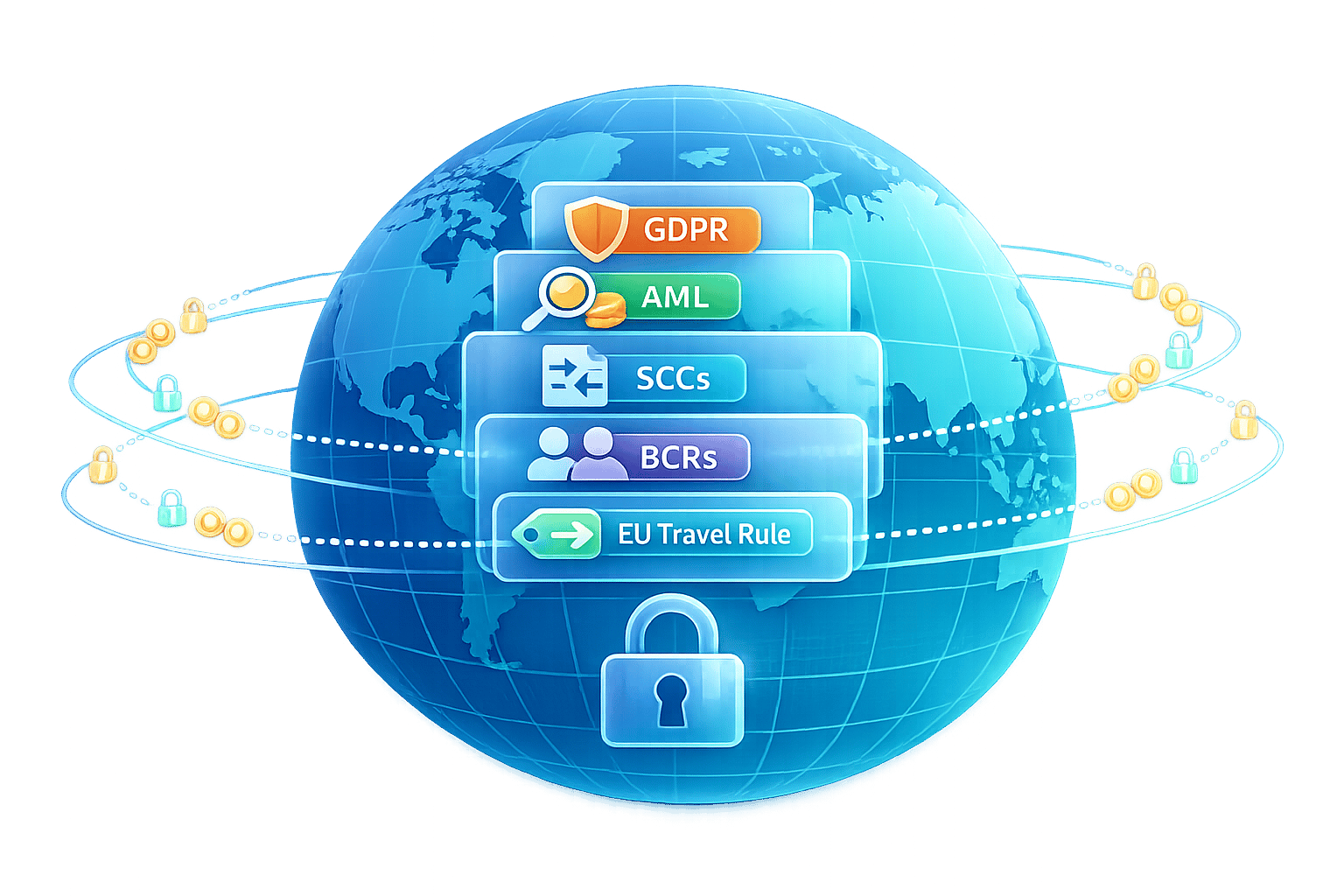
Cross-Border Crypto Privacy Laws Explained
How GDPR, AML rules, SCCs, BCRs and the EU Travel Rule shape cross-border crypto data transfers, platform duties, and user rights.
Read more
Choosing a Software Wallet: 7 Factors to Consider
Compare security, compatibility, assets, fees, usability, reputation, and integrations to pick the right software wallet.
Read more
How Meme Coins and Utility Tokens Work
Learn how meme coins differ from utility tokens, their value drivers, risks, and practical tips for evaluating and buying them.
Read more
How KYC Stops Money Laundering
How KYC verifies users, supports risk-based due diligence, and uses sanctions screening and monitoring to curb crypto money laundering.
Read more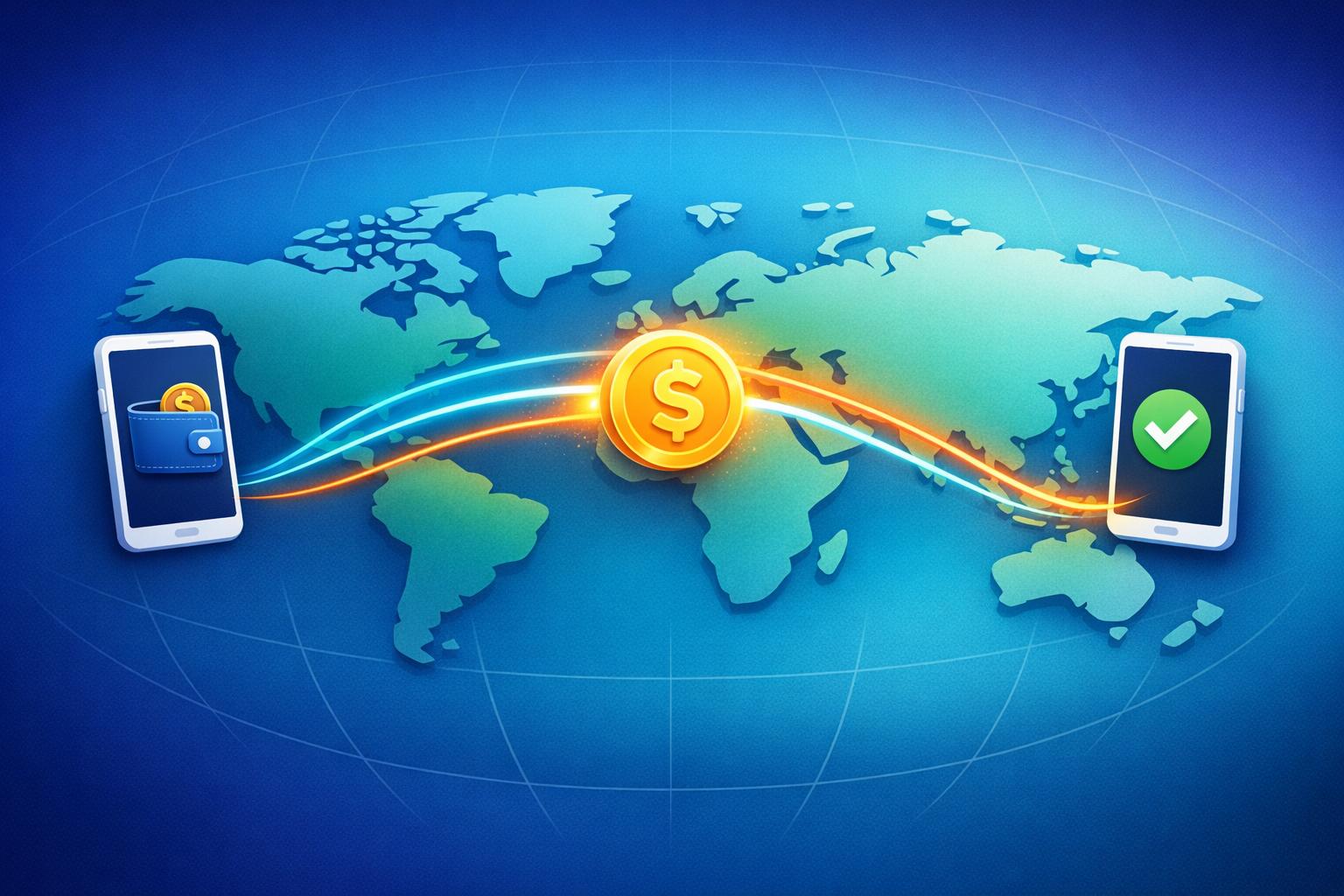
Stablecoins for Remittances: Beginner's Guide
A practical beginner's guide to using stablecoins for fast, low-cost cross-border remittances, wallets, networks, and risks.
Read more
Ultimate Guide to Encryption in Crypto Exchanges
Encryption defines exchange security: TLS, AES-256, HSMs, cold storage and key management—user practices still matter.
Read more
Step-by-Step Guide to CASP Licensing Under MiCA
Obtain a MiCA CASP license: choose jurisdiction, meet capital and governance requirements, prepare your application, and avoid common pitfalls.
Read more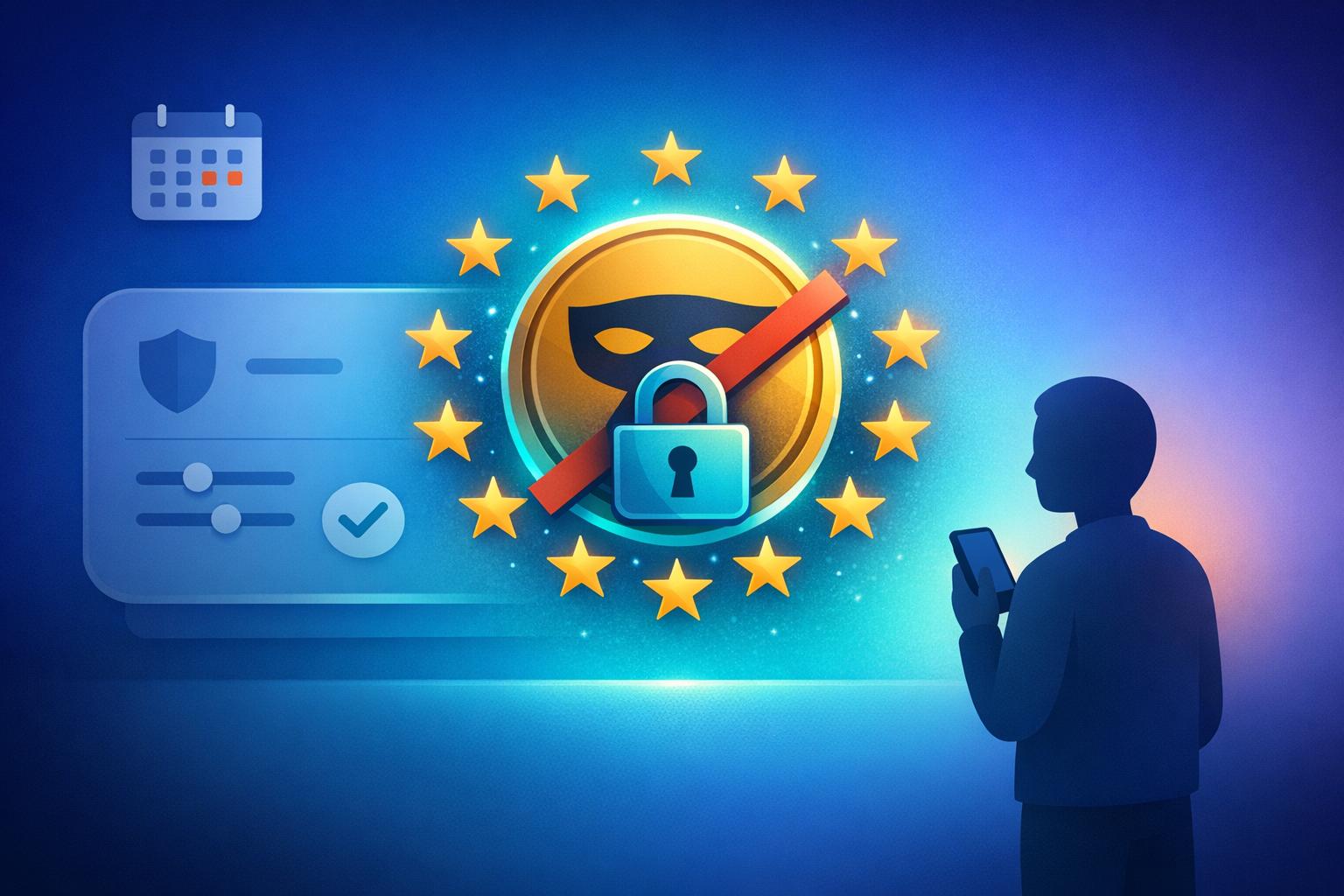
EU Privacy Coin Ban: What It Means for Users
Overview of EU rules banning privacy coins on regulated platforms, key dates, who’s affected, and steps users should take.
Read more
How GDPR Impacts Crypto Exchange Users
EU GDPR rights, deletion limits, breach notification rules, and how exchanges use off-chain storage and cryptography to protect users.
Read more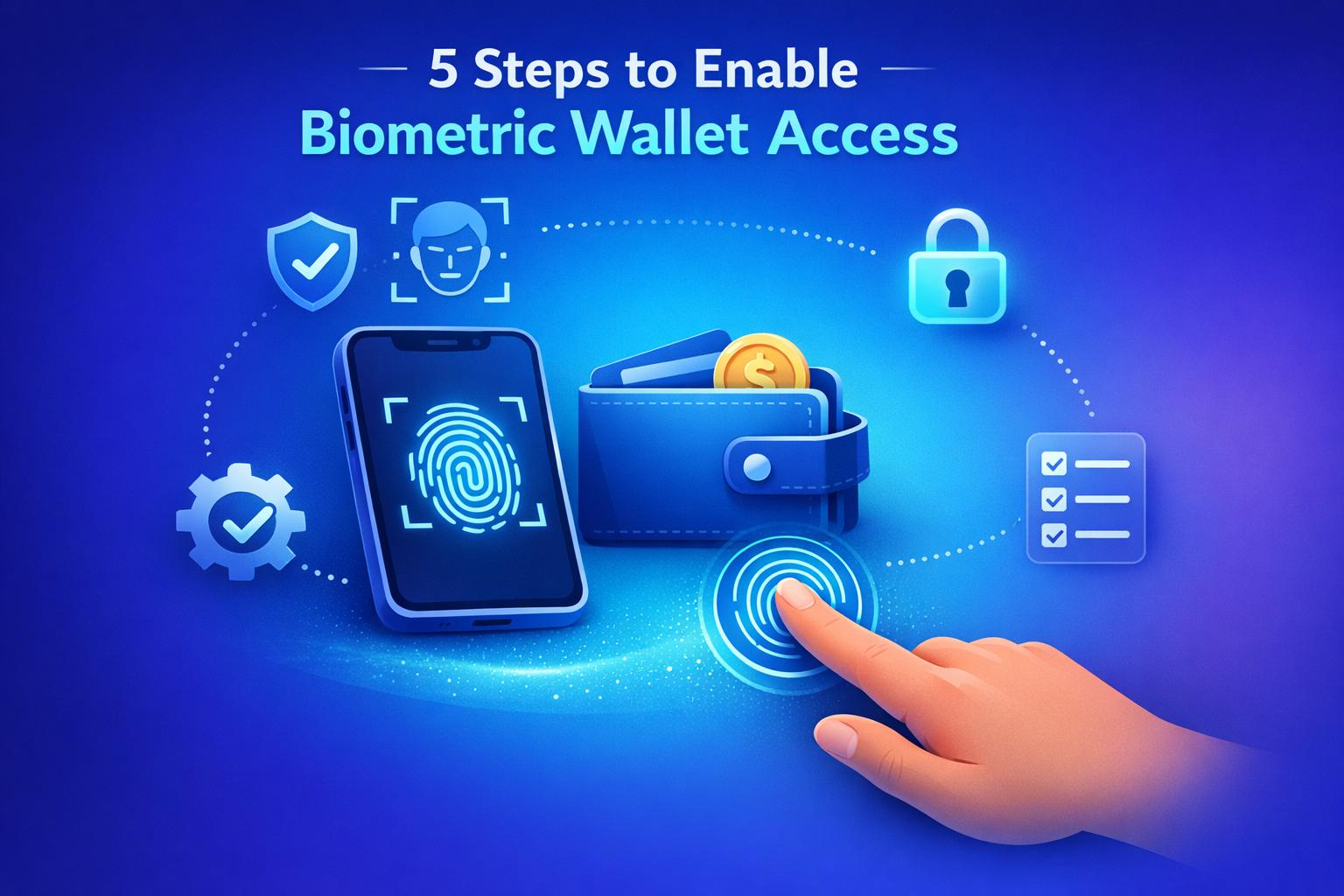
5 Steps to Enable Biometric Wallet Access
Enable fingerprint or Face ID for your digital wallet in five steps: verify device, set passcode, allow biometrics, and adjust locks.
Read more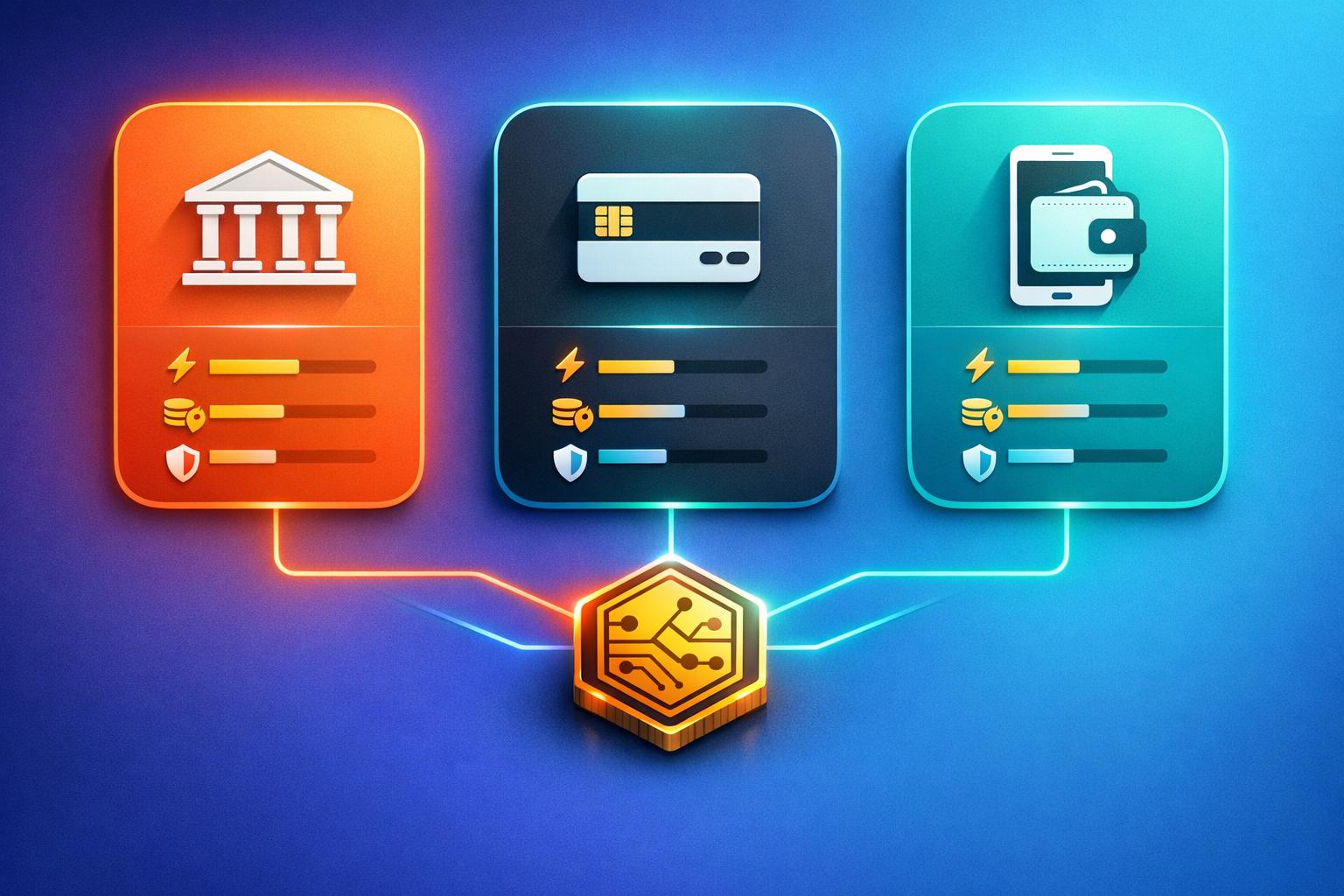
Fiat Payment Methods for Crypto: Top Platforms Compared
Compare fiat-to-crypto payment options—fees, speed, and security—and learn which methods best fit your region and needs.
Read more
Why the Next Wave of Crypto Users Will Demand Privacy by Default
Public blockchains expose transactions; next crypto users will expect privacy by default, using wallets, mixers and no-account services.
Read more
Private Crypto Payments in the EU: What's Legal, What's Private, What's Next
How EU laws (MiCA, AML, Travel Rule, CARF) reshape crypto payments, privacy coins, P2P transfers and compliant platforms.
Read more
ZK Privacy in Crypto Wallets: Why Your Transaction History Should Be Yours
Zero-knowledge proofs let crypto wallets hide transaction details, enable selective disclosure, and preserve privacy without compromising security.
Read more
What Is ZK Proof? The Tech That Lets You Pay Without Revealing Who You Are
Explains how zero-knowledge proofs let you validate payments and identity without revealing data, plus types, benefits, and limits.
Read more
How to Split Bills With Friends Using Stablecoins (No Bank Account Needed)
Split rent, dinners, or trips instantly with USDC/USDT via a mobile wallet — no bank account, low fees, and secure tips.
Read more
SocialFi Apps vs Traditional Payment Apps: What's Actually Different
Compare SocialFi's crypto, NFT, and user-owned models with traditional payment apps' fiat, custodial security, and ease.
Read more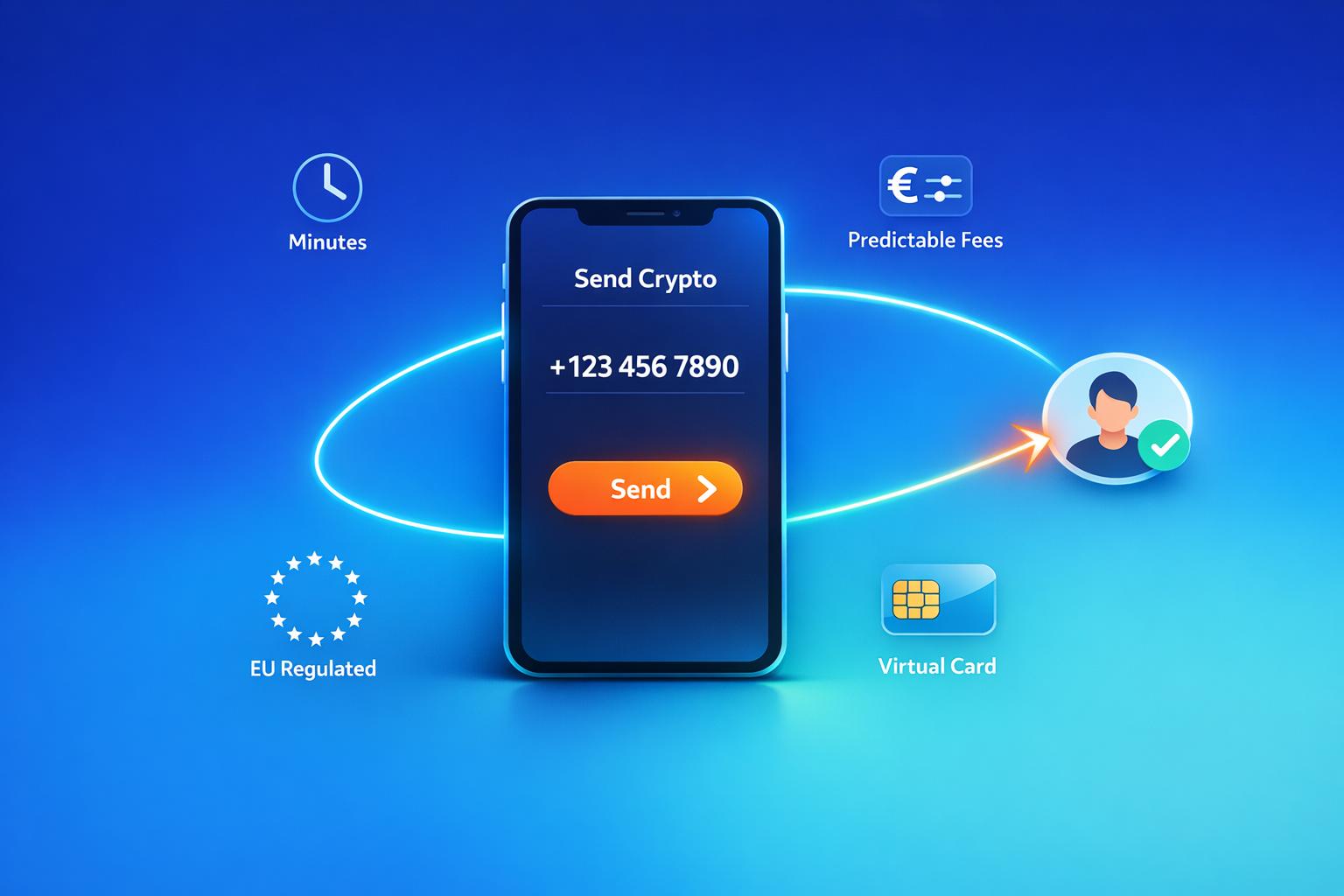
Forget IBANs: Why Crypto Payments by Phone Number Are Taking Over
Phone-number crypto payments make transfers simple, fast and low-cost—minutes, predictable fees, EU-regulated platform and virtual cards.
Read more
What Is SocialFi? The New Way to Send, Split and Save Money With Friends
Learn how SocialFi uses blockchain, tokens and smart contracts to send money, split bills, and save with friends while keeping data control.
Read more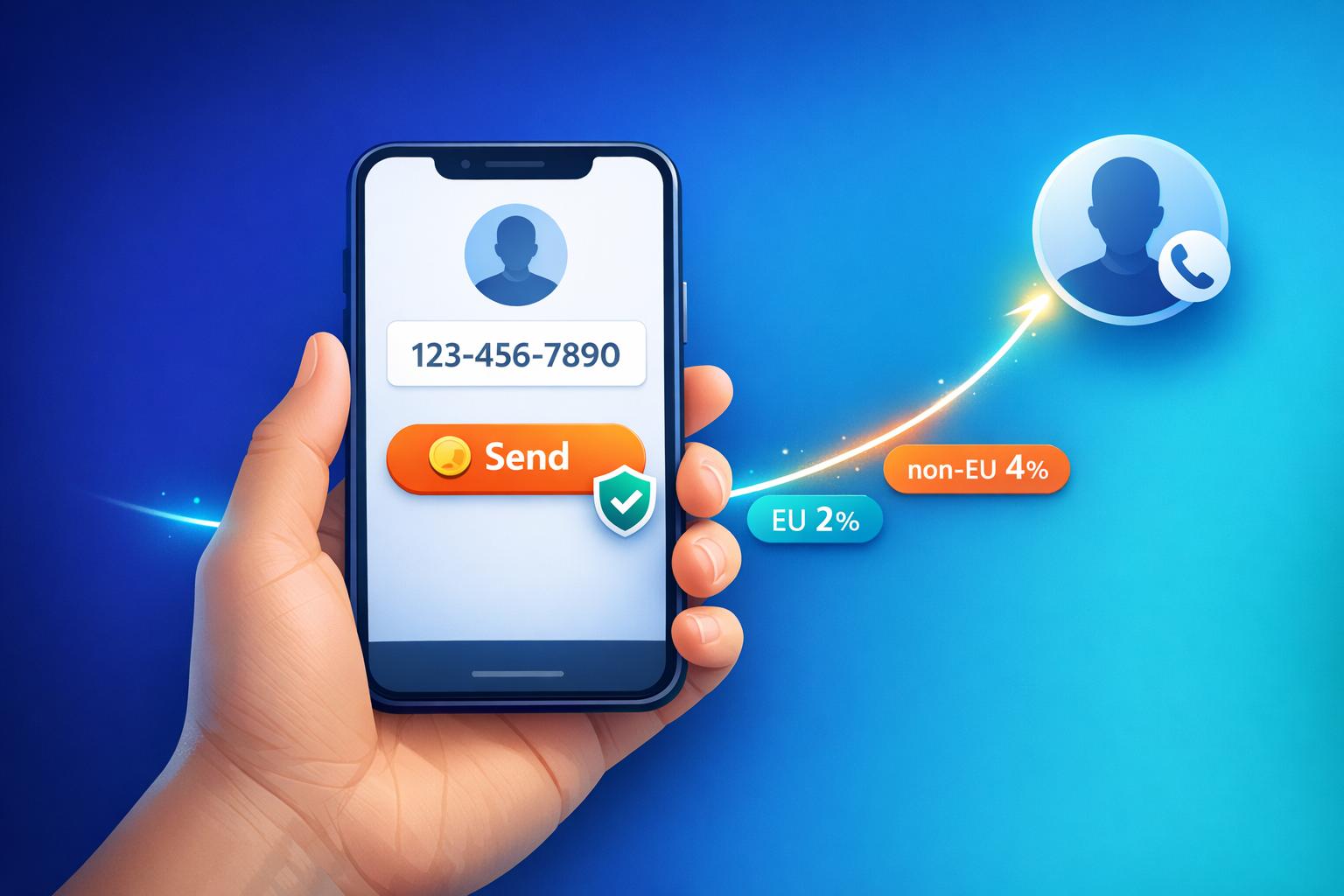
How to Send Crypto to Someone Using Just Their Phone Number
Send crypto using a phone number for instant off-chain transfers, clear fees (EU 2%/non‑EU 4%), and recommended 2FA security.
Read more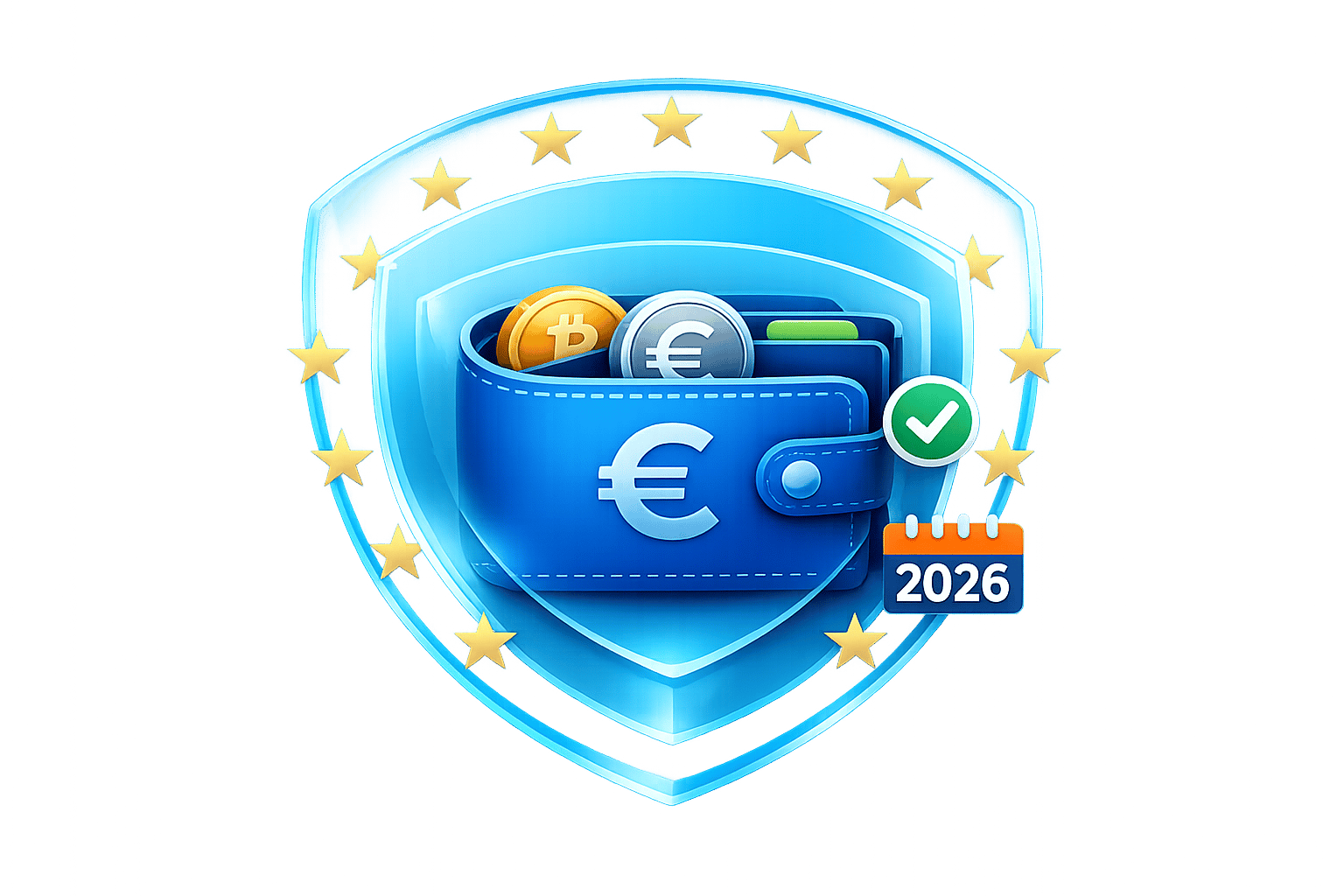
MiCA Explained: What the EU Crypto Regulation Means for Your Wallet in 2026
MiCA tightens EU crypto-wallet safety with asset segregation, stablecoin rules and stricter platform compliance before July 1, 2026.
Read more
Crypto Off-Ramp Explained: How to Convert USDC Back to Euros
Step-by-step guide to sell USDC for euros via Kryptonim: requirements, fees (2% EU/4% non-EU), timelines, and security tips.
Read moreCrypto Off-Ramp Explained: How to Convert USDC Back to Euros
Step-by-step guide to sell USDC for euros via Kryptonim: requirements, fees (2% EU/4% non-EU), timelines, and security tips.
Read more
How to Get a Crypto Visa Card in Europe - Step-by-Step Guide
Step-by-step guide to applying, activating and using a Crypto Visa card in Europe, plus fees, funding and security tips.
Read more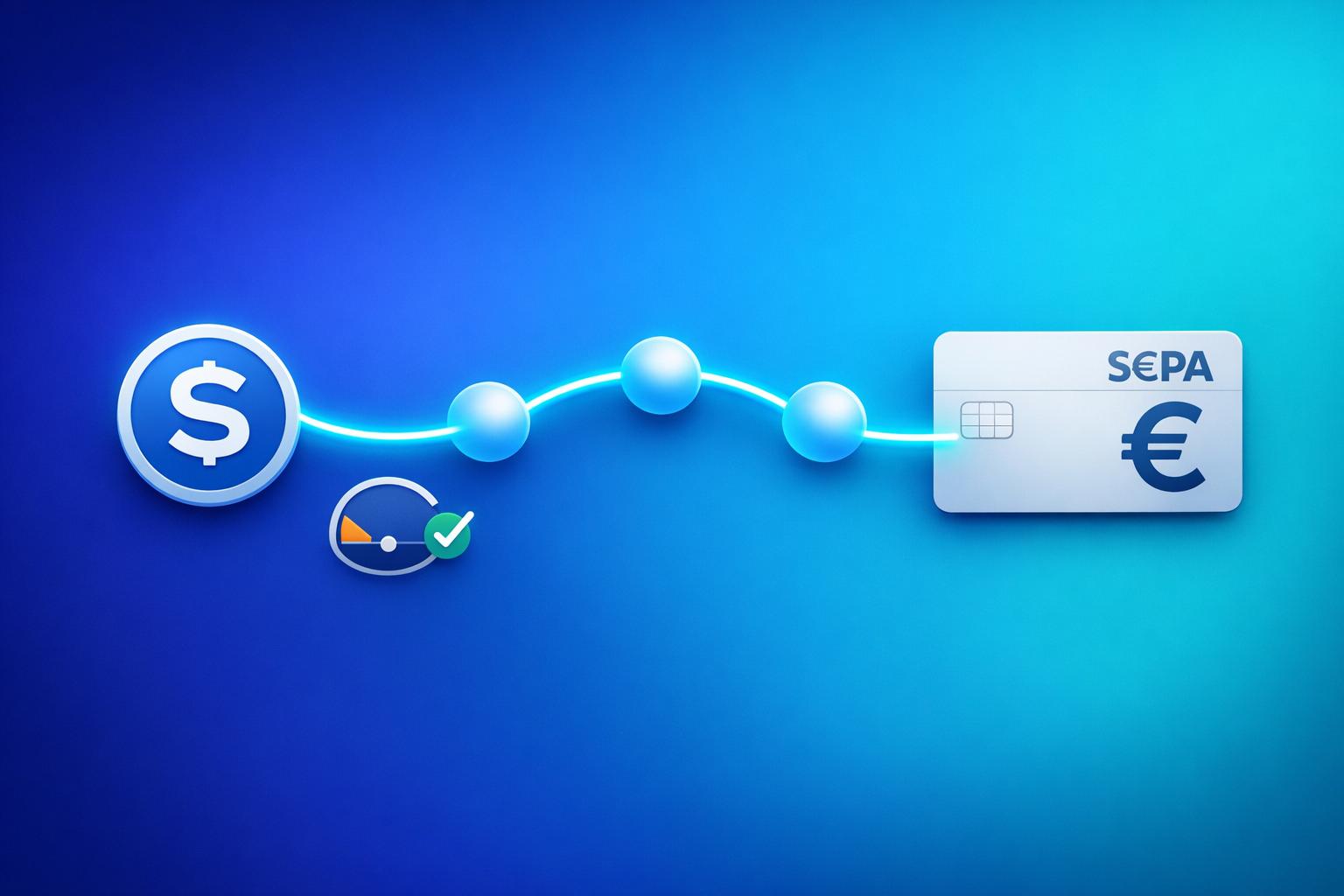
How to Cash Out Stablecoins to EUR Without Losing Money on Fees
Use low-fee networks, SEPA transfers, and smart timing to keep nearly all your value when converting stablecoins to EUR.
Read more
What Is a Crypto Card and How Does It Work With a Self-Custody Wallet?
How crypto cards let you spend crypto via Visa/Mastercard by linking to a self-custody wallet—setup, fees and security tips.
Read more
How to Pay With Crypto Using a Visa Card (Without Selling Your Coins First)
Spend crypto without selling it first: crypto-backed Visa cards convert stablecoins at checkout, offer Google Pay and low, transparent fees.
Read more
Why Stablecoins Are Becoming the Default Payment Rail in 2026
Stablecoins enable instant, low-cost, 24/7 payments, driving bank, merchant, payroll, and remittance adoption worldwide.
Read moreNeed more information?
Feel free to reach out to our team using the chat icon for any lingering questions or further details.
