
How to Buy Crypto in Finland in 2026
Only use MiCA-authorized services: verify with FIN-FSA/ESMA, fund by SEPA, complete KYC, and secure your crypto.
Yes - buying crypto in Finland is legal in 2026, but I’d only use a MiCA-authorized service that can serve Finnish residents. My short version is simple: check the provider in the FIN-FSA and ESMA registers, finish ID checks, fund in euros with SEPA if possible, and start with a small buy such as €10–€20.
Here’s what matters most before I send any money:
- Legal access first: Since mid-2025, only MiCA-authorized crypto services can legally serve people in Finland.
- SEPA is usually cheaper: Bank transfers often cost about €0–€1, while card purchases can add about 2%–4%.
- Watch the final amount: Fees may include common crypto trading fees like a trading fee, spread, and network fee. Spreads of 0.5%–2.0% are common.
- Tax still matters: In Finland, gains are taxed at 30% up to €30,000 and 34% above that.
- Start small and stay safe: Turn on 2FA, check the wallet address, and use a test transfer before moving larger amounts.
If I were helping a first-time buyer, I’d keep it this simple: pick a service that is allowed in Finland, verify my identity, deposit euros, review the full price, and make a small first order.

How to Buy Crypto in Finland: Step-by-Step Guide (2026)
Quick Comparison
| Step | What I’d do | What to watch |
|---|---|---|
| Pick a provider | Check FIN-FSA and ESMA registers | Service may not be available for Finland |
| Add money | Use SEPA for lower cost | Card fees are often much higher |
| Buy crypto | Review the final crypto amount | Spread may be built into the rate |
| Store it | Leave small amounts on-platform or move to my own wallet | Wrong network or wrong address can cause loss |
| Track records | Save receipts and trade history | Tax reporting gets harder without records |
The article below walks through each part in plain steps, but these points cover the main decision path from start to finish.
sbb-itb-0796ce6
How to Choose a Crypto Service That Works for Buyers in Finland
Stick with MiCA-authorized services that can legally serve Finland. Then compare how you can fund the account and what the full purchase will cost before you send any euros.
Check Legal Availability, EUR Support, and Fee Disclosure
The fastest way to rule out weak options is to look at three things first.
Start with the FIN-FSA public register under "Undertakings operating in the capital markets > Crypto-Asset Service Providers". Then check whether the provider also appears in ESMA's centralized register of authorized crypto-asset service providers, including firms that can serve Finland from another EU/EEA country.
After you confirm that the service is authorized, look at these practical details before you transfer euros:
- EUR support via SEPA: For Finnish bank users, SEPA bank transfers are usually the standard low-cost way to fund an account. Card deposits tend to cost more, often adding about 1.5% to 3.99%.
- Fee disclosure: The platform should show the trading fee, spread, and any network fee before you confirm the order. If costs are hard to find, that's a red flag.
- KYC requirement: You should expect identity verification before you can buy.
One small habit can save you money: check the final crypto amount on the checkout screen, not just the stated trading fee. Spreads of 0.5% to 2.0% are common, and many platforms build them into the exchange rate instead of listing them as a separate charge.
Example: When Kryptonim Works for a First Purchase
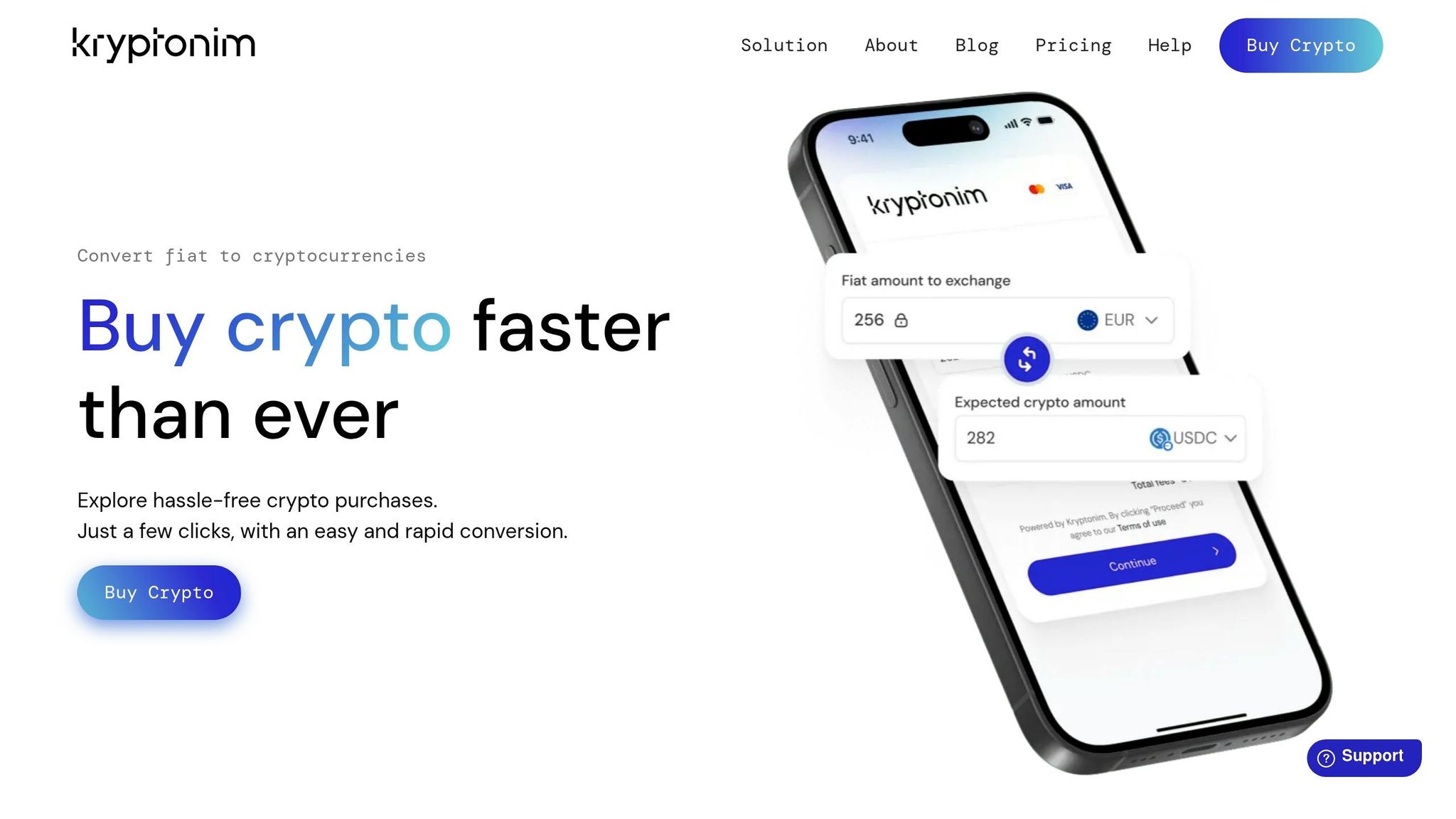
For a first purchase, Kryptonim can make things easier. Its fiat-to-crypto flow is simple, and the pricing is shown clearly, so you can review the final amount you'll get before you buy.
Once you've picked a compliant service, the next step is identity verification and adding euros.
How to Complete Verification and Add Euros to Your Account
How to Get Through Identity Checks Without Delays
After you pick a compliant service, finish verification before you add money to the account.
The cleanest way to do it is this: create the account, upload your ID, do the selfie check, and add proof of address if the platform asks for it. A passport or Finnish national ID card will usually work for the ID step. For proof of address, a recent bank statement or utility bill is often accepted.
Make sure your photo is sharp and shows all four corners of the ID. Then enter your name exactly as it appears on your official document - no nicknames, no shortened forms. The most common reason verification gets stuck is a mismatch between the account name and the name on the ID.
If the process stalls, check your email. The service may ask for a clearer photo, a source-of-funds note, or one more document.
Once approval comes through, add euros next.
How to Fund Your Purchase by Bank Transfer or Card in EUR
For Finnish buyers, the two most practical ways to fund a purchase are SEPA bank transfer and debit or credit card.
| Method | Speed | Typical Cost | Best For |
|---|---|---|---|
| SEPA Bank Transfer | 1–2 business days | €0–€1 | Larger, planned purchases |
| Debit or Credit Card | Instant | 2%–4% | Small, urgent buys |
SEPA usually costs less. A card is faster.
Wait until your euro balance shows as confirmed before you place the order. If you try to buy before the transfer clears, the payment can fail or leave you short.
Some Finnish banks may flag or block transfers to crypto providers. If that happens, contact the bank directly.
How to Buy Your First Crypto and Store It Safely
How to Place a Small First Order and Check the Final Amount
Once your euro balance is confirmed, buying crypto is pretty simple. Pick the asset you want, like Bitcoin, and enter the amount in euros you want to spend. Many platforms let you start with as little as €10–€20, which is a smart place to begin for a first purchase.
Before you confirm, look closely at the order preview. The main thing to check is the final crypto amount shown there, because that's what you'll actually get. After the order goes through, you can either keep the crypto on the platform or send it to your own wallet.
Platform Storage vs. a Personal Wallet: What to Choose First
For a first purchase, ease of use often matters more than extra control. A platform wallet is easier when you're just getting started. A personal wallet gives you full control, but it also means you're in charge of the keys.
| Wallet Type | Who Controls the Keys | Best For |
|---|---|---|
| Platform Wallet | Platform | Beginners / Frequent trading |
| Mobile Wallet | User (app-based) | Daily use / Small amounts |
| Hardware Wallet | User (physical device) | Long-term storage |
If you decide to move your crypto to a personal wallet, don't send the full amount right away. Start with a small test transfer. Then double-check the wallet address and network before sending the rest. Keep your recovery phrase offline in a secure place, and never share it with anyone.
Before buying more, take a minute to review fees, tax reporting, and basic security steps.
Costs, Security, and Common Mistakes to Review Before You Buy
Fee Breakdown, Tax Notes, and Basic Security Steps
Before you confirm your first buy, check the full cost, the tax rules, and your account security.
Your total cost can include deposit fees, trading fees, withdrawal fees, and network fees.
| Fee Type | Typical Cost | Impact |
|---|---|---|
| SEPA Deposit | €0–€1 | Cheapest way to fund your account; takes 1–2 business days |
| Card Purchase | 2%–4% | Instant, but much more expensive |
| Trading Fee / Spread | 0.1%–2% | Taken from your purchase amount; some zero-fee offers hide the cost in the spread |
| Withdrawal Fee | Varies by network | Charged when you move crypto to a personal wallet |
| Network Fee | Varies by congestion | Paid to the blockchain, not the platform |
After you buy, keep your records. That part may feel boring, but it can save you a headache later.
For taxes, you owe tax when you sell for euros, swap one crypto for another, or spend crypto. Vero taxes gains at 30% up to €30,000 and 34% above that. Starting in tax year 2026, Vero will get more automated crypto trading data from domestic and international providers. Keep receipts and other supporting documents for six years after the tax year.
For security, turn on 2FA as soon as you register and use a password you don't use anywhere else.
Common Mistakes That Lead to Failed or Costly Purchases
Most beginner mistakes are pretty simple, and they tend to cost either time or money:
- Using a service not authorized for Finland
- Choosing a card for a big purchase when SEPA would cost less
- Sending euros from an account not in your name, rushing KYC, or picking the wrong network
- Skipping records and making tax math harder later
Summary: The Safest Way to Buy Crypto in Finland
The safest path is simple: check that the service is authorized for Finland, complete KYC carefully, fund in EUR with SEPA, and place a small first order.
FAQs
How do I confirm a crypto service is legal in Finland?
Check that the crypto service is authorized by the Finnish Financial Supervisory Authority (FIN-FSA). Since June 30, 2025, crypto-asset service providers operating in Finland must be authorized under the EU’s MiCA framework.
The simplest way to verify this is to match the provider’s name with the official FIN-FSA registry. Authorized platforms must follow AML and KYC rules, which helps improve security, transparency, and consumer protection.
What should I do if my bank blocks a crypto transfer?
First, make sure your account fully meets the platform’s AML and KYC requirements. In Finland, these checks are enforced strictly.
If your bank still flags the transfer, try another supported payment method, like a debit or credit card. Just note that fees may be higher than with a bank transfer.
You can also use a platform that supports direct integration with Finnish online banking credentials.
When should I move crypto to my own wallet?
Many exchanges let you store crypto in their built-in wallets. That can be fine at first. But once you’re more comfortable and thinking about long-term storage, moving your coins to a private wallet is often the better move.
Leaving funds on an exchange can work for beginners. Still, a private wallet gives you full control over your crypto. Before you move anything, check that the wallet supports the exact asset and network you plan to use. And one rule matters more than anything else: never share your private keys.