
Long-Term Crypto Portfolio: Beginner Guide
Simple long-term crypto plan: small allocation, BTC/ETH core, dollar-cost averaging, secure self-custody, and tax-ready record keeping.
If I were starting a long-term crypto portfolio today, I’d keep it simple: set a small crypto budget, put most of it in BTC and ETH, use dollar-cost averaging, store coins in my own wallet, and track taxes from day one.
That’s the core idea of this guide. It focuses on buy-and-hold for years, not day trading. It also keeps risk in check by using a small slice of total investable assets - often 1% to 5% for cautious investors, 5% to 10% for medium risk, and 10% to 20%+ only for people who can handle deep swings.
Here’s the full game plan in plain English:
- Start with your money base first: build an emergency fund for 3 to 6 months of expenses and get high-interest debt under control.
- Set a crypto limit: choose how much of your total portfolio goes into crypto.
- Use a simple mix: keep the bulk in Bitcoin and Ethereum, with a small stablecoin reserve and only a small slice in altcoins.
- Buy on a schedule: a fixed monthly amount like $100 to $300 can help remove emotion.
- Store it safely: for long-term holding, bigger balances often belong in a hardware wallet, not on an exchange.
- Keep records: in the U.S., crypto is usually taxed as property, so sells and swaps can create taxable events.
- Avoid common mistakes: no hype buying, no oversized bets, no panic selling, and no seed phrase stored online.
A few numbers stand out. The article notes that 65% of current crypto owners say they buy for long-term investment potential. It also points out that exchange attacks made up 88% of all service losses in Q1 2025, which is a strong reason not to leave large balances sitting on a platform.
Quick Comparison
| Portfolio Style | Crypto Share of Investable Assets | Main Mix | Risk Level |
|---|---|---|---|
| Conservative | 1%–5% | Mostly BTC and ETH | Lower |
| Moderate | 5%–10% | Core assets plus some altcoins | Medium |
| Aggressive | 10%–20%+ | Broader mix, more volatility | High |
| Bucket | Typical Share | What Goes Inside |
|---|---|---|
| Core | 60%–70% | BTC, ETH, and a small stablecoin reserve |
| Growth | 20%–30% | Larger altcoins with clear use cases |
| Experimental | 5%–10% | Small, high-risk bets |
| Storage Type | Best Use | Main Trade-Off |
|---|---|---|
| Hardware wallet | Long-term holding, larger balances | More setup and device cost |
| Software wallet | Smaller balances, learning | Online exposure |
| Custodial storage | Short-term convenience | You rely on a third party |
My takeaway: the best beginner portfolio is usually the one I can stick with during a bad year. Small position sizes, steady buys, safe storage, and clean records matter more than trying to pick the next hot token.
The rest of the article fills in the details behind that plan.
sbb-itb-0796ce6
How to Choose the Right Asset Mix
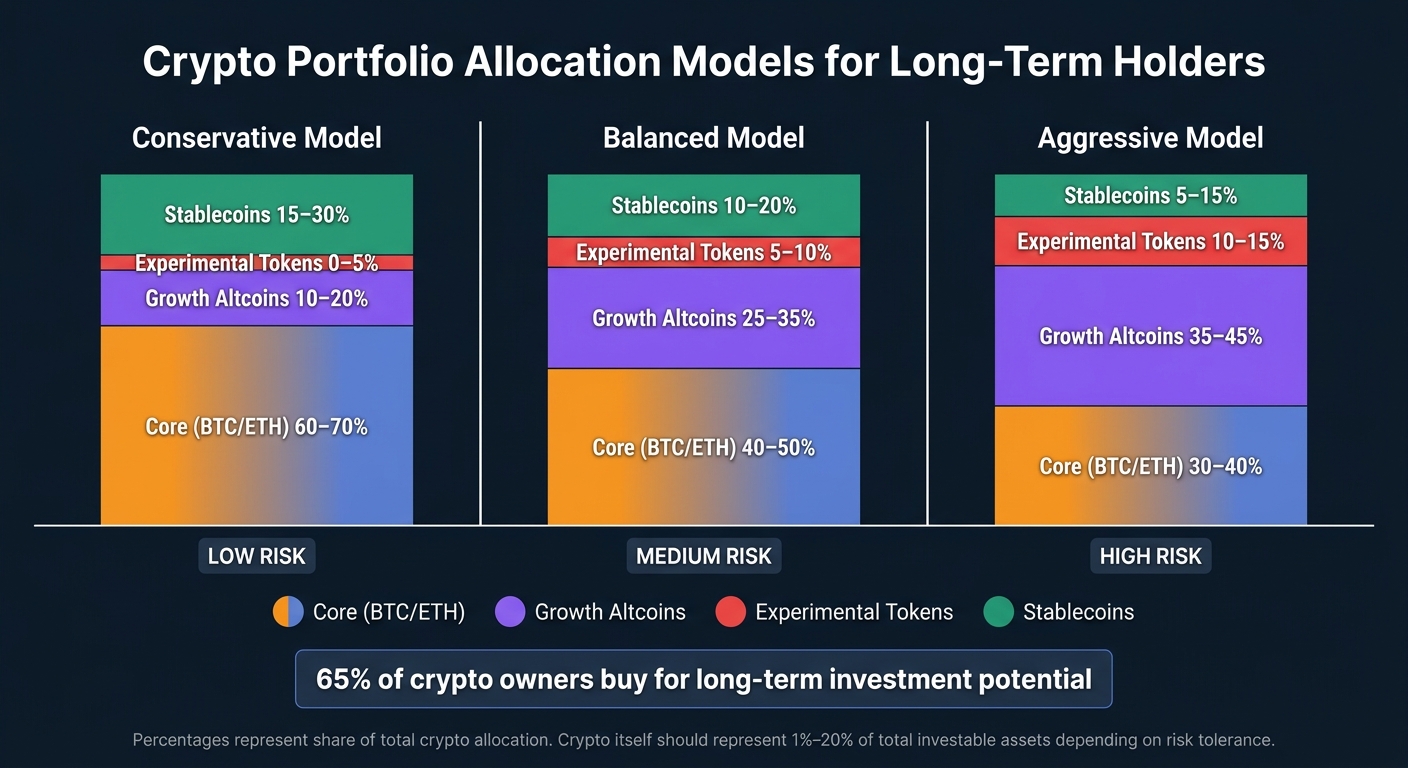
Crypto Portfolio Allocation Models: Conservative vs Balanced vs Aggressive
Now it’s time to turn that setup into actual percentages.
Build a Core With Bitcoin, Ethereum, and Stablecoin Reserves
Start with Bitcoin and Ethereum. These are the most established and liquid crypto assets, so they often make up the core of a portfolio. Bitcoin usually acts as the anchor. Ethereum gives you exposure to the smart-contract ecosystem behind DeFi, NFTs, and many other on-chain apps.
A common beginner setup puts 50% to 70% of the total crypto budget into BTC and ETH combined, with Bitcoin usually getting the bigger slice.
You can also keep a small stablecoin reserve of about 5% to 15%. That reserve gives you dry powder for future buys and can soften some price swings. But stablecoins are not risk-free. They can carry issuer risk and depeg risk, so it’s best to treat them as a liquidity tool, not a replacement for an insured bank account.
Once the core is in place, add smaller positions only if the risk lines up with your plan.
Add a Small Share of Growth and Experimental Positions
After the core is set, you can add a smaller layer of growth assets. This usually means established altcoins with real usage, such as leading layer-1 networks, layer-2 scaling projects, or infrastructure protocols. These assets tend to swing more than Bitcoin or Ethereum, but they’re usually less speculative than very early-stage tokens. A common range for this bucket is 15% to 30% of your crypto allocation.
Experimental positions should stay small - ideally 5% to 10% or less of your total crypto budget. These are high-risk bets. The upside can be big, but the chance of loss is just as real.
To avoid putting too much into one name, keep any single altcoin position to about 2% to 5% of your full crypto portfolio. For beginners, a simple place to start is:
- 2 to 3 growth assets
- 1 to 2 experimental picks
Before buying, check the project docs, tokenomics, team transparency, and audits. It also helps to keep the total number of holdings to about 5 to 10 assets, which makes tracking, monitoring, and taxes easier to handle.
Conservative, Balanced, and Aggressive Allocation Models Compared
Use these ranges as a starting point based on how much volatility you can handle.
| Model | Core (BTC/ETH) | Growth Altcoins | Experimental Tokens | Stablecoins |
|---|---|---|---|---|
| Conservative | 60–70% | 10–20% | 0–5% | 15–30% |
| Balanced | 40–50% | 25–35% | 5–10% | 10–20% |
| Aggressive | 30–40% | 35–45% | 10–15% | 5–15% |
After you set the mix, move it to secure storage.
How to Store Crypto Safely for the Long Term
Once your allocation is set, the next job is simple: protect it. If you're holding for the long haul, storage matters just as much as picking the right asset. Big gains on paper do not help much if your wallet gets drained.
Hardware, Software, and Custodial Storage: Key Differences
Each storage option comes with its own security trade-offs, cost, and learning curve. The best fit usually comes down to two things: how much you're holding and how long you plan to keep it there.
| Storage Type | Security | Ease of Use | Cost | Best For Long-Term Holding |
|---|---|---|---|---|
| Hardware wallet | Highest - private keys stay offline | Moderate setup, simple daily use | Upfront device cost | Larger balances held for months or years |
| Software wallet | Lower than cold storage - connected to the internet | Easy | Often free or low-cost | Smaller balances or learning the basics |
| Custodial storage | Depends on the provider | Easiest | Usually free | Temporary use or convenience |
A good rule of thumb: start small. Then move bigger holdings to self-custody once you're comfortable with backups and recovery. That extra step can matter a lot. Centralized exchange attacks accounted for 88% of all service losses in Q1 2025, which helps explain why many long-term holders don't leave large balances on a platform for too long.
How to Back Up Your Wallet and Build a Basic Security Routine
Your seed phrase is the master key to your wallet. If someone gets it, they can move your funds. No password reset. No help desk. It's game over.
Write the seed phrase down by hand, in the correct order, as soon as you create the wallet. Do not store it on your phone, in cloud storage, in email, or in a notes app. Keep at least two physical copies in separate secure places, like a home safe and a safe deposit box. Paper works, but metal backups hold up better against fire and water.
Once your backup is done, test everything before sending more money. Send a small test transaction first. Make sure it arrives. Then send the rest. Also, keep wallet firmware updated from official sources, check the destination address before every transfer, and make sure the network matches exactly.
With storage handled, the next move is buying on a set schedule and keeping track of each purchase.
How to Buy and Maintain Your Portfolio
Make Your First Buys With a Dollar-Cost Averaging Plan
Start small. A $25 to $50 test buy of BTC or ETH is enough to make sure everything works the way it should. Send it to your wallet, double-check the address and network, and confirm that the funds arrive where you expect.
Once that test goes through, set up the rest of your buys on a fixed schedule.
For your main plan, use the same dollar amount on the same schedule every time. That keeps things simple and takes some of the emotion out of buying. Then split each contribution based on your target mix. If your target is 50% BTC / 30% ETH / 20% stablecoins and you plan to invest $500 per month, each round of buys would look like this:
- $250 in BTC
- $150 in ETH
- $100 in stablecoins such as USDC
Use Kryptonim for a Simple Fiat-to-Crypto Purchase
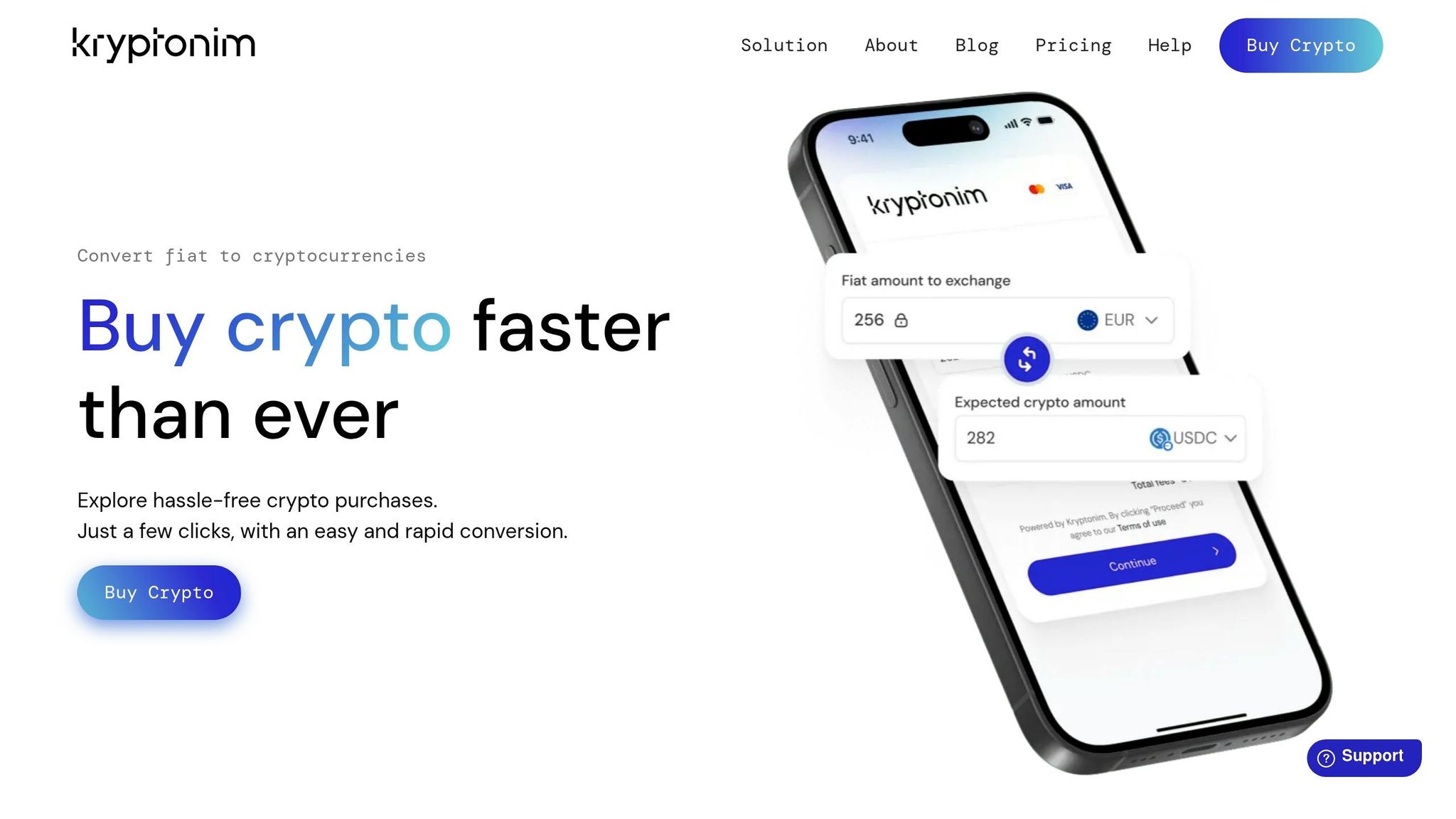
Kryptonim gives you a simple way to go from fiat to crypto, with a clear quote and no account creation.
Here's the basic flow:
- Choose your asset - Bitcoin, Ethereum, or a stablecoin that fits your allocation plan.
- Enter your USD amount - for example, $200 or $500 to match your DCA budget.
- Review the rate, fee, and final amount shown before you confirm.
- Complete the purchase using a supported payment method, such as a card or bank transfer.
- Transfer the crypto to your personal wallet after the purchase, whether that's a hardware wallet or software wallet.
After that, log the transaction in your tracker.
Rebalance on a Schedule and Keep Tax Records
Once your buys are running, the next job is keeping the portfolio close to your target mix. Review it quarterly or annually. A simple quarterly schedule would be 03/31, 06/30, 09/30, and 12/31. On each review date, check whether any asset has moved 5 to 10 percentage points away from its target.
Say Bitcoin grows to 60% in a portfolio that targets 50%. In that case, you can send more of your next DCA buys into ETH and stablecoins until the mix comes back in line. That approach helps you rebalance with new contributions instead of selling, which can cut down on taxable events.
You should also keep clean tax records from day one. Log every buy, sell, swap, spend, and wallet transfer. For each transaction, record the date in MM/DD/YYYY format, the asset, quantity, USD value at the time, fees, and transaction type.
A simple spreadsheet works well:
| Date | Type | Asset | USD Amount | Notes |
|---|---|---|---|---|
| 09/01/2026 | Buy | BTC | $250.00 | Monthly DCA |
| 09/01/2026 | Buy | ETH | $150.00 | Monthly DCA |
| 09/01/2026 | Buy | USDC | $100.00 | Monthly DCA |
| 09/01/2026 | Transfer | BTC | $250.00 | To hardware wallet |
Once your transaction count starts to grow, use crypto tax software.
Common Beginner Mistakes to Avoid
Once your portfolio is set up and stored safely, the biggest threats usually aren’t market charts. They’re emotion-driven moves and avoidable slip-ups. Most beginner losses come from bets that are too big, impulse buying and selling, and poor security habits.
Avoid Overconcentration, Hype Buying, and Panic Selling
Stick to the position limits in your written plan.
Only buy assets that match your allocation plan. If a coin isn’t in the plan, skip it. That rule sounds simple, but it saves people from a lot of bad decisions during hype cycles.
Panic selling turns a paper loss into a locked-in loss. Instead of staring at your portfolio every day, check it monthly or quarterly. That small shift can help you stay calm and keep your plan on track.
Do Not Ignore Security, Fees, or Taxes
The next set of risks is more practical: small mistakes can lead to permanent loss.
| Mistake | Why It Hurts | How to Prevent It |
|---|---|---|
| Sending to the wrong address or network | Crypto sent to the wrong destination is usually unrecoverable | Always send a small test transaction first; double-check the address and network |
| Ignoring transaction fees | Fees compound and quietly reduce long-term returns | Batch transfers, minimize unnecessary swaps, and use platforms with transparent fee structures |
| Storing seed phrases digitally | Screenshots, cloud notes, and emails are vulnerable to hacks | Never store seed phrases online or in any app |
Key Takeaways for a Simple Long-Term Hold Strategy
The simplest long-term crypto plan is often the one people struggle to follow: stick to your allocation, buy on schedule, store your assets safely, and don’t make reactive decisions.
FAQs
How much crypto should I own?
How much crypto you should own comes down to three things: your risk tolerance, your investing goals, and how steady your finances are.
Start with the basics first. Make sure you have an emergency fund that covers three to six months of expenses and that your must-pay bills and other core obligations are handled. Then, and only then, put money into crypto. A simple rule here: only invest money you can afford to lose.
For most people, crypto makes up a small slice of a portfolio, often around 1% to 10%. If you're new to it, a common starting range is 1% to 5%.
When should I use a hardware wallet?
Use a hardware wallet if you plan to hold cryptocurrency for the long haul. It keeps your private keys offline, which helps shield your funds from online threats like hacking and malware.
A common setup is to keep 90% of your funds in cold storage and 10% in a software wallet for day-to-day transactions. That gives you a solid mix of safety and convenience. A hardware wallet also lets you check transaction details on the device’s screen before you approve anything, which adds another layer of protection.
How often should I rebalance?
It depends on your investment strategy, risk tolerance, and market conditions.
Many investors rebalance quarterly. That schedule can help you stay close to your target allocation without piling up transaction costs or setting off extra capital gains taxes.
Another route is a drift-based approach. With this method, you rebalance only when an asset moves 5% to 10% away from your target.
Whatever approach you pick, stick with it and avoid overtrading.