
5 Steps to Set Crypto Investment Goals
Five-step framework to set clear crypto investment goals: assess finances, define objectives, set SMART targets, pick DCA or lump-sum, and review.

Jumping into crypto without a plan? Here's why that's risky: The market is volatile, and emotional decisions like panic selling or FOMO can derail your investments. Setting clear goals helps you stay focused and make smarter choices. Here's a quick breakdown of the 5 steps to create a solid crypto investment strategy:
- Evaluate Your Finances: Know how much you can afford to risk without jeopardizing essentials or emergency funds.
- Define Your Objectives: Are you diversifying, hedging against inflation, or building long-term wealth? Be clear on your purpose.
- Set Measurable Targets: Use the SMART framework to create specific, trackable goals (e.g., accumulate 0.01 BTC or allocate 5% of your portfolio).
- Choose an Entry Strategy: Decide between dollar-cost averaging (DCA) or lump-sum investing to build your portfolio.
- Monitor and Adjust: Regularly review your progress, rebalance your portfolio, and adapt to personal or market changes.

5 Steps to Set Crypto Investment Goals - Complete Strategy Framework
Step 1: Assess Your Financial Situation and Risk Tolerance
Before diving into cryptocurrency investments, take a moment to evaluate your financial standing. This isn't about being overly cautious - it's about being practical. Cryptocurrency is known for its unpredictable price swings, and there's always a chance you could lose your entire investment. Knowing what you can afford to risk is a critical first step.
Evaluate Your Current Finances
Begin by figuring out your disposable income - the money left after paying for essentials like housing, groceries, utilities, insurance, and debt obligations. This gives you a clear picture of how much you can reasonably set aside for investments.
If you have high-interest credit card debt, focus on paying that off before considering crypto investments. It's also wise to build an emergency fund - a financial safety net for unexpected expenses like medical bills or job loss. This prevents you from being forced to sell your crypto holdings during a market dip, which could lock in losses.
When incorporating cryptocurrency into your investment strategy, aim to make it a small part of your overall portfolio. This diversification helps you balance potential gains with risks you can handle.
Understand Your Risk Tolerance
Once you've assessed your finances, think about how much risk you can handle. Risk tolerance isn't just about numbers - it’s also about how you react emotionally to market fluctuations. For instance, if the market drops by 30% in a single week, can you stay calm? Or would you feel compelled to sell in a panic?
"If losing your entire crypto investment would affect your ability to pay bills, handle emergencies, or fund long-term goals, you've invested too much." - CoinShares
Your age and life stage are also key factors. Younger investors often have more time to recover from losses, whereas those nearing retirement should consider a more cautious approach. According to Fidelity, by age 30, you should aim to have saved an amount equal to your annual pre-retirement income. By age 40, that target rises to 3x your income, and by age 67, it’s 10x. If you're not meeting these milestones, speculative investments like cryptocurrency may not be the best focus.
Think about this: How much of your portfolio can you risk without losing sleep? Would a total loss derail your financial goals? Answering these questions can help you set clear boundaries and avoid making impulsive decisions during market turbulence.
Step 2: Define Your Investment Objectives and Timeframe
Now that you've assessed your finances and determined your risk tolerance, it's time to clarify what you want to achieve with your cryptocurrency investments.
Identify Your Purpose for Investing
Understanding why you're investing in cryptocurrency is essential. Without a clear purpose, you might find yourself swayed by market trends or making emotional decisions.
Here are some common reasons people invest in crypto:
-
Portfolio Diversification
Adding cryptocurrency to your portfolio can help spread risk. For example, a study showed that allocating 4% to Bitcoin increased annualized returns from 6.9% to 14.4% while reducing correlation with stocks and bonds by 8%. Many financial advisors recommend keeping crypto allocations between 4% and 7.5% of your total portfolio. -
Hedging Against Inflation
Bitcoin is often referred to as "digital gold" because it’s seen as a way to preserve purchasing power, especially during periods of monetary expansion. -
Long-Term Wealth Building
Some investors focus on capital appreciation by holding high-conviction assets like Bitcoin and Ethereum. -
Passive Income
You can also generate income through strategies like staking, which allows you to earn rewards.
"A defined purpose, whether it's protection, growth, or diversification, acts as your compass in volatile waters." - CoinShares
Ask yourself: Are you looking to hedge against inflation? Do you want an asset uncorrelated with traditional markets? Or are you drawn to the technology itself? Being clear about your motivations can help you stay focused and avoid acting on hype when the market gets unpredictable.
Once you’ve defined your purpose, the next step is to determine a timeframe that aligns with your goals.
Set a Realistic Timeframe
The timeline for your investment should match your objectives - whether you're aiming for growth, income, or preservation.
Here’s a breakdown of typical timeframes for crypto investments:
-
Short-term (0–6 months)
This strategy often involves taking advantage of momentum or price fluctuations. It requires active monitoring and quick decision-making. -
Mid-term (1–5 years)
Investors in this category may follow broader trends, such as Bitcoin's halving cycle. Historically, market peaks have occurred in November 2013, December 2017, and November 2021. -
Long-term (5+ years)
For those focused on protecting wealth or guarding against monetary debasement, a long-term approach is key.
As the market evolves, some analysts predict the traditional four-year cycle may shift by 2026. This change is attributed to more consistent institutional buying, which contrasts with the retail-driven momentum of the past. By late 2025, at least 172 publicly traded companies were holding Bitcoin, accounting for roughly 5% of the circulating supply.
"If you're hoping to capture gains in the short or medium term (4 to 5 years or less), there's a chance you may be late... However, on a very long-term time horizon, I personally do not think you can ever be fundamentally late to bitcoin if you are thinking of it as a store of value." - Chris Kuiper, Vice President of Research, Fidelity Digital Assets
For inflation hedging, consider a 10-year horizon. For growth-focused investments, a 3-year timeframe may be more appropriate.
Step 3: Set Specific and Measurable Targets
Now that you’ve nailed down your purpose and timeframe, it’s time to turn those plans into clear, actionable goals. Vague ambitions won’t cut it, especially when markets get unpredictable. That’s where the SMART framework comes in - your goals should be Specific, Measurable, Achievable, Relevant, and Time-based. Research even shows that writing down and sharing well-defined goals significantly boosts your chances of achieving them.
Choose Unit-Based or Percentage-Based Goals
When setting crypto targets, you’ve got two main approaches to consider: unit-based or percentage-based. Each serves a different purpose depending on your strategy.
Unit-based goals are all about accumulating a specific amount of a cryptocurrency. For instance, you might aim to own 0.01 BTC or 1 ETH. Here, the focus isn’t on timing the market or weekly profits - it’s about steadily growing your holdings over time. This approach often appeals to those who value Bitcoin’s fixed supply and its scarcity.
Percentage-based goals, on the other hand, focus on how much crypto makes up your overall portfolio. For example, you might decide to allocate 5% of your total investments to cryptocurrency. This strategy emphasizes diversification and managing risk. Research suggests that keeping crypto between 4% and 7.5% of your portfolio can be effective. In fact, data from 2015 to 2024 indicates that a Bitcoin allocation of roughly 8.1% to 8.4% works well when considering risk-adjusted returns.
| Goal Type | Focus | Example Target | Best For |
|---|---|---|---|
| Unit-Based | Quantity of asset owned | Accumulate 0.1 BTC or 2 ETH | Long-term investors prioritizing scarcity |
| Percentage-Based | Portfolio weight | Maintain crypto at 5% | Investors aiming for diversification |
| Contribution-Based | Action-oriented approach | Invest $200 monthly (DCA) | Beginners managing volatility with consistency |
Track Your Progress with Measurable Goals
Once you’ve picked your target type, get as precise as possible. Don’t just aim to “buy some Bitcoin.” Instead, set a clear goal, like: “Accumulate 0.015 BTC by December 31, 2026, through monthly contributions of $100.” Check in regularly - whether monthly, quarterly, or annually - to review your progress. Use these check-ins to make small, thoughtful adjustments rather than reacting emotionally to market swings.
"We all benefit from having structure and a framework to work toward our goals. The best way to start that process is to dedicate time outlining what's most important to you and why."
- Sarah Darr, Head of Financial Planning, U.S. Bank Wealth Management
Write your goals down, including the timeframe and how you’ll measure success. This simple step keeps you grounded, helps you avoid impulsive decisions during market volatility, and holds you accountable to your original plan.
With your specific targets locked in, the next move is figuring out the best entry strategy to start building your crypto portfolio.
sbb-itb-0796ce6
Step 4: Choose an Entry and Accumulation Strategy
Deciding how to build your crypto portfolio is crucial - stick to a methodical plan to avoid making decisions based on emotions.
Dollar-Cost Averaging vs. Lump-Sum Investing
When it comes to entering the crypto market, two popular strategies stand out: dollar-cost averaging (DCA) and lump-sum investing. With DCA, you invest a fixed amount of money at regular intervals - like $100 every week or $200 monthly - no matter what the current price of the asset is. On the other hand, lump-sum investing means putting all your available funds into the market in one go.
DCA works particularly well in markets prone to price swings. By investing the same amount consistently, you end up buying more when prices are lower and less when prices are higher. This approach reduces your average cost over time and removes the stress of trying to time the market perfectly. For example, historical data shows that investing $100 weekly in Bitcoin starting at its December 2017 peak would have delivered a 299% return by January 2021. Compare that to a lump-sum investment made at the same peak, which would have returned just 113%.
DCA is especially suited for beginners navigating the ups and downs of crypto markets. As Josef Tetek, a Bitcoin analyst at Trezor, explains:
"Many Bitcoiners have found over the years that building long-term Bitcoin savings through DCA works best for them".
Once you’ve decided on your entry strategy, the next step is to execute it securely.
Use a Secure Platform Like Kryptonim
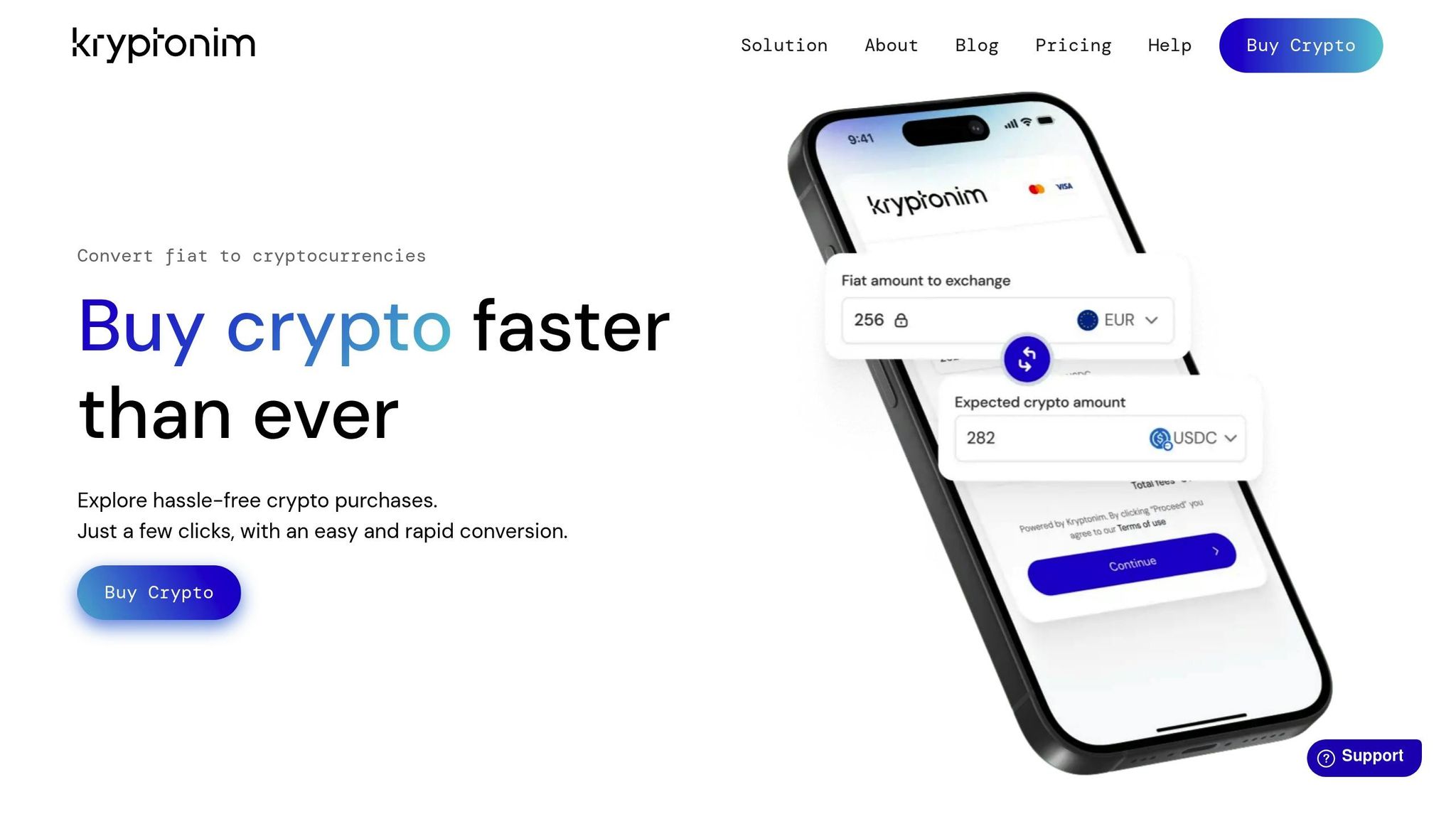
After finalizing your strategy, make sure to carry out your crypto purchases on a trusted platform. Kryptonim, a secure and EU-regulated exchange, simplifies the process of converting fiat into crypto. It even supports recurring purchases, making it easier to stick to your DCA plan. The setup is straightforward - complete a quick verification process, and you’re ready to start buying.
Kryptonim’s pricing is transparent, charging a 2% fee for EU users and 4% for others, with no hidden costs. The platform also supports local payment methods and offers competitive exchange rates, allowing you to focus on growing your crypto portfolio securely.
Step 5: Plan for Monitoring, Review, and Adjustments
Keeping track of your investments and tweaking your strategy as needed ensures your crypto portfolio stays in sync with your financial goals. Regular reviews are essential to navigate the ever-changing crypto market effectively.
Set Milestones and Check-In Schedules
Develop a review schedule that aligns with your investment timeline. Monthly check-ins are ideal for ensuring you're sticking to your dollar-cost averaging plan and have sufficient funds for future purchases. On a quarterly basis, take a closer look at performance metrics and evaluate project updates. In addition to these regular reviews, schedule extra check-ins when you hit key milestones - like accumulating 0.1 BTC - or experience major life events, such as a job loss or unexpected medical expenses.
An annual portfolio rebalance is also crucial to maintain your target allocation. Some guidelines suggest keeping crypto investments between 4% and 7.5% of your total investable assets.
To enhance your review process, consider keeping an investment journal. Documenting your adjustments and insights can help you stay disciplined. Research shows that writing down your goals and sharing updates with someone you trust can significantly increase your chances of success - over 70%, compared to just 35% when goals are kept private. These consistent reviews and records allow you to adapt to changing conditions while sticking to the disciplined approach outlined in earlier steps.
Adjust Goals Based on Market Changes
As the crypto market shifts, your strategy should evolve too. Bitcoin's four-year halving cycle, for instance, can influence your entry and exit points for mid-term goals. Regulatory changes, such as new laws impacting digital assets, may also alter the risk profile of your portfolio and require you to reassess your allocations.
Personal circumstances play a role as well. Changes in your financial situation, like a reduced risk tolerance or an urgent need for liquidity, should trigger a review. Avoid putting at risk funds you need for essentials like bills or emergencies. Major life events - caring for aging parents, managing high-interest debt, or unexpected medical costs - often call for portfolio adjustments to ensure you have access to more liquid assets.
Charley Brady, Vice President of Investor Relations at BitFuFu, emphasizes the importance of staying disciplined:
"Set price alerts at levels that matter, stick to your plan, and don't let volatility shake you. Emotional decisions are usually bad decisions in this space."
When making changes, aim for gradual, incremental adjustments rather than sweeping overhauls. Define profit-taking and loss-cut thresholds ahead of time to minimize the risk of impulsive reactions. This measured approach helps you navigate the unpredictable nature of the crypto market with confidence.
Conclusion
Having clear goals in crypto investing transforms guesswork into a well-thought-out strategy. By evaluating your financial situation, setting specific objectives, creating measurable targets, sticking to a disciplined accumulation plan, and regularly reviewing your progress, you establish a roadmap that shields you from impulsive decisions and market hype.
This kind of structure is your best defense against the market's inevitable ups and downs. Volatility is part of the crypto world, but a solid plan helps you stay grounded. As CoinCodex explains, "A solid plan helps you minimize risks, avoid emotional decisions, and focus on building your portfolio the smart way." Whether you're using Dollar-Cost Averaging to steadily grow your holdings or setting rebalancing points to keep your portfolio in check, discipline always outshines trying to time the market.
Choosing a secure, EU-regulated platform like Kryptonim adds an extra layer of protection to your crypto journey. With features like transparent pricing, no account setup, and competitive rates, Kryptonim makes it easier to execute your investment plan without unnecessary hassle.
Keep your crypto investments tied to your original purpose - whether that's hedging against inflation, seeking growth, or diversifying your portfolio. As CoinShares wisely notes, "In the end, the market will have its cycles, but with clear objectives and a structured approach, you'll be positioned to participate in crypto's potential on your own terms - driven by your plan, not the market's emotions."
Stick to these five steps, stay disciplined, and make adjustments when needed. By doing so, you’ll be better equipped to navigate the crypto market with clarity and confidence.
FAQs
How can I assess my risk tolerance before investing in cryptocurrency?
Determining how much risk you can handle is key when diving into crypto investments. Start by reflecting on your reaction to market swings. For instance, if your portfolio took a 30% hit in just a week, would you stay calm and hold on, or would you feel compelled to sell? Understanding your emotional response to volatility can help you assess your comfort level.
Next, take a close look at your finances. Never invest money you can't afford to lose. Your essential expenses, emergency fund, and long-term financial goals should remain untouched. Many beginners find it reasonable to allocate just 1%–5% of their total investment portfolio to crypto, striking a balance between opportunity and caution.
Lastly, consider your timeline. If you're thinking long-term - say, five years or more - you’ll likely find it easier to ride out the inevitable ups and downs of the market. Make it a habit to revisit your risk tolerance regularly and tweak your strategy to ensure it stays in sync with your current financial circumstances and goals.
What is the SMART method for setting cryptocurrency investment goals?
The SMART method is a straightforward way to set clear and manageable goals for cryptocurrency investments. It focuses on making your objectives Specific, Measurable, Achievable, Realistic, and Time-bound.
For instance, instead of vaguely stating, "I want to invest in crypto", a SMART goal would look like this: "I will invest $1,000 in Bitcoin over the next six months by contributing $250 each month." This kind of goal-setting adds structure and makes tracking progress much simpler, helping you stay focused and consistent.
What is dollar-cost averaging, and why is it a good strategy for crypto investing?
Dollar-cost averaging (DCA) is a straightforward investment strategy where you commit a fixed amount of money at regular intervals, no matter the current price of the asset. The idea is to spread your purchases over time, which helps soften the effects of market ups and downs.
When it comes to cryptocurrency, DCA can be a game-changer. Instead of risking a lump-sum investment during a price surge, this method allows you to consistently invest, potentially lowering your average purchase price. Plus, it takes the pressure off trying to predict market movements. For beginners or anyone looking to grow their portfolio steadily, DCA offers a sensible way to manage risk while staying in the game.