
Dollar-Cost Averaging in Crypto: Beginner Guide
DCA simplifies crypto investing: set small recurring BTC/ETH buys, control fees, and keep crypto a small, long-term allocation.

If I’m new to crypto, DCA is one of the easiest ways to start without trying to time every price move.
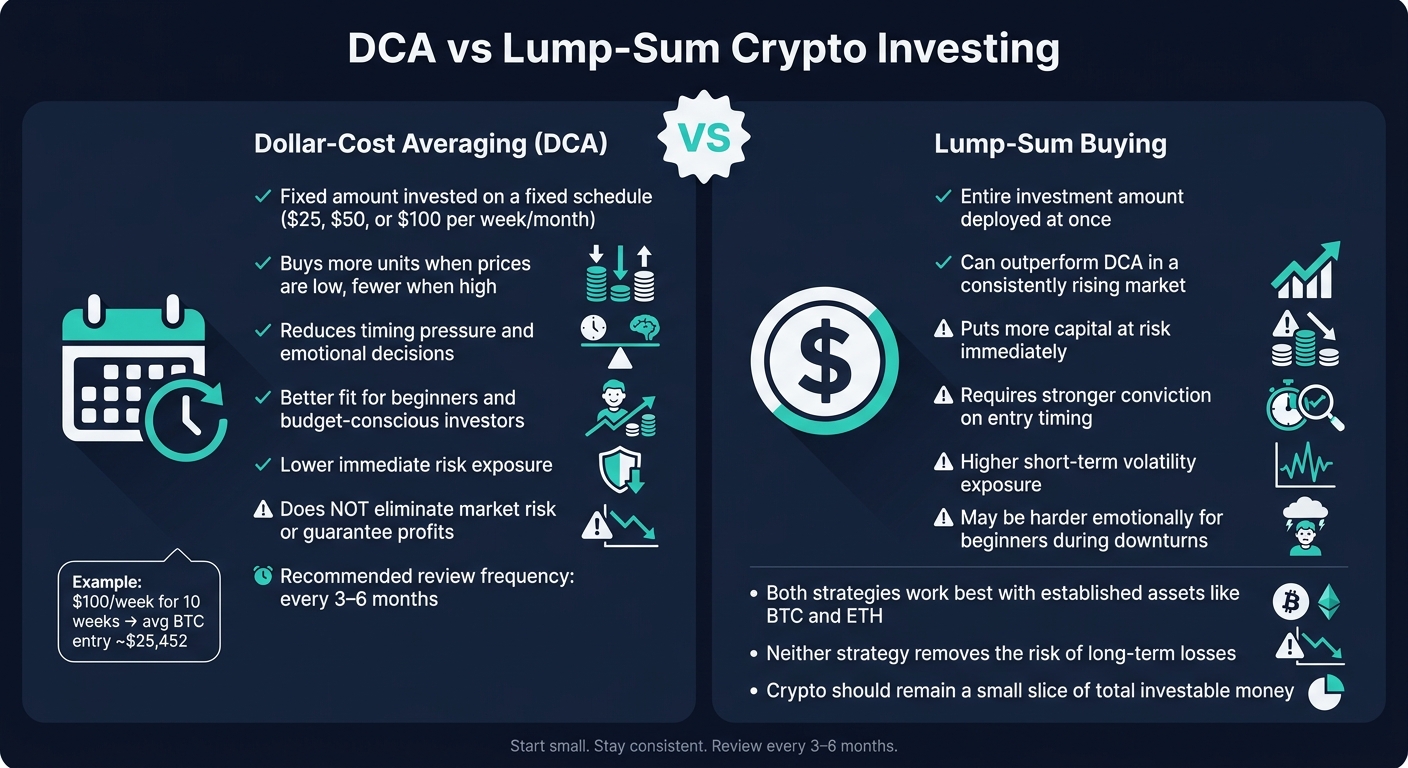
I put in a fixed amount like $25, $50, or $100 on a set schedule, such as weekly or monthly. That means I buy more when prices drop and less when prices go up. In the example from this article, investing $100 per week for 10 weeks led to an average Bitcoin entry price of about $25,452.
Here’s the short version:
- DCA means fixed buys on a fixed schedule
- It can lower timing stress and cut down on panic decisions
- It does not stop losses in a long downturn
- Fees matter, especially on small recurring buys
- BTC and ETH are often the first picks for beginners
- Crypto should usually be only a small part of my total investments
- A check-in every 3 to 6 months is often enough
DCA is not about beating the market every time. It’s about building a simple habit I can stick with, while keeping risk in check.
Why Beginners Use DCA in Volatile Crypto Markets
Crypto prices can swing 50% or more. If you're new and you buy right before a drop, that kind of move can hit hard. Panic kicks in fast. DCA gives beginners a simple rule to follow when the market gets wild. And that matters most when every dip feels like a crisis and every rally feels like a last chance to buy.
For people investing spare cash from each paycheck, DCA also makes recurring buys easier. You don't need to watch prices all day or guess the "right" moment.
How DCA Reduces Timing Pressure and Emotional Decisions
FOMO can push people to buy when prices are running up. Fear can push them to sell when prices fall. DCA cuts through both. Instead of making a fresh decision every time the market moves, you follow a fixed schedule. If your next buy is already set, there's nothing to debate in the heat of the moment.
That mindset shift matters. You stop reacting and start accumulating. For beginners, that's a big deal. Checking your portfolio monthly instead of daily can also help keep your attention on the long term, rather than every short-term price move.
What DCA Can and Cannot Protect You From
DCA helps with behavior and entry timing, but it is not a shield against losses. It won't save you if an asset keeps losing value over time. It won't stop your portfolio from falling in a long downturn. And it doesn't come with a built-in plan for taking profits or setting stop-losses.
Put simply, DCA is a buying method, not a safety net. It works best with assets that have long-term staying power. It does not make a risky token less risky. For beginners, that usually makes DCA a better fit for established assets like Bitcoin or Ethereum than for unproven tokens.
From there, the next step is choosing a simple amount and schedule you can stick with.
sbb-itb-0796ce6
How to Set Up a Simple Crypto DCA Plan
DCA doesn't get rid of risk. It just gives you a steady way to buy. So keep the setup simple: decide what to buy, how much to put in, and when to buy.
Pick Your Asset, Amount, and Buy Schedule
Start with one or two established assets. For most people, that means BTC and ETH. Both can be bought in fractions, and many platforms let you start with as little as $1.
For the amount, use a number that fits your actual budget, not your best-case budget. Common starting points are $25, $50, or $100 per interval. If you're keeping the plan small, sticking with BTC and ETH can make things easier to manage. And yes, the old rule still applies: only invest money you can afford to lose.
Your buy schedule should line up with your paycheck. If you're paid biweekly on Fridays, set your buy for every other Friday. If your direct deposit lands on the 1st of each month, schedule your crypto buy for that same day. That way, the plan can run on autopilot instead of relying on willpower.
Once you've set the schedule, the next thing to watch is fees.
Track Fees and Log Your Recurring Buys
Recurring-buy fees deserve a close look, especially if you're making small purchases often. A fee that seems minor can take a bigger bite out of a $25 buy than most people expect.
It also helps to log every purchase in a spreadsheet. Track the date, amount, price, fees, and units held. Then check that log once a month to make sure the plan is still doing what you want it to do.
Choosing a Platform for Recurring Buys
A platform with recurring-buy support makes the whole process easier to stick with. Look for clear pricing, recurring-buy tools, and support for the assets you want to buy.
Kryptonim is an EU-regulated platform with transparent pricing and no account creation required for fiat-to-crypto purchases. Confirm that fees are shown clearly before you complete each transaction. That keeps fee tracking accurate.
Where DCA Fits in a Simple Investment Plan
DCA vs Lump-Sum Crypto Investing: Key Differences for Beginners
Once your recurring buys are in place, the next step is simple: decide how much of your portfolio should go into crypto. Before you put any money there, cover your day-to-day expenses and set aside an emergency fund. What remains is the amount you can put to work without stretching yourself too thin.
Set a Small Crypto Allocation and Review It Regularly
After you know how much you can invest, choose what portion goes to crypto. For most beginners, crypto should be a small slice of investable money, not the entire portfolio. It also makes sense to keep most of that crypto share in BTC and ETH, with only a smaller portion in other established coins.
You don't need to check this every day. In fact, that's often a fast track to stress. A simple approach is to review your allocation every 3 to 6 months and rebalance if it drifts from your target mix. That way, your risk level stays more consistent without turning investing into a full-time habit.
From there, the main choice is whether DCA or lump-sum buying is a better match for your risk tolerance.
DCA takes some of the pressure out of timing and tends to fit beginners well. Lump-sum buying can do better in a rising market, but it also puts more money at risk right away.
DCA can help with discipline and budgeting, but it may trail lump-sum buying and doesn't shield you from long-term losses.
Key Takeaways for Starting Crypto DCA
Once your schedule and budget are set, keep these rules in mind.
DCA is simple. It turns investing into a fixed habit instead of a guessing game about timing.
Start with an amount you can stick with, even if it’s small. That matters because DCA only works if you can keep buying during dips, not just when prices feel safe.
DCA can lower the pressure to time the market, but it does not remove market risk or promise profits.
Keep crypto as a small part of your investable money, and review that allocation every 3 to 6 months.
FAQs
Is DCA better than buying all at once?
Not always. Whether DCA is better than a lump-sum investment comes down to your goals and how much risk you're comfortable taking.
At its core, DCA is a risk-mitigation strategy. You invest a set amount on a regular schedule instead of putting all your money in at once.
That approach can help in a few ways:
- It keeps you from trying to time the market
- It lowers the chance of buying right at a short-term peak
- It adds discipline to the process and can take some emotion out of investing
How long should I keep a crypto DCA plan?
There’s no set end date for a dollar-cost averaging plan. How long you stick with it comes down to your financial goals and how much risk you’re comfortable taking on.
In most cases, DCA works best over the long haul, often five years or more. You can keep it going as long as it still lines up with your investment plan. It also helps to check in on it from time to time. If your risk tolerance shifts or you hit a major money goal, it may make sense to adjust the plan or stop.
What fees should I watch for with recurring buys?
Watch for transaction and network fees. They can pile up fast if you buy often.
Some platforms charge a processing fee for each transaction. On top of that, network fees can change based on blockchain activity, so the cost isn't always the same from one purchase to the next.
To keep costs in check, avoid making lots of small purchases if they push your total fees higher. And before you confirm anything, check the final summary screen to see every cost that applies.