
5 Features Every Crypto Wallet Needs
Learn the five essential crypto wallet features: strong security, easy UX, multi-asset support, reliable backups, and platform integrations.

Your cryptocurrency wallet is your gateway to managing digital assets securely and efficiently. The right wallet should prioritize safety, ease of use, and versatility. Here are five key features every crypto wallet should have:
- Strong Security: Encryption, two-factor authentication (2FA), biometric signing, and Secure Element (SE) chips protect your funds. Always securely store your recovery phrase offline.
- User-Friendly Interface: Simplified layouts, QR code scanning, and quick onboarding (like biometric passkeys) make managing crypto less daunting and prevent errors.
- Multi-Cryptocurrency Support: Manage various assets (Bitcoin, Ethereum, stablecoins, and more) in one place, with built-in swaps for convenience.
- Backup & Recovery Tools: Seed phrases, Shamir Backup, and durable physical storage options (like titanium) ensure access to your funds even if devices are lost.
- Platform Integration: Seamless connections to exchanges, DeFi platforms, and fiat-to-crypto services simplify transactions and portfolio management.
Choosing a wallet with these features ensures your digital assets remain secure and accessible while simplifying your crypto experience.

5 Essential Features Every Crypto Wallet Must Have
1. Strong Security Measures
Encryption is at the core of wallet security. Leading wallets rely on AES encryption and ECDSA for generating key pairs - methods trusted by institutions like the U.S. National Security Agency. For perspective, a 256-bit private key has a 1 in 10^77 chance of being guessed, making brute-force attacks virtually impossible with today’s technology.
Two-factor authentication (2FA) provides an essential second layer of defense, ensuring your wallet stays secure even if your password is compromised. The most advanced wallets now include biometric transaction signing, requiring a fingerprint or face scan for every outgoing transaction. This prevents unauthorized transfers, even on compromised devices. For better protection, use authenticator apps or hardware keys like Yubikey instead of SMS-based 2FA, which can be exploited through SIM-swapping attacks. Hardware wallets offer additional security for physical assets.
Modern hardware wallets with Secure Element (SE) chips (certified EAL6+ or higher) isolate cryptographic functions, safeguarding against both digital breaches and physical tampering. These wallets are available at various price points, catering to different budgets.
"Cryptography plays an essential role in not just securing cryptocurrency networks from corruption, but also providing an irrefutable means of proving ownership of funds." – Kraken Learn Team
Keep your recovery phrase (12 to 24 words) stored securely and offline, ideally written on paper or engraved on metal for durability. Generated using the BIP-39 protocol, this phrase serves as the ultimate backup, allowing you to restore your wallet if your device is lost or damaged.
2. Easy-to-Use Interface
A well-designed, user-friendly interface makes managing crypto feel effortless. Modern wallets are ditching the overly technical jargon and adopting layouts that resemble everyday banking apps. They simplify complex blockchain processes into plain, understandable terms. For instance, instead of displaying confusing hexadecimal code, users might see something straightforward like "Swap 1 ETH for 2,000 USDC." This kind of clarity not only boosts user confidence but also lays the groundwork for features that help prevent errors.
QR code scanning has become a game-changer for reducing mistakes. Instead of manually entering long, error-prone wallet addresses - where even one typo can result in lost funds - users can simply scan a QR code to complete their transactions. Many leading wallets have embraced this feature to make crypto transfers safer and easier.
The onboarding process has also seen major improvements. In the past, asking users to jot down a 24-word recovery phrase often scared off newcomers and caused avoidable losses. Now, modern wallets streamline setup with biometric passkeys like FaceID or fingerprint recognition, making it possible to get started in under a minute.
"A smooth onboarding flow can turn a curious visitor into a confident user in under a minute. A bad one does the opposite: people drop off at sign-up." – Cryptowisser
Simplicity doesn’t mean sacrificing power for experienced users. Advanced wallets now offer features like action batching, which combines multiple steps - such as approving and swapping - into a single click. At the same time, they include customizable settings for users who want more control. The concept of progressive disclosure ensures that beginners see only the essentials, while advanced tools are tucked away under clearly labeled menus. Platforms like Kryptonim excel at this, offering an interface that caters to both first-time users and seasoned traders - no account creation required.
3. Multi-Cryptocurrency Support
Imagine managing all your digital assets from one wallet. A wallet that supports multiple cryptocurrencies allows you to store Bitcoin, Ethereum, stablecoins, and DeFi tokens in one place - no more jumping between platforms to check balances or perform swaps.
The numbers highlight how crucial this feature has become. For instance, Trust Wallet supports over 70 blockchains and approximately 4.5 million assets, while MetaMask handles more than 500,000 tokens across Ethereum and EVM-compatible networks. Even hardware wallets, like the Ledger Nano X, can manage over 5,500 coins and tokens. With this broad support, you can diversify your portfolio without compromising security by juggling multiple wallets or private keys.
"A multi‑crypto wallet solves these problems. It is a single wallet that lets you store, manage, and swap multiple cryptocurrencies across several blockchains." – Amit Chahar, Crypto Founder
Convenience doesn’t stop at asset storage. Built-in swap features make managing your portfolio faster and cheaper. Instead of transferring funds to exchanges - paying withdrawal fees and waiting for confirmations - you can swap tokens directly within your wallet. This unified approach also simplifies portfolio tracking. For those eager to buy crypto quickly, platforms like Kryptonim offer fast fiat-to-crypto transactions without requiring an account, making it easier to fund your wallet and start diversifying right away.
Another key factor is token standard compatibility. When selecting a wallet, ensure it supports popular standards like ERC-20 (Ethereum), BEP-20 (BNB Chain), and SPL (Solana). For larger portfolios, consider using a software wallet for daily transactions and a hardware wallet for secure, long-term storage.
sbb-itb-0796ce6
4. Backup and Recovery Tools
Strong encryption and two-factor authentication (2FA) are essential, but they’re not enough on their own. Backup and recovery tools play a crucial role in ensuring you don’t lose access to your funds permanently. Losing access to your wallet without a backup essentially means losing your cryptocurrency forever. That’s where the seed phrase comes in - a 12-to-24-word sequence that acts as your safety net. This phrase can regenerate all your private keys on a new device if your current one is lost or compromised.
"If you don't control your private keys, you don't actually own your cryptocurrency." – Alex Brooks, Crypto and Web3 Editor
However, a written seed phrase has its risks. If someone gains access to it, they can control your funds. To address this, advanced wallets now offer solutions like Shamir Backup. This feature splits your recovery phrase into multiple unique pieces. For instance, the Trezor Safe 5 (priced at about $169) allows you to configure settings like requiring 2 out of 3 shards to recover your wallet. This way, even if one shard is compromised, your funds remain protected. For those who prefer not to manage physical backups, services like Ledger Recover (available on the Ledger Nano X for approximately $149) offer an alternative. This service splits your seed into three encrypted fragments, each stored securely by separate custodians, using an identity-based recovery system.
Physical safety is just as important as digital security. Paper backups can be easily damaged, but titanium or stainless steel backups are far more durable, capable of withstanding extreme conditions - up to 3,000°F. For added protection, especially if you’re holding significant assets, consider storing duplicate backups in separate locations. For example, keep one in a home safe and another in a bank safety deposit box.
Finally, test your recovery process with a small amount before committing significant funds to your wallet. And remember, never store seed phrases digitally - no screenshots, cloud storage, or emails. These are prime targets for hackers and could jeopardize your funds.
5. Integration with Platforms like Kryptonim
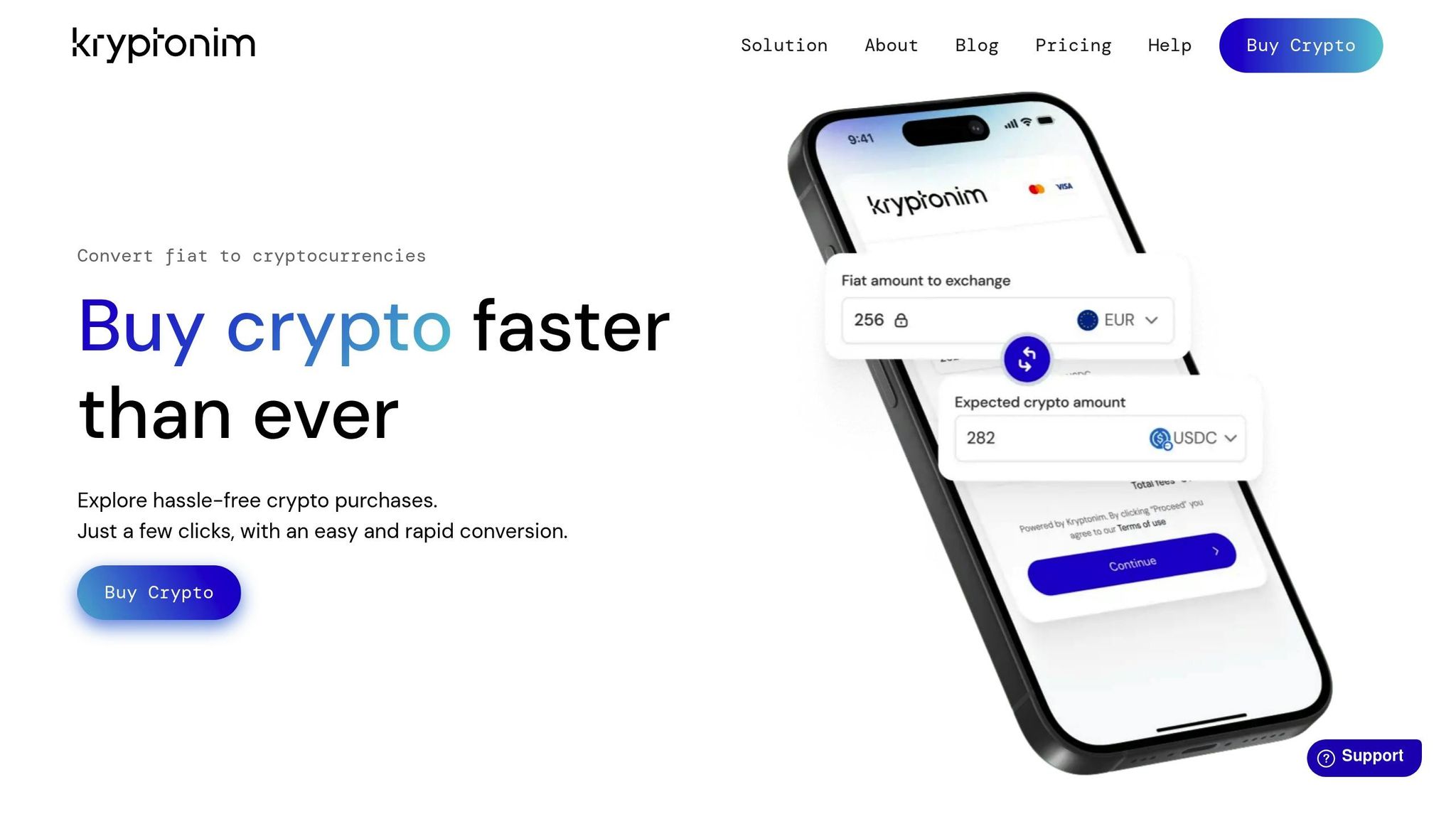
Your wallet shouldn't operate in isolation. The best cryptocurrency wallets act as bridges to the broader ecosystem, making it easier to connect with platforms and exchanges. When your wallet works seamlessly with services like Kryptonim, you can transfer funds, swap assets, and complete transactions without the hassle of switching between multiple apps or manually copying wallet addresses. This streamlined approach minimizes errors and builds on the secure, user-friendly experience mentioned earlier.
"Modern wallets are more than storage solutions - they're gateways to the decentralized ecosystem." – Arun Kumar Balusamy, Blockchain & Web3 Infrastructure Expert
Integration is crucial for everyone, whether you're just starting out or you're a seasoned crypto user. For beginners, wallets that connect with fiat-to-crypto platforms let you buy digital assets directly using traditional payment methods. This eliminates the need to navigate complicated exchanges or make manual transfers. For more advanced users, integrated wallets offer access to swap aggregators and DeFi protocols, enabling activities like yield farming or staking - all without leaving the secure wallet environment. These features expand a wallet's functionality by combining security, ease of use, and access to the larger crypto ecosystem.
The benefits become even more apparent when managing multiple wallets. By 2026, serious investors rarely rely on just one wallet. Integration platforms simplify this complexity by unifying multiple wallets into a single dashboard. This unified view not only makes it easier to track your portfolio but also automates transaction logs for tax reporting, which is especially important under 2025's regulatory landscape.
When choosing a wallet, prioritize those that support QR code scanning and API integration with your favorite platforms. These features turn what used to be complex blockchain operations into simple, one-tap actions, effectively transforming your wallet into a practical, all-in-one financial hub.
Conclusion
Picking the right crypto wallet comes down to focusing on five key features: strong security, an easy-to-use interface, support for multiple cryptocurrencies, reliable backup and recovery tools, and integration capabilities.
Security is non-negotiable - it protects your funds from cyber threats and prevents costly mistakes, like sending crypto to the wrong address, which often results in permanent loss. With the rise of cyberattacks causing major financial damage, having a wallet with solid protective measures is more important than ever. And as the crypto world continues to expand, these features are becoming even more crucial.
New technologies like Multi-Party Computation (MPC) and Account Abstraction are making strides toward combining top-tier security with user-friendly design.
In addition to these features, there are practical steps you can take to protect your investments. For example, always check for open-source code and verified security audits, and test your wallet with a small transaction first. Choose your wallet based on how you use crypto - cold storage is ideal for long-term savings, while hot wallets are better for daily use and DeFi activities. Integration with trusted platforms, like Kryptonim, can further enhance your experience by simplifying fiat-to-crypto transactions and asset management.
Your wallet isn’t just a tool - it’s your gateway to the entire crypto ecosystem. Whether you're making simple transfers or diving into decentralized finance, prioritizing these essential features ensures your assets stay secure and your crypto journey stays smooth.
FAQs
Should I use a hot wallet, a hardware wallet, or both?
Choosing the right type of wallet - hot wallet, hardware wallet, or a combination of both - comes down to how you prioritize security and accessibility.
- Hot wallets are great for frequent transactions since they’re connected to the internet, but this connectivity also makes them more exposed to potential online risks.
- Hardware wallets, on the other hand, store your crypto offline, making them a safer choice for long-term storage and reducing the chances of hacking.
A common approach is to use both: a hot wallet for day-to-day activities and a hardware wallet to securely store larger amounts or long-term investments. This way, you get the best of both worlds - ease of use and enhanced security.
What’s the safest way to store my recovery phrase?
The best way to keep your recovery phrase safe is to store it offline in a secure physical location. Consider using a hardware wallet purchased directly from the manufacturer, ensuring you initialize it yourself. Once set up, store the recovery phrase in a safe, protected spot. Avoid saving it digitally or online, as this could expose it to hacking or phishing attempts. For long-term storage, paper wallets or offline air-gapped devices are excellent options.
How do I check if a wallet supports my tokens and networks?
To find out if a wallet supports your tokens and networks, start by checking its list of supported assets. This information is usually available in the wallet's documentation or directly within its app interface. Make sure the wallet is compatible with the specific cryptocurrencies and blockchain networks you intend to use. You can often find these details on the wallet's official website or in its app store description. Keep in mind, some wallets are designed to handle a broad range of tokens, while others focus on more specific options, so it's essential to confirm compatibility before getting started.