
Australia Crypto Licensing Law: Beginner Guide
AUSTRAC vs AFSL: what they mean for fees, KYC, custody and limits — plus five checks to choose compliant crypto platforms in Australia.
If I’m buying crypto in Australia, I’d check two things first: is the platform on AUSTRAC’s register, and does it also need an AFSL for the product it sells? That one step tells me a lot about what I’ll face next: ID checks, source-of-funds requests, account limits, product warnings, and where I can complain if something goes wrong.
Here’s the short version:
- AUSTRAC registration is the base rule for crypto exchanges serving Australians.
- AFSL rules may apply if the platform offers products beyond basic spot crypto, like earn products, derivatives, or some custody setups.
- I should expect KYC checks before trading or depositing fiat.
- Platforms may keep records for 7 years and must report suspicious activity under set deadlines.
- More regulated products often mean:
- more questions at sign-up
- tighter access rules
- clearer disclosures
- higher costs built into fees or spreads
- As of 2025, AUSTRAC had 400+ registered digital currency exchange providers.
What this means for me is simple: a platform can look easy to use, but the real test is whether it clearly shows its legal status, fees, custody setup, and verification process.
Quick Comparison
| Topic | AUSTRAC-registered exchange | Platform that may also need an AFSL |
|---|---|---|
| Main role | AML/CTF registration for exchange services | Financial services rules for regulated crypto products |
| What I’ll notice first | ID checks, transaction monitoring | ID checks plus risk warnings and product questions |
| Common user checks | Name, DOB, address, ID, proof of address | Same checks, plus suitability or finance questions |
| Limits and access | Tiered limits, extra checks for large transfers | More product limits, mainly for retail users |
| Complaint path | Mostly platform support process | May include AFCA access |
| Good for | Basic spot crypto buying and selling | Products that go past simple spot trading |
If I’m new to crypto, I’d use this article as a simple filter: check registration, check licensing, read the fee page, review custody terms, and know what documents I may need before sending money.
sbb-itb-0796ce6
What licensed crypto platforms must do
Licensed platforms have to keep their compliance systems running every day. And if they also offer regulated financial products, they take on a second set of AFSL duties. In plain English, that means more checks in the background and more paperwork on the front end.
Rules tied to AUSTRAC registration
Every AUSTRAC-registered crypto exchange must maintain an anti-money laundering and counter-terrorism financing (AML/CTF) program. This is a written set of policies, controls, and staff training aimed at detecting and preventing financial crime. It also can't sit on a shelf and gather dust. The program has to be reviewed and updated as risks change.
Platforms must verify customer identities before providing a service. They also have to keep checking customer activity over time, monitor transactions, and keep records for seven years - including identity and transaction records.
When something looks off, the platform has to move fast. AUSTRAC rules set strict deadlines for suspicious matter reports (SMRs): 24 hours for suspicions tied to terrorism financing and 3 business days for suspected money laundering, tax evasion, or other offenses. If your account gets flagged for a compliance review, that's usually what's happening behind the scenes: the platform is checking the account for compliance reasons.
AUSTRAC can also suspend or cancel a platform's registration for serious breaches.
If the platform also offers regulated financial products, a second layer of rules kicks in.
Extra duties when AFSL rules apply
If a crypto product counts as a financial product, the provider may also need an Australian Financial Services Licence (AFSL). That adds more duties on top of AUSTRAC registration.
AFSL holders must operate honestly and fairly, keep proper risk controls in place, and make sure their staff are trained and able to do the job. For users, this often shows up as:
- clearer risk warnings
- Product Disclosure Statements
- access to AFCA if a dispute comes up
Those checks tend to appear when you sign up and when you make transactions.
What checks users may face when signing up and transacting
When you sign up with a regulated Australian crypto platform, you should expect identity checks before you can trade or deposit Australian dollars. That’s the baseline. After that, the process can get tighter as your account activity grows.
Identity verification and proof of where the money came from
At a minimum, you’ll usually need to provide your full legal name, date of birth, and residential address, plus a government ID and proof of address.
As your deposits or total trading volume increase, platforms often add more checks. This usually happens when your activity hits internal thresholds, such as a large deposit, an unusual transfer, or a sudden jump in trading. If that happens, the platform may ask for documents like payslips, tax returns, bank statements, or similar records to show that your money came from a legitimate source.
Ongoing monitoring, withdrawal holds, and reporting triggers
The checks don’t end once your account is approved. Regulated platforms keep monitoring transactions in the background. They look for activity that seems out of line, like fast in-and-out transfers, large one-time movements, or behavior that doesn’t match your normal pattern.
If something gets flagged, the platform might place a temporary withdrawal hold, ask what a transaction was for, or request more documents before releasing funds. And if the concern passes a legal threshold, the platform must file a Suspicious Matter Report (SMR) with AUSTRAC - within 24 hours for terrorism financing concerns, or within 3 business days for other offenses such as money laundering. That can slow down withdrawals, but it’s part of the compliance process.
Basic registration checks vs. AFSL onboarding checks: a comparison
Not every regulated platform uses the same onboarding flow. A standard AUSTRAC-registered exchange is mostly focused on Australia’s anti-money laundering rules: identity checks and transaction monitoring. A platform that also holds an AFSL and offers financial products like derivatives adds another layer on top of that. In those cases, users may also face suitability checks, risk disclosures, and questions about their finances and experience.
| Platform type | When ID is required | Possible extra checks |
|---|---|---|
| AUSTRAC-registered exchange (spot crypto) | Before any trade or fiat deposit | Proof of where the money came from for large deposits; withdrawal holds; SMR reporting |
| Crypto platform with AFSL (financial products) | Same KYC as above, built into a broader onboarding flow | Product suitability assessments, financial situation questionnaires, risk disclosures, and knowledge tests for complex products |
If you only want to buy a small amount of bitcoin, the AUSTRAC-only process is often simpler. Still, even a simple account can be asked for proof of where the money came from if activity starts to climb. These checks also affect how fast your account moves, what limits apply, and which features you can use next.
How regulation affects fees, limits, and access
After verification, the next thing users feel is cost and access.
Why compliant platforms may charge more or price differently
Compliance costs money. When a platform has to run an AML/CTF program, keep transaction records for seven years, hire compliance staff, and pay for audits and legal work, the bill stacks up fast. Those costs usually show up somewhere: trading fees, spreads, or withdrawal charges.
That’s why fee transparency matters more than the lowest headline rate. A platform that clearly spells out its trading fee, fiat-to-crypto spread, and withdrawal charge is much easier to judge than one that says “zero fees” while building the actual cost into the exchange rate.
How licensing shapes access and product availability
Regulation also affects what you can do on a platform and who gets access. AUSTRAC registration requires platforms to manage customer risk. In plain English, that can mean limits for users from high-risk jurisdictions or for people who can’t pass identity checks. The AFSL framework adds another layer by separating retail and wholesale clients, with tighter rules for retail users.
On the ground, this often means more complex products, like leveraged crypto derivatives or structured yield schemes, may be limited to wholesale clients or offered with strict caps on position size. If you’re a beginner buying spot Bitcoin, that usually won’t get in your way. But it does help explain why a fully licensed Australian platform may offer fewer exotic tokens than an unlicensed offshore site. Those listed assets are more likely to have gone through a regulatory risk review.
Transaction limits follow the same pattern. A basic verified account may allow purchases of $1,000 to $5,000 per day, with higher tiers opened only after extra identity or source-of-funds checks. Put simply, higher limits often mean more paperwork.
User impact of stronger regulation: a comparison
Here’s how that tends to play out for users:
| User outcome | AUSTRAC-only platform | AFSL-regulated platform |
|---|---|---|
| Fee transparency | Basic; costs often embedded in spreads | Clearer disclosure of fees, spreads, and product risks required |
| Verification burden | ID and AML checks; relatively quick signup | Same KYC plus possible suitability checks, financial or experience questionnaires, and product access controls |
| Daily limits | Typically tiered; complex products may have stricter caps for retail clients | Similar tiers, but complex products may have stricter caps for retail clients |
| Custody safeguards | Not specifically addressed by AUSTRAC rules | Segregated wallets, governance over private keys, and external audits expected |
| Complaint options | Relies on the platform's own support policies | Formal complaint procedures and potential access to external dispute resolution |
Use these trade-offs when you compare platforms before you buy.
How to choose a crypto platform under Australia's rules
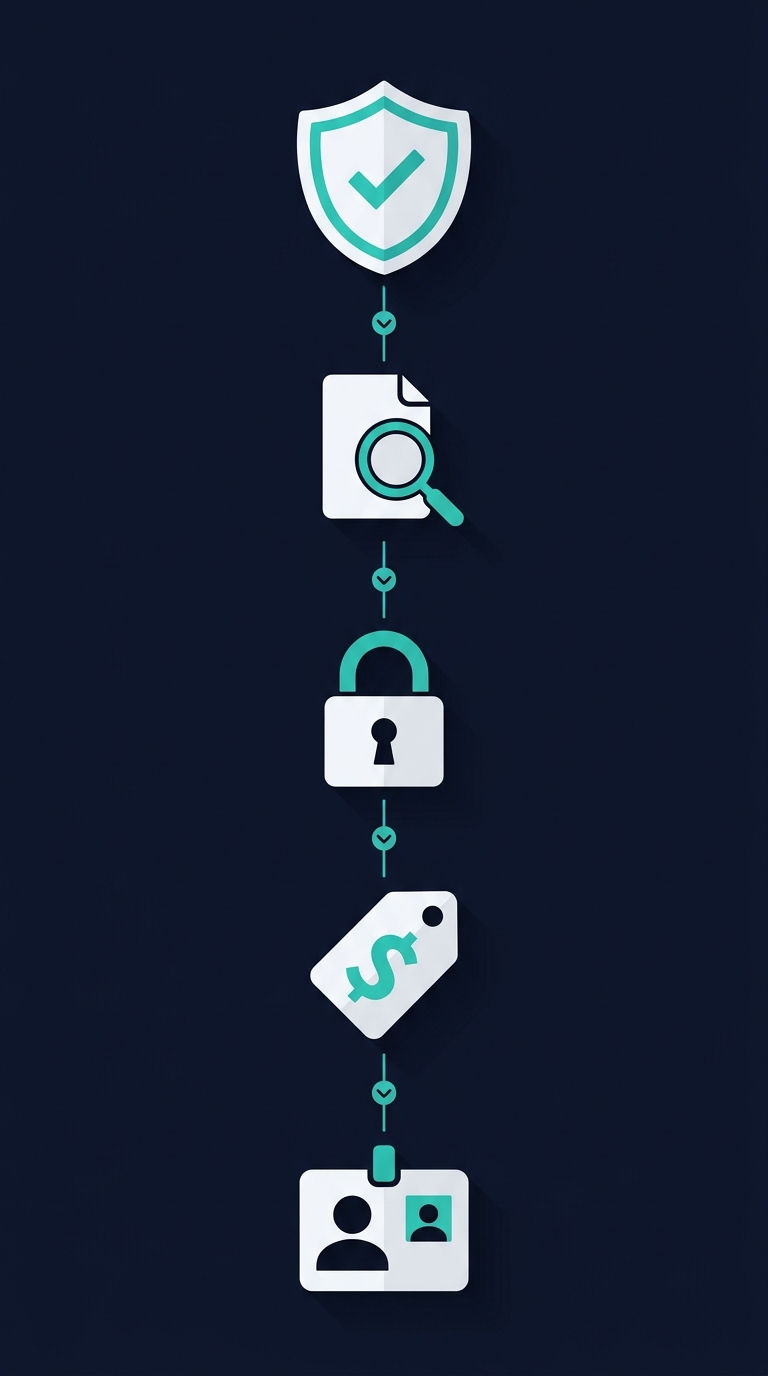
5 Checks Before Buying Crypto in Australia
Use the AUSTRAC and AFSL differences above as a simple filter before you send any money.
5 checks to make before you buy crypto
Before you fund an account, go through these five checks:
- Confirm AUSTRAC registration. Search the platform on AUSTRAC's Virtual Asset Service Provider register, and make sure the legal entity lines up with the service name.
- Ask whether AFSL rules apply. If the platform offers more than spot buying, like derivatives or structured products, check whether it has an AFSL through ASIC's license search tool.
- Read how client assets are held. Look for plain details on segregated accounts or wallets, cold storage, and what happens to assets if the platform goes under. Skip past fuzzy claims like "bank-level security."
- Check the full fee schedule. Review the trading fee, spread, deposit charge, and withdrawal cost before you commit. It also helps to compare the quoted buy price with a market reference price.
- Understand the ID process upfront. Know which ID and source-of-funds documents the platform may ask for before you deposit money. That can save you from account holds or failed purchases later.
Where Kryptonim may fit for simple fiat-to-crypto purchases
If you want a simple fiat-to-crypto flow, Kryptonim is one option to look at.
Kryptonim is an EU-regulated platform for simple fiat-to-crypto purchases. It offers no account creation, transparent pricing, and a 2% per-transaction fee for EU users (4% outside the EU).
One point matters here: EU regulation under MiCA is not the same thing as Australian licensing. EU-regulated platforms are not automatically recognized under Australia's AUSTRAC or AFSL frameworks. So if you're in Australia, check whether the platform meets local rules for the type of transaction you want to make.
Key takeaways for beginners
Once you've checked the basics, keep your eye on three things: transparency, custody, and onboarding.
AUSTRAC registration is the starting point for most crypto exchanges operating in Australia, but it doesn't tell the whole story. Depending on what a platform offers, AFSL rules may also come into play. Platforms that follow the rules will ask for your ID, may review larger transactions, and can cost more because compliance isn't free. In practice, the safer pick is often the platform that's clear about its legal status, fee structure, custody setup, and onboarding steps, not the one that just promises the easiest signup.
FAQs
How do I check if a crypto platform is legally allowed to serve Australians?
First, check whether the platform is registered with AUSTRAC. In Australia, legit platforms usually list their regulatory status and licensing details right on their website, often in the footer or the About Us page.
Next, confirm those details in the official AUSTRAC register. If a platform is vague about regulation, or it doesn’t clearly explain support for your local currency, fees, and compliance standards, treat that as a red flag.
Why would a crypto platform ask for source-of-funds documents?
A crypto platform may ask for source-of-funds documents to comply with AML regulations and check your risk level.
That lets the platform see where your money comes from and how you plan to use the service. From there, it can watch for suspicious activity, help prevent financial crime, and meet legal requirements.
Does AUSTRAC registration mean my crypto is protected if the platform fails?
No. AUSTRAC registration mostly means a platform follows AML/CTF rules, like verifying customer identities and monitoring transactions.
It does not mean your crypto is protected if the platform goes under. And it does not require the same asset-protection or insolvency safeguards used in some other jurisdictions.