
Global Crypto Regulations: What Beginners Should Know
Explore essential insights on global cryptocurrency regulations, their impact on trading, and tips for staying compliant in a rapidly evolving landscape.

Cryptocurrency is reshaping finance, but regulations are key to making it safer and more reliable. Here's what you need to know:
- Why regulations matter: They protect consumers, prevent financial crimes, and ensure market stability. Over 50 countries and 30+ U.S. states have updated crypto laws as of 2025.
- Key terms: Understand concepts like KYC (Know Your Customer), AML (Anti-Money Laundering), stablecoins, custodial vs. non-custodial wallets, and jurisdictional restrictions.
- Global differences: Regions like the U.S., EU, and Asia handle crypto differently. The U.S. has fragmented rules, while the EU's MiCA framework unifies regulations.
- Practical tips: Research your local laws, use compliant exchanges (like Kryptonim in the EU), and stay on top of tax obligations.
Staying informed and compliant is critical to navigating the fast-changing crypto landscape. Let’s dive into the details.
Basic cryptocurrency regulation concepts
Key regulatory terms beginners should know
Understanding the terminology surrounding cryptocurrency regulation is essential for navigating this rapidly evolving space. A crypto-asset represents any digital form of value secured through cryptographic methods - examples include well-known cryptocurrencies like Bitcoin and Ethereum. Stablecoins, on the other hand, are a specific type of crypto-asset designed to maintain a stable value by being tied to traditional assets, such as the U.S. dollar. These coins have drawn significant regulatory focus due to concerns about their potential effects on financial systems.
A crypto exchange serves as a platform for buying, selling, or trading cryptocurrencies and is required to comply with local regulatory standards. Regulatory compliance refers to adhering to laws and guidelines set by governments, while jurisdiction defines the legal authority a specific country or region has over certain activities.
Another critical distinction lies between custodial and non-custodial wallets. Custodial wallets, managed by third parties like exchanges, are subject to stricter regulations, including know-your-customer (KYC) and anti-money laundering (AML) rules. In contrast, non-custodial wallets allow users full control over their private keys and are generally less directly regulated, though tax and reporting requirements still apply. These foundational terms are key to understanding the regulatory landscape of cryptocurrencies.
Goals of crypto regulation
Cryptocurrency regulations globally aim to address several important priorities that directly influence the user experience. Anti-money laundering (AML) measures are designed to prevent the misuse of digital assets for illegal financial activities by enforcing strict transaction monitoring. Consumer protection plays a crucial role in shielding users from fraud, scams, and major financial losses. This is achieved through measures such as clear disclosures, stringent security protocols, and effective dispute resolution systems. For instance, EU-regulated platforms like Kryptonim emphasize enhanced security and legal protections for their users.
Another major focus is ensuring market integrity by curbing market manipulation and promoting accurate reporting of trading activities. Regulators also prioritize financial stability, particularly when it comes to stablecoins. To address potential risks to the broader economy, governments impose tighter rules on stablecoin issuers. For example, in the U.S., stablecoin issuers are required to have mechanisms to freeze or burn coins and comply with legal directives.
How different crypto activities are regulated
The regulatory approach varies widely depending on the type of crypto activity. For instance, buying and trading cryptocurrencies typically involve stringent KYC and AML procedures. However, holding crypto in self-custody - via non-custodial wallets - faces fewer direct regulations, though tax reporting obligations remain.
When it comes to issuing cryptocurrencies, particularly stablecoins, the scrutiny is even greater. The EU’s Markets in Crypto-Assets (MiCA) regulation, for example, enforces strict reserve and transparency requirements for stablecoin issuers. Meanwhile, U.S. regulators are working on comprehensive legislation that focuses on ensuring stablecoins are properly backed by reserves. By 2025, most Financial Stability Board member jurisdictions are expected to align with global frameworks for regulating both crypto-assets (62%) and stablecoins (60%).
Regulators are also expanding their oversight to cover emerging areas like decentralized finance (DeFi), crypto lending, and staking activities. This signals that today’s unregulated activities may soon be subject to new regulatory requirements as the landscape continues to evolve.
Global regulatory frameworks and regional approaches
International regulatory frameworks
Two major international organizations play a key role in shaping crypto regulation. The Financial Action Task Force (FATF) sets global standards for anti-money laundering (AML) and combating the financing of terrorism (CFT) in crypto transactions. One of its key measures, the "Travel Rule", requires exchanges to share customer information during fund transfers. On the other hand, the Financial Stability Board (FSB) introduced a global regulatory framework in July 2023, focusing on crypto-asset activities and stablecoin arrangements. This framework is built on the principle of "same activity, same risk, same regulation", promoting consistent oversight regardless of the technology involved.
These frameworks provide adaptable, technology-neutral guidelines that countries integrate into their laws. According to the FSB, 62% of its member jurisdictions plan to align with its crypto-asset framework, and 60% intend to do so for stablecoins by 2025. FATF's guidelines already require many crypto exchanges to verify customer identities and report suspicious activities. While most international standards are set to take effect by January 2026, some jurisdictions are adopting stricter measures, such as banning certain crypto-related activities for banks.
Regional approaches to regulation
While international frameworks set the stage, regional approaches define how regulations are applied locally. In the United States, the regulatory environment is fragmented, with oversight divided among federal agencies like the SEC, CFTC, and FinCEN, along with varying state-level rules. This fragmented system creates uncertainty around token classification - whether they are securities, derivatives, or commodities.
By contrast, the European Union has introduced the Markets in Crypto-Assets Regulation (MiCA), which unifies rules across all member states. MiCA establishes clear requirements for crypto service providers, stablecoin issuers, and trading platforms, ensuring consistent consumer protections across the EU.
In the Asia-Pacific region, regulatory approaches differ widely. For example, Singapore and Hong Kong have implemented licensing frameworks that prioritize investor protection while encouraging innovation. Meanwhile, mainland China enforces a ban on crypto trading but allows personal holdings.
The Middle East is crafting new regulatory systems aimed at balancing oversight with fostering innovation. In Africa, the regulatory landscape is mixed - some nations are leveraging crypto to promote financial inclusion, while others impose strict restrictions.
The table below highlights how these regional approaches vary in terms of compliance, consumer protection, and innovation:
| Region | Regulatory Framework | Compliance Complexity | Consumer Protection | Innovation Support |
|---|---|---|---|---|
| United States | Fragmented (federal/state) | High | Moderate | Moderate |
| European Union | MiCA (harmonized) | Moderate | High | High |
| Canada | Provincial/federal mix | Moderate | Moderate | Moderate |
| Asia-Pacific | Varies by country | Varies | Varies | Varies |
| Middle East | Emerging frameworks | Low-Moderate | Low-Moderate | Moderate |
| Africa | Limited, emerging | Low | Low | Moderate |
These regional differences have real-world consequences for users and businesses. In the United States, compliance requirements can vary significantly between states due to overlapping federal and state regulations. The European Union, with MiCA, offers a more streamlined and predictable regulatory environment. In the Asia-Pacific, access to crypto services depends on each country’s unique stance. Understanding these distinctions helps explain why compliance and exchange access differ so much around the world.
Jurisdictional restrictions and exchange access
How jurisdictional restrictions affect users
Jurisdictional restrictions limit what exchanges and features users can access. These limitations generally fall into three main categories, shaping which platforms are available and the services they offer.
Licensing requirements are the most common hurdle. In the U.S., exchanges must comply with federal and state laws, which can make some platforms unavailable in certain states. Take New York, for instance - its strict BitLicense rules have led many exchanges to either pay for expensive licenses or block New York residents entirely. This forces exchanges to tailor their services by state. In some cases, services like derivatives trading are completely off-limits in more restrictive areas.
Outright bans create the strictest limitations. For example, China’s sweeping ban on crypto trading has driven major exchanges out of the market, leaving residents without legal access to regulated platforms. While individuals are still allowed to hold cryptocurrencies, converting between fiat and crypto through regulated channels is nearly impossible.
Limited feature restrictions also play a significant role. Some countries permit basic trading but prohibit activities like margin trading, derivatives, or the use of certain tokens, such as privacy coins. Even in supportive regulatory environments, like under the EU’s MiCA framework, access to high-risk products may still be restricted to protect users. This means trading capabilities on the same platform can vary significantly depending on the user’s location.
These restrictions aren’t just inconvenient - they can also be costly. Users in restricted regions often face higher fees, fewer payment options, or end up relying on platforms that lack strong consumer protections or regulatory oversight. These challenges highlight the complexities of navigating global regulations.
Dealing with regulatory differences across countries
On top of these restrictions, international differences in regulations add another layer of complexity. Regulatory arbitrage has become a common phenomenon, with users and businesses trying to work around the inconsistent patchwork of global crypto rules. While some countries implement comprehensive regulations, others may lag behind or impose outright bans, creating an uneven playing field.
Cross-border trading complications are another issue. A service that works seamlessly in one country might be inaccessible in another. For example, a European user accustomed to MiCA-regulated platforms could find their access restricted when traveling to countries with different rules. This creates practical challenges for users who need financial flexibility while moving between jurisdictions.
Operational complexity also affects both users and providers. Exchanges must modify their services to meet each jurisdiction’s rules, which can limit cross-border access and increase costs.
The legal uncertainty surrounding international crypto activities poses risks for users. What’s legal in one country might be prohibited in another, leading to frozen accounts, legal penalties, or even the loss of funds if a non-compliant service is shut down.
Despite these challenges, regulatory momentum is pushing the industry toward greater consistency. Recent clarifications in regulations have brought more stability to the market. For instance, the 2025 Global Crypto Adoption Index highlights the United States as a leading country for crypto adoption, partly due to the approval of spot bitcoin ETFs. However, progress remains uneven, and users around the world continue to face varying regulatory hurdles.
Kryptonim as a compliant solution
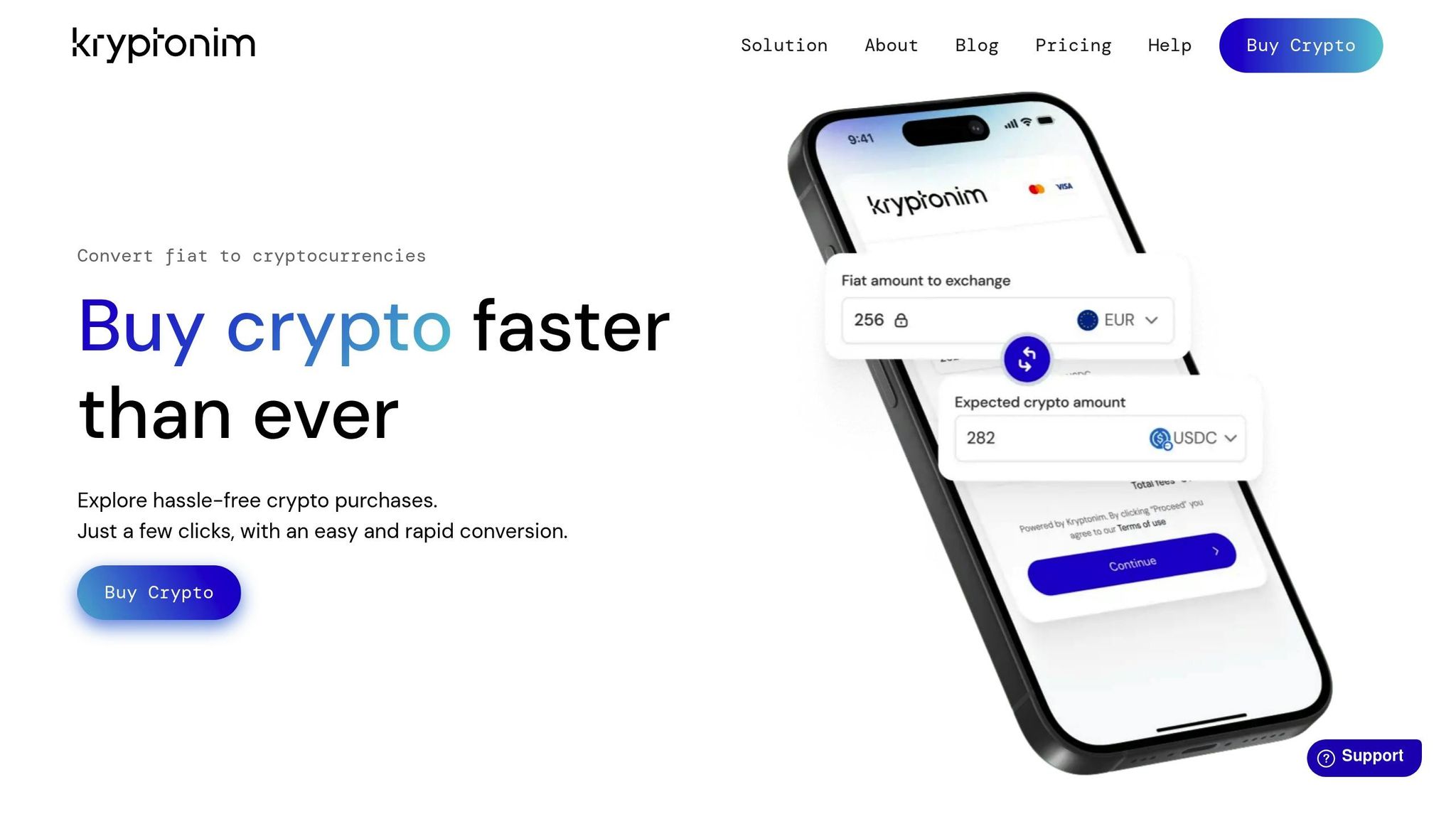
Navigating these jurisdictional challenges calls for a regulated and reliable platform, and Kryptonim offers just that. As an EU-regulated platform, Kryptonim operates within the framework of MiCA and other European standards, providing a clear and compliant solution for crypto users.
Simplified access. Kryptonim serves as an EU-regulated on-ramp for purchasing cryptocurrencies, eliminating many of the compliance headaches users typically face. Its streamlined verification process makes buying crypto straightforward, even for beginners.
Transparent operations. With clear, upfront pricing and no hidden fees, Kryptonim prioritizes fairness and simplicity, ensuring users know exactly what they’re paying for.
Cross-border reliability. Thanks to its EU-regulated status, Kryptonim offers legal certainty and strong consumer protections. This is especially valuable for users who frequently travel or conduct business across multiple countries.
Beginner-friendly approach. Kryptonim doesn’t require account creation and supports local payment methods, making it accessible even for those with minimal technical experience.
Security and compliance. Using a regulated platform like Kryptonim significantly reduces risks such as losing funds due to service shutdowns, facing legal penalties for noncompliance, or lacking consumer protection in cases of fraud. Kryptonim’s regulatory framework ensures dependable and secure access to crypto markets.
sbb-itb-0796ce6
Practical Tips for Beginners Dealing with Crypto Regulations
Researching Local Regulations
Getting familiar with your local cryptocurrency regulations is a must for safe and legal trading. In the United States, crypto rules can vary widely, as they're enforced at both the federal and state levels. Federal agencies like the Securities and Exchange Commission (SEC) and the Commodity Futures Trading Commission (CFTC) oversee general compliance, while individual states impose their own requirements.
To stay on top of these rules, visit official websites like those of the SEC, the CFTC, or your state’s regulatory bodies. These sites frequently update their guidelines to reflect the changing crypto landscape, so make it a habit to check them before you trade.
State-specific regulations can be particularly tricky. For instance, New York’s BitLicense is known for imposing strict requirements, which may limit trading options for residents. What’s allowed in one state might be restricted in another, so always double-check the rules where you live.
For a broader perspective, consult reports from reputable financial advisory firms like PwC, which publish annual summaries of regulatory changes worldwide. You can also rely on updates from industry associations and trusted crypto platforms. To make life easier, consider signing up for newsletters or alerts from regulatory bodies to stay informed about any changes that might impact your trading activities.
Checking Exchange Compliance
After understanding your local regulations, the next step is ensuring the exchange you use complies with them. Choosing a compliant platform is crucial to avoid legal trouble and protect your assets. Non-compliant exchanges often lack consumer protections, which can leave you exposed to fraud, sudden shutdowns, or even frozen funds.
Look for exchanges that clearly disclose their regulatory status. For example, platforms like Kryptonim openly advertise their EU-regulated status, which can provide peace of mind for beginners. Transparency like this shows that the platform follows established standards.
You can also verify an exchange’s registration by checking databases like FinCEN or your state’s regulatory agency. Doing this ensures the platform operates legally within your jurisdiction.
Be cautious with unregistered or non-compliant exchanges. If an exchange faces regulatory action or shuts down, you could lose access to your funds, and recovering them may not be possible. Prioritize platforms with strong regulatory oversight, as they offer better legal protections and reduce the risks associated with trading.
Understanding Tax Requirements
Taxes are another critical piece of the crypto compliance puzzle. The Internal Revenue Service (IRS) classifies cryptocurrency as property, meaning nearly every transaction - whether it’s a trade or a purchase - can trigger a taxable event.
Here’s what you need to know:
- Know what triggers taxes. Any crypto transaction, including trading one cryptocurrency for another or using crypto for everyday purchases, is considered a taxable event.
- Keep detailed records. Maintain accurate logs of your transactions, including dates, amounts, counterparties, and wallet addresses. While many exchanges offer downloadable transaction histories, keeping your own records can help simplify tax filing and reduce errors during audits. When calculating gains and losses, use the fair market value of the cryptocurrency at the time of each transaction.
- Always report your transactions. Failing to report crypto activity can lead to audits, fines, or other penalties from the IRS. If you’re unsure about how to handle your taxes, it’s worth consulting a tax professional with expertise in cryptocurrency.
Conclusion
Navigating the world of cryptocurrency requires a solid understanding of regulations to safeguard your investments in this ever-evolving digital market. With the crypto market now surpassing a staggering $3 trillion in value, staying compliant with regulations is no longer optional - it’s essential for both newcomers and seasoned traders.
Regulatory landscapes can shift quickly. For example, the EU's MiCA framework now provides unified rules across all 27 member states, while new federal legislation in the U.S. continues to reshape the trading environment. What might have been acceptable yesterday could easily be non-compliant today. Keeping up with local regulations is critical to avoid unnecessary risks.
Trader safety hinges on making informed decisions. Opting for platforms that follow anti-money laundering (AML) and know-your-customer (KYC) protocols can significantly reduce the chances of fraud, account freezes, or legal complications. Platforms regulated under EU standards, like Kryptonim, demonstrate how compliance not only enhances security but also improves the overall user experience.
To trade safely and successfully, focus on three key pillars: researching your local regulations, ensuring the exchange you use is compliant, and understanding your tax responsibilities. With over 40 U.S. states currently working on cryptocurrency legislation, staying informed is more important than ever.
It’s worth remembering that regulatory frameworks exist for a reason. They aim to protect consumers, ensure financial stability, and prevent money laundering - objectives that ultimately benefit legitimate traders. Embracing compliance is not just a legal necessity; it’s a cornerstone of sustainable success in the dynamic world of digital assets.
FAQs
How do differences in cryptocurrency regulations affect trading or using crypto internationally?
Cryptocurrency laws differ significantly from one country to another, shaping how and where you can trade or use digital currencies. While some governments enforce tight restrictions, including taxes or limited access, others embrace crypto more openly, promoting its growth and adoption.
If you're trading across borders, knowing the local laws in each country is crucial. These rules can affect everything from transaction fees and reporting obligations to the legality of specific cryptocurrencies. Staying informed and compliant is key to avoiding legal or financial complications.
How can I make sure the crypto exchange I use follows local regulations and keeps my assets secure?
When selecting a crypto exchange, it's crucial to ensure it follows local regulations and protects your assets. Look for platforms that are regulated in your region, as they typically meet strict compliance standards. For instance, exchanges regulated in the European Union often prioritize transparency and user protection.
It's also wise to choose exchanges that emphasize secure transaction methods while avoiding requests for excessive personal information. This not only enhances privacy but also makes the buying process smoother - an important factor for those new to cryptocurrency.
How do local regulations impact access to cryptocurrency services, and how can I work around these challenges?
Jurisdictional restrictions can sometimes block access to specific cryptocurrency platforms or services, depending on local laws. These rules often determine which platforms are allowed to operate in your area and may impose extra requirements like identity verification or transaction reporting.
To handle these limitations, it’s wise to select a regulated platform that complies with the legal standards in your region. For instance, Kryptonim provides a secure and straightforward way to purchase cryptocurrency, adhering to EU regulations while offering a smooth user experience. By staying updated on your local laws and opting for reliable platforms, you can trade with greater confidence and security.