
EU Crypto Regulations: Impact on Cross-Border Payments
EU crypto rules (MiCA, TFR, DAC8) force transparency, AML checks and tax reporting, reshaping cross-border crypto payments.

The European Union's new crypto regulations are reshaping how digital currencies are used for cross-border payments. Starting December 30, 2024, the EU introduced standardized rules under the Markets in Crypto-Assets (MiCA) framework and the Transfer of Funds Regulation (TFR). These regulations aim to improve security, transparency, and compliance in crypto transactions across all 27 member states. Here's what you need to know:
- Travel Rule: Requires identifying information for both sender and recipient in all crypto transfers, reducing anonymity.
- Unified Standards: MiCA replaces individual national laws, simplifying operations for businesses and users.
- Passporting: Crypto-Asset Service Providers (CASPs) authorized in one EU country can operate across all member states.
- Anti-Money Laundering (AML): CASPs must verify identities, monitor transactions, and report suspicious activity.
- Tax Compliance (DAC8): Starting January 1, 2026, crypto transactions must be reported to tax authorities, ensuring transparency.
These changes make crypto payments more secure and predictable, while also holding providers to higher accountability standards. Platforms like Kryptonim exemplify how regulated services can offer lower fees, clear processes, and improved trust for cross-border payments.

EU Crypto Regulations Timeline: MiCA, TFR, and DAC8 Implementation Dates
EU Crypto Regulations in 2026
The European Union (EU) has introduced unified standards for crypto regulation, aiming to simplify and streamline operations across its 27 member states. Two key frameworks - Markets in Crypto-Assets (MiCA) and the Transfer of Funds Regulation (TFR) - now govern how crypto-assets are handled, replacing the patchwork of national rules that previously made cross-border transactions more complex.
The MiCA Framework Explained
MiCA brings consistency to crypto-asset rules across the EU, offering clarity for issuers and service providers alike. It categorizes crypto-assets into three main types: e-money tokens (EMT), asset-referenced tokens (ART), and other crypto-assets like utility tokens. While the framework became fully enforceable on December 30, 2024, provisions for ARTs and EMTs began earlier, on June 30, 2024.
One standout feature of MiCA is the "passporting" regime. This allows Crypto-Asset Service Providers (CASPs) authorized in one EU country to operate across all member states without needing individual licenses for each. This not only simplifies compliance but also makes cross-border payment verification more efficient.
"Crypto-assets can also be used as a means of payment and can present opportunities in terms of cheaper, faster and more efficient payments, in particular on a cross-border basis, by limiting intermediaries."
– European Commission
To operate under MiCA, CASPs must meet specific capital requirements. For instance:
- Providers offering order execution or advisory services need a minimum of $54,000 (€50,000).
- Those offering exchange or custody services require $135,000 (€125,000).
- Running a trading platform demands $162,000 (€150,000).
Issuers of asset-referenced tokens face even stricter financial thresholds. They must maintain at least $378,000 (€350,000) in own funds, or meet one of two other criteria: 2% of average reserve assets or one-quarter of the previous year’s fixed overheads - whichever is greater.
As of January 30, 2026, the European Securities and Markets Authority (ESMA) oversees an interim MiCA register. This includes a list of authorized CASPs, published white papers, and flagged non-compliant entities. The "grandfathering" period for entities operating under older national laws ends on July 1, 2026, marking the final deadline for full MiCA compliance.
AML and Travel Rule Requirements
To complement MiCA, the EU has reinforced anti-money laundering (AML) measures to ensure secure cross-border transactions. CASPs are now classified as "obliged entities" under the EU’s AML and Counter-Terrorism Financing framework. This means they must collect and share detailed sender and recipient information for every crypto-asset transfer.
For transactions over $1,080 (€1,000) involving self-hosted wallets, providers must verify whether the wallet address is owned or controlled by the originator or beneficiary. Violations come with steep penalties, starting at a minimum of $1.08 million (€1 million).
Additionally, CASPs are required to implement robust IT security measures to protect against hacks and cyber threats. They must also flag missing originator or beneficiary data before processing transfers, while adhering to rules designed to prevent insider trading and market manipulation. These measures strengthen the integrity of cross-border crypto transactions and enhance overall security.
sbb-itb-0796ce6
How MiCA Affects Cross-Border Payments
MiCA is transforming how crypto payments operate across EU borders by replacing 27 separate national rulebooks with a unified regulatory framework. This change impacts both service providers managing transactions and the individuals sending money internationally.
New Compliance Rules for Service Providers
Service providers now face stricter requirements that reshape how they handle cross-border payments. Every CASP (Crypto-Asset Service Provider) must establish a legal presence in the EU, with at least one director residing in a member state. This means non-EU companies can no longer operate remotely - they need physical offices and local governance to remain compliant.
The Travel Rule has introduced additional layers of transparency. CASPs are now required to collect and share detailed sender and receiver information for all transactions. For transfers over $1,080 (€1,000) involving self-hosted wallets, they must also verify wallet ownership. This is a major shift compared to traditional banking, where smaller transactions often bypass such scrutiny.
Another key requirement is asset segregation. CASPs must keep client funds separate from their own company assets. While this protects users, it demands that providers maintain distinct accounting systems and custody arrangements. Additionally, companies are now obligated to disclose pricing, fees, and even the environmental impact of supported crypto-assets directly on their websites.
For larger platforms classified as "significant" - those with at least 15 million active EU users annually - the oversight is even more stringent. These providers fall under the direct supervision of the European Banking Authority instead of national regulators. This creates a two-tier system, with larger players facing heightened scrutiny.
These enhanced rules aim to create a more secure and consistent environment for cross-border payments, offering benefits for all participants in the market.
Benefits of Standardized EU Regulations
One of the most notable advantages is the passporting regime. Once a CASP is authorized in one EU country, it can operate across all 27 member states without needing additional licenses.
"The regulatory shift is a positive thing for users and the industry."
– Richard Teng, Regional Head of Europe and MENA, Binance
For users, this means uniform protection no matter which EU country they are sending money to or from. The mandatory White Paper system ensures that risks and asset characteristics are disclosed transparently across borders. If the information provided turns out to be inaccurate, issuers face legal liability for damages, ensuring a high standard of accountability.
The standardized rules also enhance security and financial stability. CASPs are now required to hold minimum capital reserves and maintain insurance policies, creating a safety net in case of operational failures. Stablecoins, often used for cross-border payments, must meet strict requirements, including 1:1 liquid reserves and regular independent audits, making them more reliable.
"The work of the EU policy makers is exemplary"
– Tom Gordon, Vice President of International Policy at Coinbase
Another long-term benefit is the growing integration with the banking sector. As MiCA reduces the perceived risks of working with crypto, traditional banks are becoming more open to collaborating with crypto providers. This could pave the way for smoother interactions between fiat and crypto systems, streamlining international transfers.
DAC8 Directive and Tax Reporting
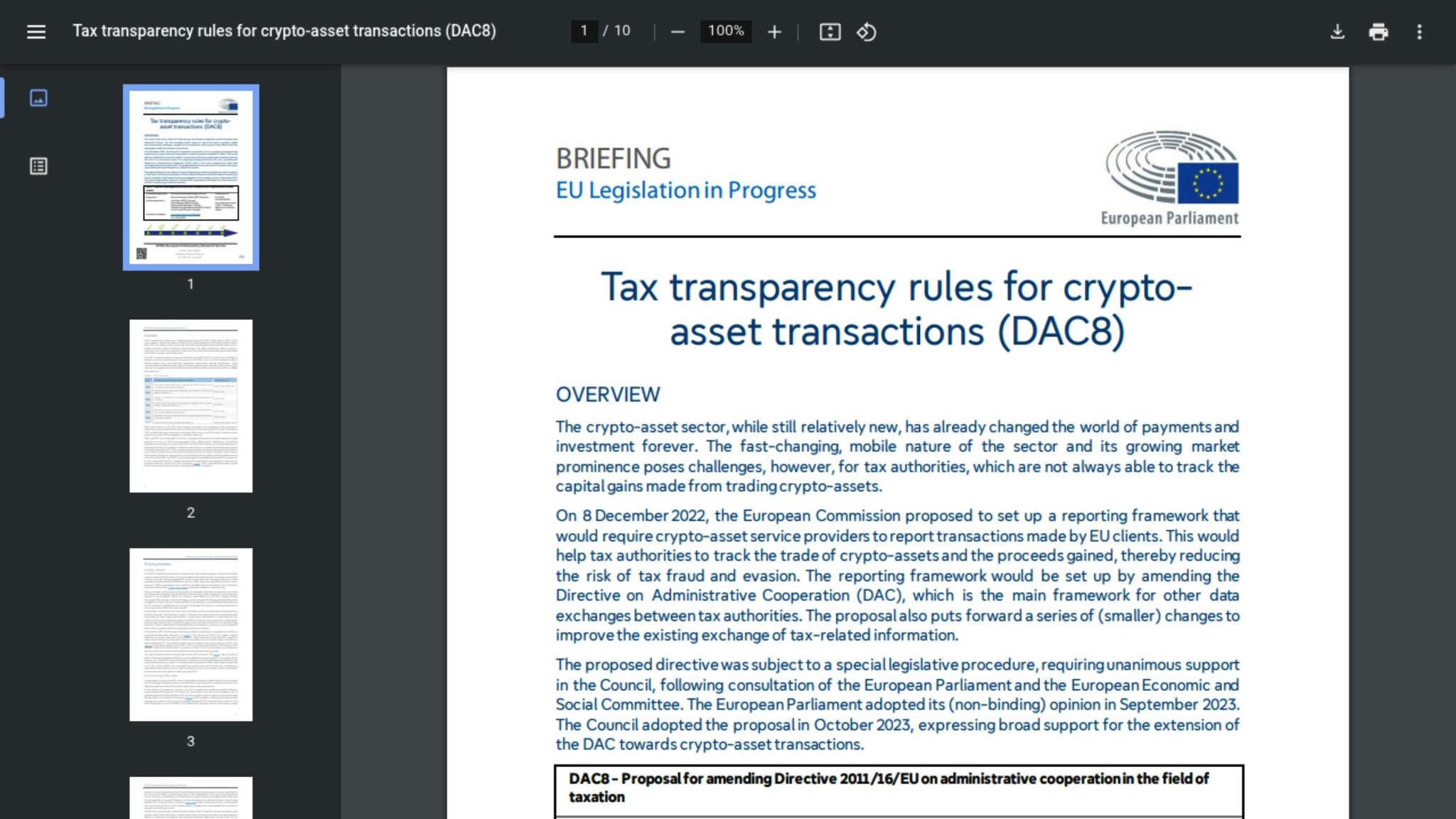
While MiCA focuses on regulating markets and protecting consumers, DAC8 takes aim at tax transparency. Officially starting on January 1, 2026, this directive extends the tax reporting standards already in place for traditional bank accounts to the crypto world. The goal is simple: make sure crypto transactions don’t slip under the radar of tax authorities, especially when funds move across borders.
Tax Compliance Challenges for Cross-Border Transactions
Mandatory reporting under DAC8 introduces new challenges for both crypto service providers and users. Reporting Crypto-Asset Service Providers (RCASPs) are now required to collect comprehensive user information, including legal names, addresses, residency in an EU member state, Tax Identification Numbers (TINs), and place of birth. This data collection began on January 1, 2026, with the first reports due to national tax authorities within nine months after the fiscal year ends - meaning the first data exchanges between EU tax authorities will happen by September 30, 2027.
For platforms, this means setting up systems similar to those used by banks. They need to track details like total gross amounts for acquisitions and disposals, the fair market value of transfers, and the total number of transactions, all categorized by crypto-asset type. Non-EU providers serving EU customers must also register in at least one EU member state if they aren’t already authorized under MiCA.
"The decentralized nature of crypto-assets has made it difficult for EU countries' tax administrations to ensure tax compliance. The inherent cross-border nature of crypto-assets requires strong international administrative cooperation."
– European Commission
For users, the directive means keeping meticulous records. Tax authorities now receive automated summaries of crypto activity, and for cross-border transactions, the provider’s country automatically shares this information with the user’s home country. Each EU member state sets its own penalties for non-compliance, as long as they are "effective, proportionate, and dissuasive".
While these changes present challenges, DAC8 also introduces a new level of transparency.
Improved Transparency Through DAC8
DAC8 significantly boosts transparency in the crypto space. It aligns the EU with the OECD's Crypto-Asset Reporting Framework (CARF), which, as of July 2024, had 58 Global Forum members planning to exchange information under the framework starting in 2027. This alignment creates a unified global standard for crypto tax reporting, closing gaps that previously allowed tax evasion using digital assets.
The directive’s scope is broad. It covers decentralized cryptocurrencies, stablecoins (including asset-referenced and e-money tokens), and certain non-fungible tokens (NFTs) used for investment or payment purposes. By tracking the flow between crypto and fiat currencies, tax authorities can now identify capital gains, staking rewards, and cross-border transfers that were once hard to monitor. Collected data must be stored and automatically exchanged for at least five years.
"DAC8 applies the same transparency logic used for bank accounts to crypto."
– Monetum
For legitimate users and businesses, this standardization brings clarity. Platforms are required to notify users that their information will be collected and reported, setting clear expectations around data privacy. Additionally, the directive applies to advance cross-border rulings for transactions exceeding €1,500,000, ensuring high-value activities are properly scrutinized. This level of transparency builds trust in the crypto sector, making it more appealing to institutional investors who demand clear regulatory and tax frameworks.
While MiCA focuses on regulating markets, DAC8 ensures crypto tax compliance and transparency across borders.
Benefits of EU-Regulated Platforms Like Kryptonim
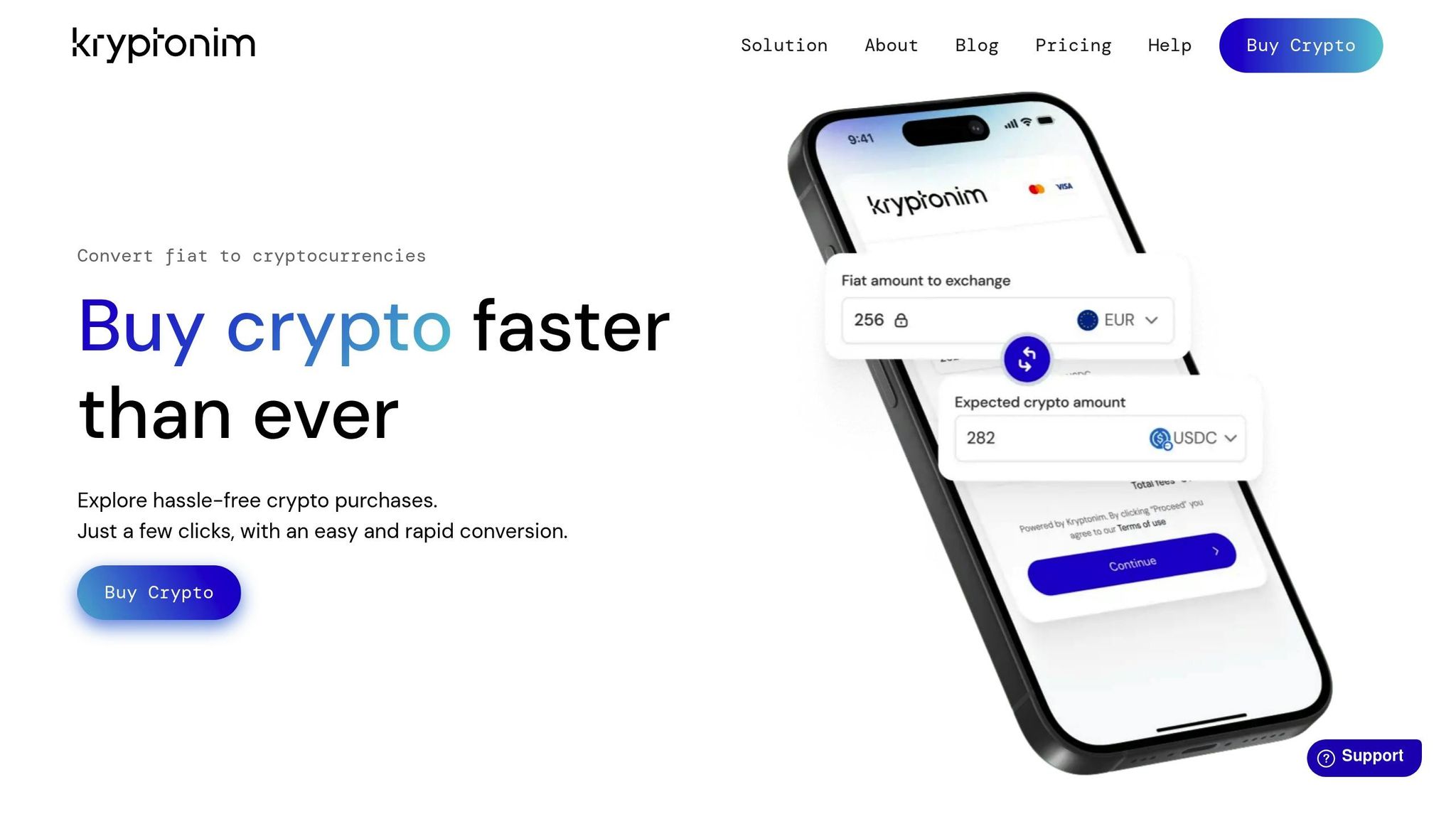
Opting for an EU-regulated platform comes with the assurance of legal safeguards and strict compliance standards. These platforms must receive authorization from national regulatory authorities, ensuring they have robust measures in place to counter money laundering and terrorist financing. They also guarantee that client funds are kept separate and adhere to high professional standards. This level of oversight directly translates to better operational practices, as seen with platforms like Kryptonim.
Security and Transparency for Cross-Border Payments
EU-regulated platforms, like Kryptonim, excel in providing secure and transparent cross-border payment services. Thanks to a unified licensing framework, a Crypto-Asset Service Provider (CASP) authorized in one EU country can operate across all 27 member states under the same regulatory standards. Kryptonim maintains these standards through real-time transaction monitoring and rigorous customer due diligence processes designed to identify and prevent suspicious activities.
Additionally, these platforms must keep immutable transaction and customer records for at least five years to ensure they are always audit-ready. Kryptonim also complies with the Digital Operational Resilience Act (DORA), which enforces strict requirements for managing ICT risks, regular penetration testing, and mandatory incident reporting starting January 2025. For cross-border payments, the EU's Transfer of Funds Regulation ensures full traceability by requiring identification details for every transaction, with no minimum threshold under the crypto Travel Rule. These combined measures highlight Kryptonim's commitment to secure and transparent operations.
Simple Interface and Competitive Rates
Kryptonim doesn’t just focus on security - it also prioritizes user convenience. With a no-account-creation model, users can quickly complete fiat-to-crypto transactions while still meeting essential AML and KYC requirements. This eliminates lengthy registration processes, making the platform more accessible. Kryptonim charges a flat 2% fee for EU users and 4% for non-EU users, with all fees clearly disclosed upfront, as mandated by MiCA regulations. These rates are notably lower than those of traditional cross-border payment methods.
MiCA also requires service providers to clearly display pricing and fee structures, and the harmonized regulatory framework across EU member states helps reduce operational costs, benefiting users. Combined with an intuitive interface, Kryptonim lowers barriers to entry, making blockchain technology easier to use in a regulated and predictable environment.
Conclusion
The EU's regulatory reforms have brought a transformative shift to the crypto payments arena. By introducing a unified framework through MiCA and the Travel Rule, the EU has replaced fragmented national laws, offering much-needed legal clarity for users and businesses alike across all 27 member states. These changes emphasize stricter compliance, ensuring both security and accountability, while the passporting regime makes it easier for businesses to operate across borders.
The benefits are clear: quicker settlements, reduced fees, and improved security compared to traditional banking methods. The Travel Rule has also addressed anonymity issues, reducing opportunities for illicit activities, while the Crypto-Asset Reporting Framework (CARF) promotes tax transparency across borders. Stablecoin regulations add another layer of reliability by requiring strong reserve standards, further enhancing cross-border transactions.
Platforms like Kryptonim showcase the potential of EU-regulated crypto solutions, blending strict compliance with user-friendly features. These platforms provide transparent operations and competitive rates, demonstrating how blockchain technology can deliver the protections of traditional finance with unmatched efficiency.
With cross-border payment flows expected to hit $268 trillion by 2030, adhering to a regulated framework isn't just about following rules - it's about positioning for the future of global finance. These reforms not only safeguard current transactions but also lay the groundwork for the next chapter in international financial evolution.
FAQs
How do MiCA and the Travel Rule affect EU crypto transfers?
The Travel Rule, introduced under MiCA regulations, sets stricter requirements for crypto transactions within the EU. Crypto service providers are now obligated to gather and share detailed information about both the sender and the recipient for every transaction - eliminating the previous €1,000 threshold.
This shift is designed to reduce anonymity in crypto transfers, strengthen anti-money laundering measures, and ensure compliance. It also establishes clear procedures for handling cases where transfer information is incomplete, creating a more accountable and transparent system for cryptocurrency exchanges.
What does “passporting” mean for crypto businesses in the EU?
In the EU, "passporting" lets crypto businesses operate across all member states with just one authorization, like a MiCA license. This removes the hassle of getting separate licenses for each country, making compliance easier and facilitating smoother cross-border operations.
What should I save for taxes under DAC8 reporting?
Keeping records of your crypto-asset transactions is crucial under DAC8 to meet tax reporting obligations. This means tracking details like trades, proceeds, and other transaction-related data. Proper documentation ensures transparency and helps avoid issues related to tax evasion.