
How Automated Tools Detect Crypto Pump-and-Dumps
Explains how automated tools detect crypto pump-and-dumps using market, order book, social media, and blockchain signals to flag manipulation early.

Pump-and-dump schemes in cryptocurrency markets involve artificially inflating a token's price through hype and coordinated efforts, only to sell off holdings at the peak, leaving others with losses. These schemes often lead to price crashes of up to 90% within hours. Automated tools now play a key role in identifying these manipulative practices by analyzing real-time market data, social media activity, and blockchain transactions.
Key Insights:
- Detection Speed: Advanced tools can flag manipulation within 25 seconds of initiation, with up to 87% accuracy.
- Data Sources: These tools monitor price/volume anomalies, order book patterns, social media signals, and blockchain activity.
- Social Media Role: Platforms like Telegram and Discord are commonly used to coordinate pumps, making natural language processing (NLP) crucial for detection.
- Challenges: False positives and encrypted communication channels remain hurdles, but combining multiple data sources improves accuracy.
By configuring alerts for unusual price/volume spikes and monitoring social media signals, traders can protect their investments and avoid falling victim to these schemes. However, no system is flawless, so skepticism and thorough research are essential.
How Automated Tools Detect Pump-and-Dump Schemes

How Automated Tools Detect Crypto Pump-and-Dump Schemes: 4 Data Sources
Automated systems use four main data sources - market data, order books, social media, and blockchain activity - to uncover pump-and-dump schemes. These tools analyze real-time information to identify manipulation patterns that might elude human observers.
Price and Volume Anomaly Detection
Detection tools focus on sudden price and volume changes using advanced algorithms. Instead of flagging every small fluctuation, they rely on exponentially weighted moving averages (EWMA) and specific thresholds to filter out normal market behavior from potential manipulation.
One effective method, known as "double conditioning," reduces false alarms in tokens with low liquidity. For example, a volume spike surpassing 30% of the monthly average and 60% of the maximum recorded volume triggers an alert. A 12-hour moving window helps compare recent activity to historical trends, making it easier to spot deviations.
Threshold configurations matter. A 400% increase in volume combined with a 90% price threshold successfully identified 27 out of 40 pump events, achieving the best results among tested setups. These systems also differentiate between collective anomalies (a series of smaller, coordinated moves) and point anomalies (single extreme spikes), helping separate organized schemes from natural price movements.
Order Book and Trade Pattern Analysis
Order book data provides deeper insights into manipulative tactics. By examining Level 2 market data, which includes bid/ask spreads and order cancellations, tools can detect schemes like "spoofing" - where fake buy orders create an illusion of demand but are canceled before execution.
"The manipulator rarely actually makes a purchase during the pump phase since they continually cancel their buy orders just before they are filled", note Cameron Ramos and Noah Golub from Stanford University.
Neural networks trained on order book data achieve 81.245% accuracy in detecting pump-and-dump events by analyzing order types and volume patterns. These models can predict pump events up to 12 hours in advance with an accuracy of 82.5%. Systems also track the accumulation phase, during which insiders execute 70% of their trades, often within an hour before the public announcement.
Social Media and Messaging Signal Analysis
Adding social media data enhances detection accuracy. Platforms like Telegram are frequently used to coordinate pump-and-dump schemes. Automated tools employ Natural Language Processing (NLP) and Named Entity Recognition (NER) to extract structured data from messages, such as targeted cryptocurrencies, entry prices, and countdowns.
Between February 16 and October 9, 2024, the Perseus system monitored 2,103 Telegram channels and analyzed over 27 million messages. It identified 290 masterminds orchestrating schemes involving 322 cryptocurrencies, potentially mitigating trading volume impacts of $3.24 trillion. These tools categorize messages into phases like Pump Announcement, Countdown, Target Coin Release, and Pump Results.
In one study from December 2024, researchers used a BERTweet model to analyze 91,295 Telegram messages. By combining this with Z-score anomaly detection, they accurately identified the pumped coin within the top five predictions in 55.81% of verified pump events on the Poloniex exchange - just 20 seconds before the pump began.
On-Chain Activity and Wallet Analytics
Blockchain analytics reveal wallet behaviors that point to coordinated manipulation. Tools monitor decentralized exchanges for patterns such as five or more independent buyers followed by a single wallet withdrawing over 70% of the liquidity. These suspicious liquidity removals often yield profits averaging $2,672.
Detection systems also use wallet clustering to link multiple addresses controlled by the same entity. By tracking large token transfers and recurring patterns, they can distinguish legitimate whale activity from coordinated schemes. In 2023, about 54% of ERC-20 tokens listed on decentralized exchanges showed signs of pump-and-dump activity.
sbb-itb-0796ce6
Setting Up Automated Pump-and-Dump Detection
Choosing and Configuring Monitoring Tools
Start by selecting tools that match your trading goals and level of expertise. For tracking social media-driven pumps, LunarCrush is a popular option, as it monitors community engagement metrics across various platforms.
Set alerts for significant price and volume changes - aim for price surges between 70% and 100% and volume increases of 300–400%. Use techniques like double-conditioning and EWMA (Exponentially Weighted Moving Average) to filter out noise and reduce false positives. Focus specifically on low-market-cap tokens, which are frequent targets due to their limited liquidity. Advanced AI algorithms can predict manipulation with an impressive 87% accuracy before major price shifts, and machine learning models can identify pump-and-dump activity in as little as 25 seconds, achieving a 94.5% F1-score. Proper configurations ensure you can interpret alerts effectively, setting the stage for informed decision-making.
Interpreting Alerts and Making Trading Decisions
Always verify alerts against credible news sources. If a coin's price jumps 50% or more within minutes without any legitimate announcements or project updates, it’s a strong indicator of a pump in progress. Look for simultaneous price and volume surges - isolated volume spikes could simply indicate market noise or attempts to avoid delisting by exchanges.
Check social media platforms like Telegram, Discord, and X (formerly Twitter), as these are often used to coordinate pump phases and generate FOMO (fear of missing out). Determine whether the activity represents the accumulation phase (insider buying) or the pumping phase (public hype). Research shows that 70% of pre-event trading volume typically happens within an hour of an official pump announcement.
"Rather than trying to profit from pumps, most experts recommend using detection tools primarily as warning systems to protect your existing investments", explains WunderTrading.
To safeguard your capital, always use strict stop-loss orders, especially during the dump phase, when prices can crash by 65–90%. These pump-and-dump cycles often unfold rapidly, sometimes lasting just seconds or minutes, leaving unsuspecting investors with tokens that plummet in value. With accurate alerts, you can incorporate these insights into your trading strategy using tools like Kryptonim.
Using Detection Tools with Kryptonim
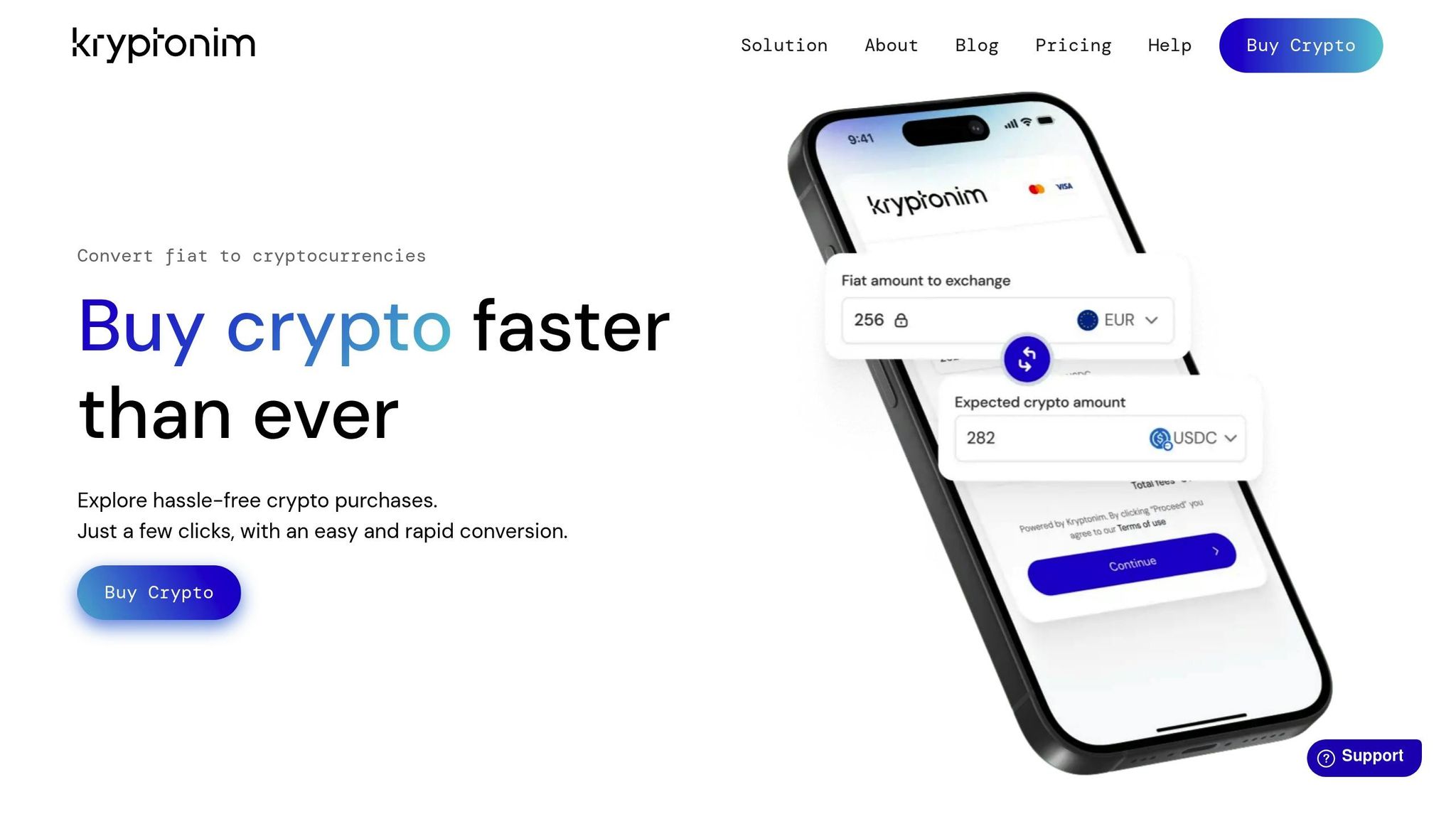
Automated alerts not only help identify pump-and-dump schemes but also encourage smarter trading decisions. If your monitoring tools flag suspicious activity in low-cap tokens, consider shifting your focus to more established cryptocurrencies with reliable trading patterns.
Advanced Detection Methods and Limitations
Machine Learning and AI-Based Detection
Modern AI tools have taken pump-and-dump detection to a new level by blending multiple data sources for early identification. For instance, Graph Neural Networks (GNNs) track the flow of information to pinpoint the organizers behind manipulative schemes. At the same time, Natural Language Processing (NLP) tools like BERTweet and GPT-4o analyze messages in real time, categorizing them into distinct phases and identifying target cryptocurrencies - sometimes as quickly as 20 seconds before a pump begins.
Machine learning models have proven incredibly efficient, detecting pump-and-dump activities within just 25 seconds after they start, boasting an impressive 94.5% F1-score. In contrast, traditional rule-based systems lag behind, often taking up to 30 minutes and producing significantly more false alarms. When these models are combined with data from order books and trades, their accuracy improves even further.
"Deep learning solutions can significantly outperform all other existing pump and dump detection methods for cryptocurrencies", says researcher Viswanath Chadalapaka.
However, even with these advancements, distinguishing manipulation from normal market fluctuations remains a persistent challenge.
Handling False Positives and Evolving Tactics
Even the most advanced detection systems face hurdles. A significant limitation lies in their inability to monitor private or encrypted conversations, where many pump-and-dump schemes are organized.
"A key challenge is uncovering manipulation campaigns coordinated in private channels and messaging apps", notes Abigail Murphy from GeniusFirms.
Another issue is the resemblance between manipulative activity and legitimate market behavior, particularly in low-liquidity tokens. Small trades in these markets can sometimes trigger alerts that mimic pump-and-dump patterns. To address this, detection systems employ methods like double-conditioning and Exponentially Weighted Moving Average (EWMA) to reduce false positives.
Manipulators, however, are constantly evolving their tactics. They’ve shifted from "time-pumps", which rely on synchronized timing, to "crowd-pumps", where price-based triggers are used. The most effective detection strategies today combine insights from social media, order book data, and on-chain tracking. This multi-faceted approach is essential because no single data source can provide the complete picture.
Conclusion
Automated detection tools have become a crucial part of navigating the unpredictable world of cryptocurrency markets. Pump-and-dump schemes, notorious for their rapid execution, typically conclude within 30–60 minutes and can lead to devastating value drops of 65% to 90% in just a few hours. These detection systems, boasting accuracy rates of up to 87%, are capable of identifying manipulation within 30-second intervals - sometimes as much as an hour before it unfolds.
The most effective approach involves layering multiple detection strategies. Configure your tools to flag unusual price or volume movements, set automated stop-loss orders to limit potential losses, and use on-chain analytics to verify token authenticity. Be particularly cautious with tokens trading below $100,000 in daily volume, as these are frequent targets for manipulation. These methods serve as a foundation for safer trading practices.
When you identify a legitimate opportunity, ensure your execution is secure. For example, platforms like Kryptonim provide a regulated fiat-to-crypto on-ramp in the EU, offering transparent fees (2% for EU users and 4% for others) and instant transactions. This not only minimizes security risks but also ensures compliance with AML and KYC standards.
That said, no detection system is foolproof. Manipulators are constantly refining their tactics, often coordinating through private channels and messaging apps. The best defense is a mix of healthy skepticism and thorough research. Automated tools are an excellent first line of defense, but always double-check token legitimacy, assess liquidity, and prioritize self-custody for added security.
FAQs
How do automated tools identify pump-and-dump schemes in cryptocurrency using social media?
Automated tools keep an eye on social media platforms like Twitter, Telegram, and Discord to spot pump-and-dump schemes. They work by analyzing massive amounts of posts in real-time, using natural language processing (NLP) to detect sudden spikes in mentions of certain cryptocurrencies, changes in sentiment, and coordinated bursts of specific keywords.
These tools also use sophisticated models to monitor how information spreads across networks. By identifying rapid and unusual activity patterns, they can flag potential pump-and-dump schemes for further review. This helps users stay alert and avoid becoming targets of market manipulation.
What makes it difficult for automated tools to detect crypto pump-and-dump schemes?
The unpredictable and fast-changing world of cryptocurrency markets makes it incredibly tough for automated tools to spot pump-and-dump schemes. Many tokens either trade at low volumes or stay dormant for long stretches, making it tricky to tell the difference between regular market shifts and deliberate manipulation. On top of that, the lack of clearly labeled examples of these schemes and the wild price swings in crypto often result in more false alarms.
Adding to the challenge is how these schemes are organized. Platforms like Telegram, Discord, and Twitter - where users often operate under pseudonyms - allow fraudsters to coordinate quickly and discreetly. To keep up, detection systems have to sift through massive amounts of unstructured social media data in real time. And as fraud tactics evolve rapidly, algorithms need to adjust on the fly, often without the luxury of frequent retraining. The nonstop, global nature of crypto trading only makes things harder, requiring round-the-clock monitoring to catch manipulative behavior as it unfolds.
How do automated tools help traders detect crypto pump-and-dump schemes?
Automated tools are becoming an essential ally for traders aiming to spot crypto pump-and-dump schemes. By analyzing market activity in real time, these tools can detect sudden price surges, unusual trading volumes, and spikes in on-chain activity - common red flags for potential market manipulation. Many advanced systems go a step further, combining statistical analysis of price movements with machine learning models that sift through market data and even social media trends.
With these insights, traders can make smarter decisions to safeguard their investments. For instance, they might set stop-loss orders to limit potential losses, steer clear of assets flagged by the system, or adjust their positions based on the tool's confidence levels. Essentially, these tools act as an early warning system, helping traders reduce the risk of losses when the inevitable price crash follows a pump-and-dump scenario.