
How to Diversify Crypto Across Blockchain Sectors
Learn how to effectively diversify your cryptocurrency investments across various blockchain sectors to manage risk and maximize growth potential.
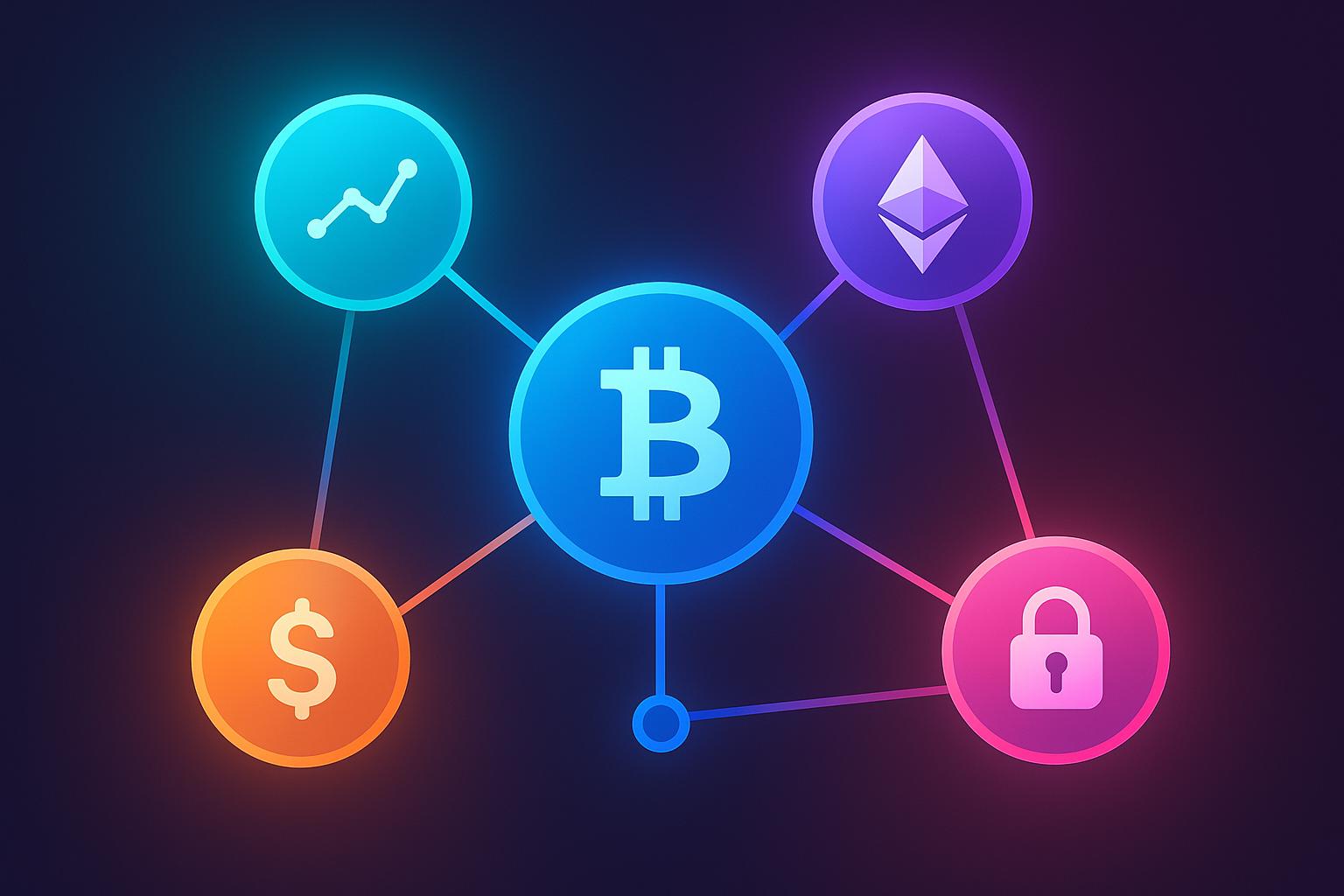
Investing in cryptocurrency is risky, but diversifying across blockchain sectors can help reduce that risk and increase growth opportunities. By spreading your investments across different categories like payment coins, DeFi, gaming tokens, and infrastructure platforms, you can balance market volatility and sector-specific risks. Here's a quick breakdown:
- Payment Coins (e.g., Bitcoin, Litecoin): Lower risk, stable growth.
- Smart Contract Platforms (e.g., Ethereum, Solana): Moderate risk, driven by developer activity.
- DeFi Tokens (e.g., Uniswap, Aave): Higher risk but strong potential in financial services.
- Gaming/Metaverse Tokens (e.g., Axie Infinity, Decentraland): High risk, speculative.
- Infrastructure Tokens (e.g., Polygon, Render): Moderate risk, adoption-dependent.
- AI/Blockchain Integration (e.g., Fetch.ai): High risk, experimental.
- Tokenized Assets (e.g., RealT): Moderate risk, tied to physical assets.
To build a diversified portfolio:
- Assess your risk tolerance and goals.
- Allocate funds across sectors (e.g., 40% in Bitcoin/Ethereum, 25% in infrastructure, 20% in DeFi, 15% in gaming/metaverse).
- Monitor liquidity, sector maturity, and rebalance periodically.
Using secure platforms like Kryptonim, which offers transparent fees and easy transactions, can simplify the process. Diversification ensures you're better prepared for market changes while exploring the crypto ecosystem's potential.
Understanding Blockchain Sectors
The blockchain world has expanded far beyond Bitcoin's original vision of digital payments. Today, it encompasses a variety of sectors, each offering unique opportunities and risks. To build a well-rounded portfolio, it's key to understand these sectors and how they interact. Diversifying across them can help balance risk while tapping into growth areas.
Key Blockchain Sectors to Explore
Payment Coins are the cornerstone of the crypto ecosystem, focused on enabling digital transactions. Bitcoin is the prime example, known for secure value transfers. Litecoin also fits this category, offering faster transaction speeds. These coins tend to be less volatile than other sectors but may grow more slowly due to their established market positions.
Smart Contract Platforms have transformed blockchain by enabling programmable transactions and decentralized applications (dApps). Ethereum leads this space, providing a platform for developers to create complex applications. Competitors like Solana and Avalanche aim to improve on transaction speed and cost efficiency. These platforms drive much of the innovation in Web3 but rely heavily on developer interest and technological progress.
Decentralized Finance (DeFi) is reshaping financial services by removing intermediaries. Platforms like Uniswap allow direct trading, while Aave offers lending and borrowing without traditional banks. The DeFi sector has seen rapid growth, with over $50 billion locked in protocols as of 2024. However, it comes with risks like vulnerabilities in smart contracts and regulatory hurdles.
Gaming and Metaverse Tokens enable players and creators to own digital assets and participate in new virtual economies. Projects like Axie Infinity and Decentraland have even introduced virtual real estate markets. While these tokens are high-risk due to their dependence on user adoption, they also offer the potential for significant rewards.
Infrastructure Tokens support the underlying tech that powers blockchains. Akash provides decentralized computing, Render focuses on distributed GPU rendering, and Polygon helps blockchains scale more efficiently. These tokens carry moderate risk, as their value hinges on the broader adoption of blockchain technology.
AI and Blockchain Integration is an emerging area combining artificial intelligence with decentralized networks. These projects focus on applications like data sharing, automation, and transparency, particularly in IoT and machine learning. Though still experimental, this sector shows promise for future growth.
Real-World Asset Tokenization brings tangible assets like real estate, art, and commodities onto blockchain networks. This makes traditionally illiquid investments more accessible. Stablecoins, a subset of this category, have gained traction, with a circulating supply exceeding $120 billion. They offer a more stable entry point for new investors.
| Sector | Main Use Case | Example Projects | Typical Risk Profile |
|---|---|---|---|
| Payment Coins | Digital payments, value transfer | Bitcoin, Litecoin | Lower, more stable |
| Smart Contract Platforms | Programmable transactions, dApps | Ethereum, Solana | Moderate, tech-driven |
| DeFi | Decentralized financial services | Uniswap, Aave | Higher, smart contract risks |
| Gaming/Metaverse | Virtual economies, digital assets | Axie Infinity, Decentraland | High, speculative |
| Infrastructure | Blockchain scaling, computing | Polygon, Render | Moderate, adoption-dependent |
| AI/Blockchain | Data sharing, automation | Ocean Protocol, Fetch.ai | High, experimental |
| Real-World Assets | Tokenized physical assets | Energy Web Token, RealT | Moderate, regulatory risks |
Why Sector-Based Diversification Matters
Investing across multiple blockchain sectors helps protect against market volatility and sector-specific risks. Each sector reacts differently to technological shifts, regulatory changes, and market conditions. For example, during the 2021 bull market, DeFi and gaming/metaverse tokens saw significant growth, while payment coins like Bitcoin offered steadier returns. In contrast, during bear markets, foundational sectors like payment coins and infrastructure tend to retain more value, while speculative areas like gaming often face sharper declines.
Sector-specific challenges further emphasize the need for diversification. DeFi protocols are vulnerable to hacks, gaming tokens rely on user trends, and regulatory changes can impact sectors differently. Spreading investments across sectors reduces the chances of a single event derailing your entire portfolio.
Blockchain is evolving rapidly, with many projects now spanning multiple categories. For instance, DeFi protocols are beginning to integrate AI, and gaming platforms are incorporating real-world asset tokens. Understanding these overlaps can help investors spot projects positioned to benefit from multiple growth areas.
Institutional interest is also growing, especially in infrastructure and real-world asset sectors, as traditional finance explores blockchain for efficiency and transparency. This interest can add stability to these sectors, while experimental areas like AI and blockchain integration remain higher-risk but potentially more rewarding for early participants.
Building a Diversified Crypto Portfolio
Creating a well-rounded crypto portfolio involves spreading investments across various blockchain sectors. To do this effectively, you need to evaluate your financial situation and allocate funds strategically, ensuring your choices align with your risk tolerance and investment goals.
Assessing Risk Tolerance and Investment Goals
Before jumping into crypto investments, take a close look at your financial standing - your income, expenses, and savings. The golden rule? Only invest money you can afford to lose. Cryptocurrencies are highly volatile, and it's essential to protect your financial well-being.
Your investment timeline plays a big role in shaping your strategy. If you're investing for the long haul, you can afford to weather market swings and might allocate more to emerging areas like gaming and metaverse tokens. Short-term investors, however, should lean toward more established sectors, such as payment coins and infrastructure platforms, to minimize risk.
Think about your comfort level with market fluctuations. Some sectors, like gaming and metaverse tokens, are highly sensitive to user adoption trends, leading to sharp price changes. On the other hand, assets like Bitcoin and Ethereum tend to show more predictable behavior over time.
Define your goals clearly: Are you aiming for steady growth, preserving capital, or chasing high-risk, high-reward returns? For example, a conservative investor might aim for 10-15% annual growth, while someone with a higher risk appetite might target 25-50% returns, knowing there’s a chance of significant losses.
Once you’ve determined your risk profile and goals, you can begin distributing your investments across different sectors.
Spreading Investments Across Sectors
A balanced portfolio is key to managing risk and capturing opportunities. By diversifying your investments, you avoid putting all your eggs in one basket while tapping into the growth potential of various blockchain sectors.
For beginners, a conservative allocation might look something like this:
- 40% in major cryptocurrencies like Bitcoin and Ethereum for stability.
- 25% in infrastructure platforms such as Solana and Avalanche.
- 20% in DeFi tokens like Uniswap and Aave.
- 15% split between gaming/metaverse tokens and service tokens like Chainlink and Filecoin.
This mix offers a solid foundation with exposure to both established and emerging areas.
If you’re more aggressive, you could reduce your allocation to major cryptocurrencies (25-30%) and increase exposure to higher-growth sectors like gaming and metaverse tokens. However, avoid concentrating more than 20-25% in any single high-risk sector, especially if you're just starting out.
The DeFi sector, which holds over $40 billion in total value locked as of 2023, presents exciting opportunities. Focus on established protocols with strong track records rather than newer, untested platforms. Similarly, when exploring gaming and metaverse tokens, research the project's user base and development activity to gauge its potential.
Stablecoins also play a critical role in portfolio management. With a market capitalization exceeding $100 billion, they act as a buffer against volatility while keeping your funds within the crypto ecosystem. Consider allocating 5-10% of your portfolio to stablecoins for rebalancing and risk management.
This diversified approach helps limit exposure to any single risk while positioning your portfolio to benefit from various growth trends.
Considering Liquidity and Sector Maturity
Once your funds are allocated, it’s important to evaluate the liquidity and maturity of your assets to safeguard your portfolio. Liquidity refers to how easily an asset can be bought or sold. High-liquidity assets like Bitcoin and Ethereum allow for quick trades, which is crucial during market downturns or when rebalancing your portfolio.
You can assess liquidity by looking at trading volumes, exchange listings, and bid-ask spreads. Assets with daily trading volumes above $10 million on major exchanges typically offer sufficient liquidity. Steer clear of assets with low trading volumes or those listed on only a few smaller exchanges, as selling them during market stress can be challenging.
Sector maturity also plays a significant role in determining risk and potential returns. Mature sectors - such as those led by Bitcoin and Ethereum, which together account for over 60% of the total cryptocurrency market capitalization - offer stability through established use cases, active development teams, and large user bases.
Emerging sectors like gaming and metaverse tokens, while exciting, come with higher volatility and uncertainty. These areas often depend on broader technological adoption, regulatory developments, and unpredictable shifts in user behavior.
For a balanced portfolio, focus 60-70% of your investment on mature sectors to provide stability, while allocating 30-40% to emerging sectors for growth potential. As you gain experience and confidence in crypto markets, you can adjust these ratios to reflect your evolving preferences and market conditions.
Keep an eye on performance indicators like developer activity, user adoption trends, and institutional interest to evaluate sector maturity. Mature sectors typically show steady development progress, growing user bases, and increasing institutional involvement, while emerging sectors may display more erratic patterns.
Monitoring and Rebalancing Your Portfolio
Managing a diversified crypto portfolio isn't a "set it and forget it" task. With the fast-paced nature of the cryptocurrency market, your carefully planned allocations can shift quickly, making regular monitoring and adjustments essential to maintain your desired risk level and investment strategy.
Why Periodic Rebalancing Matters
Cryptocurrency markets are known for their volatility. When one sector outperforms others, it can throw your portfolio out of alignment with your original plan, potentially exposing you to more risk than intended.
Take this example: You initially allocate 25% of your portfolio to each of four sectors - payment cryptocurrencies, DeFi, infrastructure, and NFTs. If DeFi tokens experience a surge in value, their share in your portfolio could grow disproportionately. This overexposure to DeFi might leave you vulnerable if that sector takes a downturn.
A 2024 Deloitte report found that 55% of institutional investors rebalance their crypto portfolios at least quarterly, while 25% do so monthly, underscoring how dynamic this market is.
Setting clear rebalancing rules, like a 5% deviation threshold or scheduling quarterly reviews, can help you stick to your strategy. However, it's not just about discipline - transaction costs and taxes also come into play. In the U.S., selling crypto to rebalance can trigger capital gains taxes, so it's important to weigh these costs. Quarterly rebalancing often strikes a good balance between maintaining your strategy and minimizing expenses.
Your personal circumstances also evolve. A promotion might increase your risk tolerance, while nearing retirement could shift you toward more conservative investments. Regular reviews ensure your portfolio aligns with your changing financial goals and life stage.
Adapting to Market Trends and Risks
Once you've established a rebalancing plan, staying flexible is key. The crypto landscape changes rapidly, with emerging sectors gaining traction while others fade. Keeping up with these shifts allows you to make informed adjustments to your allocations.
Regulatory changes can have a big impact on sector performance. For instance, new SEC guidelines on DeFi protocols or stablecoin regulations can alter the risk profile of entire sectors overnight. When the SEC increased scrutiny of certain DeFi platforms in 2023, many investors temporarily reduced their exposure to that sector.
Technological advancements also open up new opportunities. In 2024, the rise of decentralized physical infrastructure networks (DePIN) led many investors to allocate 5-10% of their portfolios to this emerging sector, often by scaling back investments in more established areas.
Track key performance indicators for each sector in your portfolio. Metrics like developer activity, user adoption rates, and institutional interest can offer early insights into a sector's health. For example, a drop in daily active users for gaming tokens might signal it's time to reduce your allocation.
Market conditions should guide your strategy. High-risk sectors like gaming and metaverse tokens often shine during bull markets, while bear markets tend to favor more established cryptocurrencies. Gradual adjustments - such as 2-3% shifts - are better than drastic changes, as they help minimize timing errors and reduce costs.
During periods of uncertainty, stablecoins can act as a safety net. Temporarily increasing your stablecoin allocation to 15-20% during volatile times provides flexibility to seize opportunities when prices dip, while also lowering your overall risk.
Finally, document your rebalancing actions. Many seasoned crypto investors use simple spreadsheets to track their allocations, rebalancing dates, and the reasoning behind each decision. This practice not only keeps you organized but also helps refine your strategy over time.
The crypto market is ever-changing, but regular monitoring and thoughtful rebalancing can help you stay on course toward your long-term goals.
sbb-itb-0796ce6
Using Secure Platforms for Crypto Purchases
When it comes to managing risk in cryptocurrency investments, selecting the right platform is essential. With over $1.7 billion lost to crypto hacks and scams in 2024, as reported by Chainalysis, platform security and regulatory compliance are vital for safeguarding your investments and successfully diversifying your portfolio.
The crypto world is filled with platforms of varying trustworthiness. Unregulated exchanges can leave newcomers vulnerable to fraud and hacking attempts. A 2023 Statista survey revealed that more than 60% of U.S. crypto investors prioritize platform security and regulatory standards when deciding where to buy cryptocurrency.
Regulated platforms stand apart by adhering to strict anti-money laundering (AML) and know-your-customer (KYC) requirements. These measures ensure greater transparency and offer legal protection in case of disputes. Platforms regulated in the EU, for example, follow some of the most rigorous financial oversight rules globally, adding an extra layer of safety. When choosing a platform, look for features like strong security protocols, clear fee structures, responsive customer support, and secure custody solutions. These elements create a solid foundation for diversifying your crypto portfolio.
How Kryptonim Simplifies Crypto Diversification
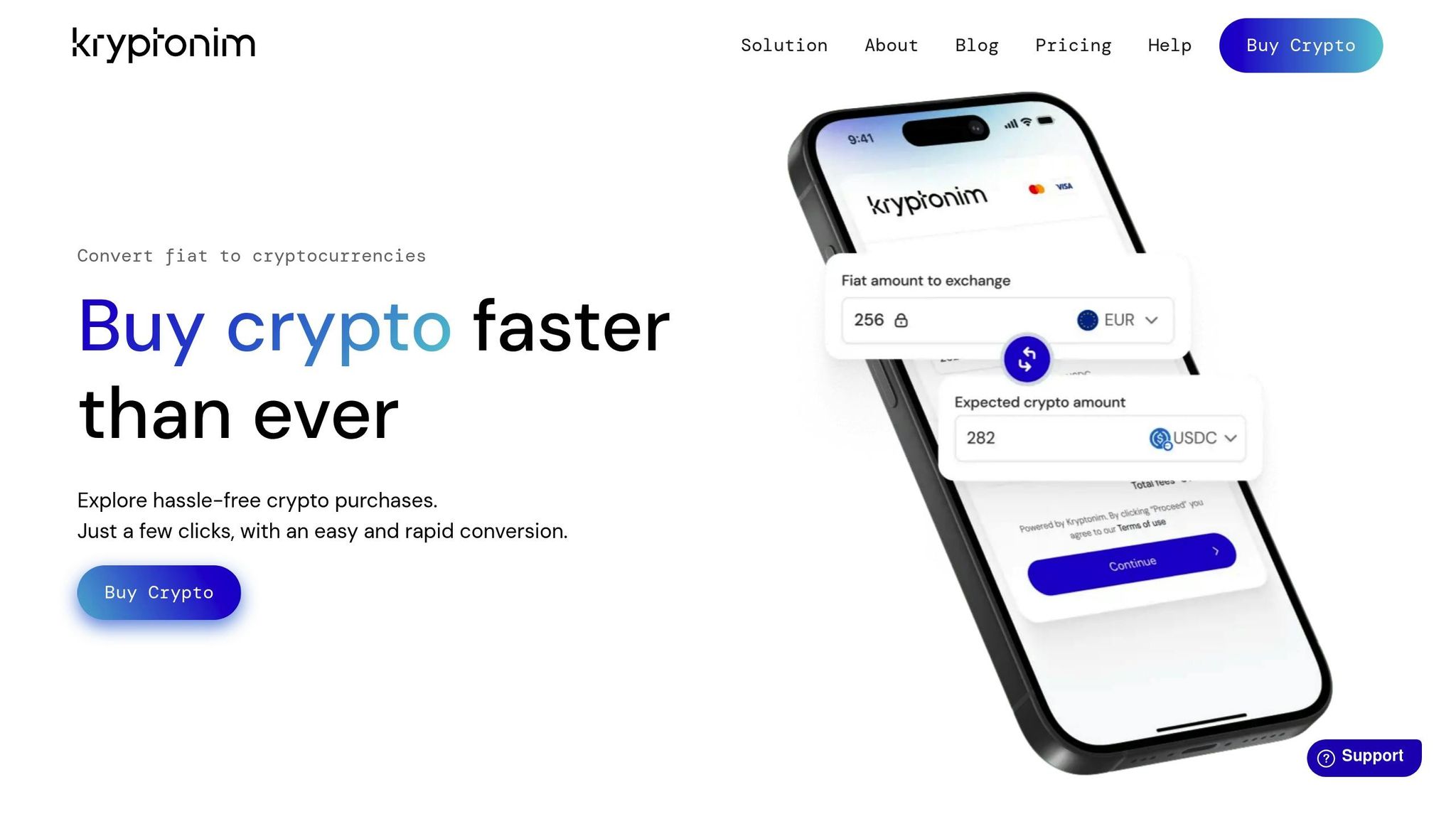
Kryptonim is an EU-regulated platform designed to make cryptocurrency purchases both secure and hassle-free. It eliminates many of the common obstacles that can deter beginners from diversifying their crypto investments.
Kryptonim is a secure, EU-regulated on-ramp tool for purchasing cryptocurrencies.
One standout feature of Kryptonim is its no-account-creation policy, which reduces the risk of data breaches by limiting personal information storage. This allows users to quickly purchase assets across various blockchain sectors without the delays of lengthy registrations. The platform also provides competitive exchange rates with transparent pricing - 2% per transaction for EU users and 4% for others - ensuring no hidden fees. With fast processing times, you can capitalize on market opportunities without unnecessary delays.
For U.S. investors, Kryptonim supports transactions in USD, displayed in familiar formats (e.g., $1,000.00), while maintaining high security standards.
Purchasing cryptocurrencies via Kryptonim is easy and doesn't require prior experience. We made our tool so simple and intuitive that anyone can use it.
Practical Steps to Diversify with Kryptonim
Diversifying your crypto portfolio with Kryptonim is simple. Here’s how you can get started:
- Select Your Cryptocurrencies: Decide which assets you want to include in your portfolio. For example, you might choose Bitcoin (BTC) for payments, Ethereum (ETH) for infrastructure, and Uniswap (UNI) for DeFi exposure.
- Use the Converter Tool: Go to Kryptonim’s website and access the converter tool. It displays live market prices in USD, making it easy to allocate your funds. For instance, you could invest $500 in BTC, $400 in ETH, and $300 in UNI.
- Provide Wallet Details: Enter your wallet addresses for each asset. Double-check the details, as blockchain transactions cannot be reversed. If you’re new to crypto, using a hardware wallet for secure, long-term storage is a good idea.
- Complete Your Purchase: Finalize your transaction using a credit card or a local payment option. Kryptonim’s streamlined verification process keeps paperwork to a minimum, letting you focus on your investment.
- Manage Your Holdings: Once the transaction is processed, the cryptocurrencies will be sent directly to your wallets. Keep detailed records of each transaction, including the date, amount, asset, and sector. This documentation is crucial for tracking your portfolio and managing taxes.
Kryptonim’s no-account-creation model allows for quick portfolio adjustments, while its transparent fees make it cost-effective to execute multiple smaller transactions. This flexibility helps maintain a balanced and diversified investment strategy, ensuring your crypto investments are both secure and efficient.
Key takeaways for crypto diversification
Diversifying your investments across different blockchain sectors is a smart way to manage risk while tapping into the potential growth of digital assets. Each blockchain sector reacts differently to market events, regulatory shifts, and technological advancements, making diversification a crucial strategy.
Looking at historical data, portfolios spread across various blockchain sectors tend to experience less volatility and deliver better risk-adjusted returns compared to those focused on a single sector. By balancing stability with growth, diversified allocations can help you navigate the dynamic crypto market. However, it’s important to stay vigilant and adapt to shifting market conditions.
Security is a cornerstone of any diversification strategy. Opting for a reliable, EU-regulated platform like Kryptonim can safeguard your investments. Kryptonim offers transparent pricing - charging 2% per transaction for EU users and 4% for others - making it easier to build your portfolio with smaller, incremental purchases without worrying about excessive fees.
The crypto world is evolving at breakneck speed. For example, the global blockchain market is predicted to soar from $7.4 billion in 2022 to $94 billion by 2027. This growth opens doors to new diversification options, such as the tokenization of real-world assets and the continued development of DeFi and NFT sectors. Keeping an eye on these trends can give you an edge in spotting promising sectors before they gain widespread attention.
FAQs
How do I evaluate my risk tolerance when diversifying my crypto investments across blockchain sectors?
Understanding how much risk you’re comfortable with is key to building a balanced crypto portfolio. Start by evaluating how much money you can set aside for investing without putting your financial health at risk. Take a close look at your income, savings, and long-term financial goals to determine what you can afford to invest.
Next, consider how well you handle market ups and downs. Cryptocurrency markets are notoriously volatile, with prices swinging dramatically. Ask yourself how much risk you’re willing to accept and how you’d react to sharp market shifts. If you’re feeling uncertain, it’s a good idea to begin with smaller investments and scale up as you become more confident.
When it comes to diversification, spread your investments across various blockchain sectors like DeFi, NFTs, and layer-1 protocols. This approach can help cushion your portfolio from losses in any single area, offering a better balance between risk and potential rewards.
What are the risks and rewards of investing in emerging blockchain sectors like AI integration compared to established ones?
Investing in newer blockchain areas, such as integrating AI, can open doors to growth opportunities. However, these areas often come with higher risks. They tend to be less predictable and more volatile, offering the chance for significant returns, but also bringing a level of uncertainty that can't be ignored.
On the other hand, more established blockchain sectors usually offer greater stability and consistent performance. While they may not promise the same level of growth as emerging areas, they can provide a reliable foundation for your investments. Striking a balance between these emerging and established sectors can help manage risk while still giving you the chance to explore cutting-edge opportunities within the blockchain space.
What is periodic rebalancing, and how can it help maintain a diversified crypto portfolio?
Periodic rebalancing involves tweaking your crypto investments to keep your portfolio in line with your preferred allocation across various blockchain sectors. This approach helps you stay on track with your risk tolerance and long-term objectives, even as market conditions shift.
When it's time to rebalance, think about factors such as how individual cryptocurrencies are performing, shifts in sector trends, and how these align with your broader investment strategy. By routinely reviewing and adjusting your portfolio, you can manage risk more effectively while positioning yourself to tap into growth opportunities in new and evolving sectors.